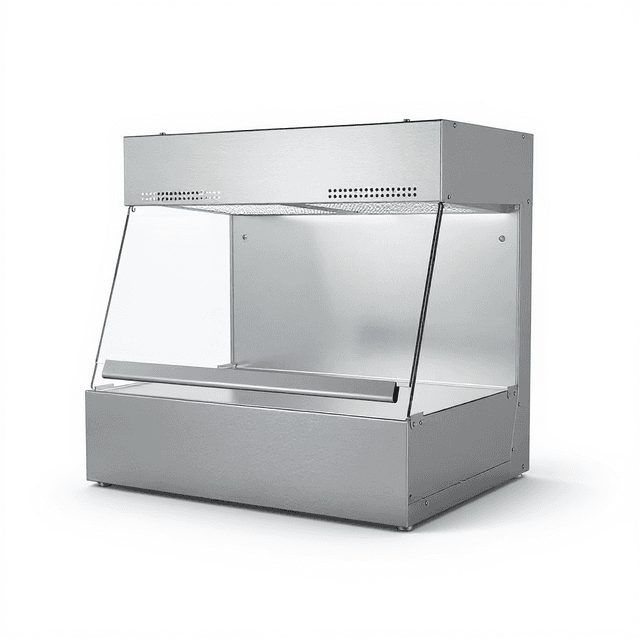
Horizontal Laminar Flow Cabinet(PIVAS)
Horizontal laminar flow cabinet providing Class 100 sterile work environment with HEPA filtration and 1370×550mm stainless steel work surface for contamination-free sample preparation.
A laminar flow clean bench protects only the sample. It blows filtered air toward the user, so it is not for infectious or toxic work.

Louise Corscadden, PhD
Director of Science · ConductScience
Ask Louise about Horizontal Laminar Flow Cabinet(PIVAS) fit, setup, configuration, or quote prep.
Already working with us? Sign in to connect this with My Scientist.
Key Specifications
Full details →- Model fit
- Configured during quote
- SKU family
- BIO-0963
- Shipping box
- 174.0 x 150.0 x 87.0 cm
- Ordering
- Online checkout and quote request available
- Category
- Clean Benches & Fume Hoods
- Build notes
- Confirm accessories, station layout, and support needs before purchase
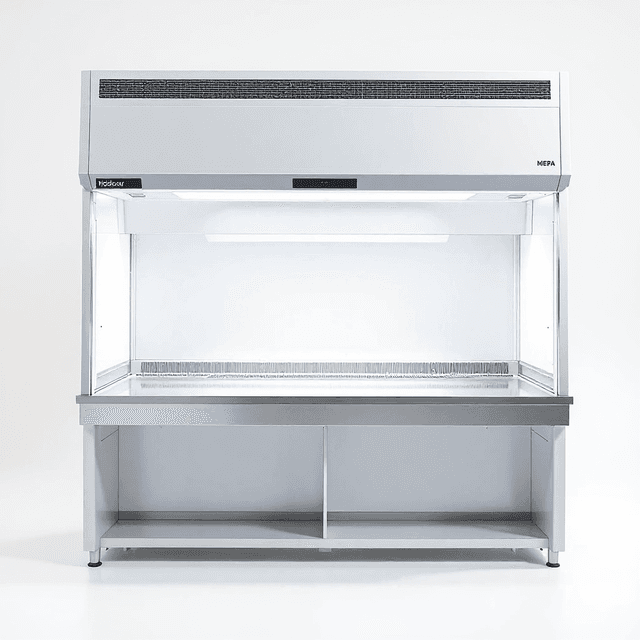
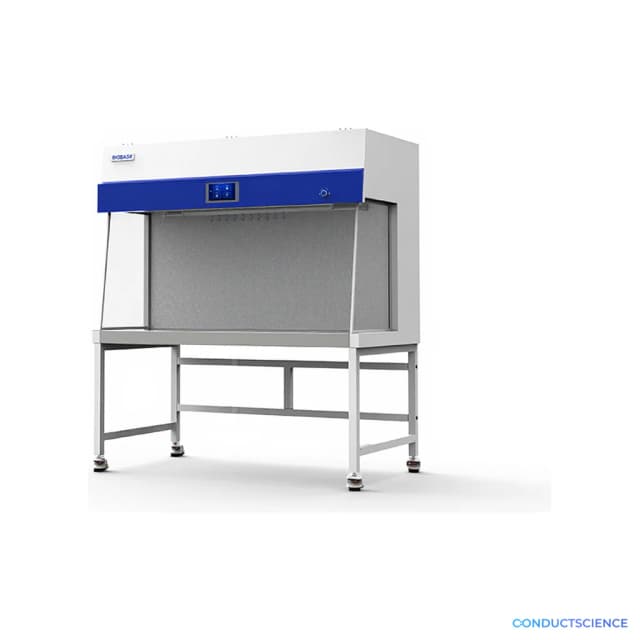
The Horizontal Laminar Flow Cabinet (PIVAS) provides a sterile working environment through horizontal unidirectional airflow for pharmaceutical, microbiological, and analytical applications. This double-person single-side cabinet generates a Class 100 (ISO 5) work zone with HEPA-filtered air moving horizontally at 0.3-0.45 m/s across the 1370×550×600mm working area. The 304 stainless steel work surface and anti-bacterial powder-coated body ensure contamination-free sample preparation and manipulation.
The system incorporates a high-efficiency particulate air (HEPA) filter with 99.995% efficiency at 0.3 micrometers, removing viable and non-viable particles from the supply air. An LCD display provides real-time monitoring of operational parameters, while the washable polyester fiber pre-filter extends HEPA filter life. With ≤65 dB(A) noise levels and ≤5 μm vibration, the cabinet maintains a stable environment for precise work requiring particle-free conditions.
How It Works
The horizontal laminar flow cabinet operates by drawing ambient air through a washable polyester fiber pre-filter to remove larger particles and extend the life of the downstream HEPA filter. Air then passes through the main HEPA filter, which removes 99.995% of particles ≥0.3 micrometers in diameter through mechanical filtration mechanisms including impaction, interception, and diffusion.
The filtered air flows horizontally across the work surface at a controlled velocity of 0.3-0.45 m/s, creating a unidirectional laminar airstream that sweeps particles away from the work area and toward the front opening. This horizontal flow pattern protects samples and materials within the cabinet from particulate contamination while allowing operator access. The LCD display monitors airflow parameters to ensure consistent performance.
The 304 stainless steel work surface provides a non-porous, cleanable surface that resists chemical attack and bacterial adhesion. The anti-bacterial powder coating on the main body further reduces microbial growth on cabinet surfaces, maintaining the sterile environment integrity during extended use periods.
Features & Benefits
Shipping weight
- 225.0 lb
Shipping box
- L: 174.0 cm
- W: 150.0 cm
- H: 87.0 cm
| Feature | This Product | Typical Alternative | Advantage |
|---|---|---|---|
| Work Area Dimensions | 1370×550×600mm providing 0.75 m² work surface | Entry-level models often offer smaller work areas around 0.4-0.6 m² | Larger work surface accommodates multiple samples or collaborative work sessions simultaneously. |
| HEPA Filter Efficiency | 99.995% efficiency at 0.3μm particles | Standard models typically offer 99.97% efficiency at 0.3μm | Higher filtration efficiency provides enhanced contamination control for critical applications. |
| Airflow Velocity Control | Controlled 0.3-0.45 m/s with LCD monitoring | Basic models may lack velocity monitoring and adjustment | Velocity monitoring ensures consistent performance and enables documentation of operating conditions. |
| Work Surface Material | 304 stainless steel construction | Budget models may use powder-coated steel or laminate surfaces | Stainless steel provides superior chemical resistance and easier decontamination protocols. |
| Noise Level | ≤65 dB(A) operation | Many units operate at 70+ dB(A) | Lower noise levels reduce operator fatigue during extended use periods. |
| Vibration Control | ≤5μm vibration specification | Entry-level units may lack vibration control specifications | Low vibration maintains stable conditions for precision manipulations and analytical work. |
This cabinet combines a large work area with high-efficiency filtration, real-time monitoring, and low-vibration operation. The 304 stainless steel construction and comprehensive specifications make it suitable for demanding pharmaceutical and analytical applications requiring documented performance.
Practical Tips
Verify airflow velocity at multiple points across the work surface monthly using a calibrated anemometer.
Why: Uniform airflow distribution is critical for maintaining sterile conditions throughout the work area.
Clean the washable pre-filter monthly with mild detergent and allow complete air drying before reinstalling.
Why: Regular pre-filter maintenance extends HEPA filter life and maintains optimal airflow performance.
Allow the cabinet to run for 15-20 minutes before beginning work and avoid rapid movements within the work area.
Why: This establishes stable laminar flow and prevents disruption of the sterile air pattern.
Position materials at least 6 inches from the front edge and work from clean to contaminated areas.
Why: This maintains the integrity of the sterile airflow and prevents cross-contamination between samples.
If airflow velocity drops below specification, check pre-filter loading and clean or replace as needed.
Why: Clogged pre-filters are the most common cause of reduced airflow performance.
Never block the air intake grilles and ensure adequate clearance around the cabinet for proper ventilation.
Why: Restricted air intake compromises filter performance and can damage the blower system.
Document airflow velocity readings and filter change dates to maintain performance records.
Why: Performance documentation supports quality assurance requirements and helps predict maintenance needs.
Schedule annual HEPA filter integrity testing using dioctyl phthalate (DOP) or equivalent aerosol challenge.
Why: Regular filter testing detects potential leaks before they compromise sterile conditions.
Setup Guide
What’s in the Box
- Horizontal laminar flow cabinet main unit
- HEPA filter (installed)
- Washable polyester fiber pre-filter
- LCD display panel
- Power cord
- User manual and installation guide
- Performance verification certificate (typical)
Warranty
ConductScience provides a standard one-year manufacturer warranty covering parts and labor with comprehensive technical support. Extended warranty options and on-site service contracts are available for critical applications.
Compliance
What particle size range does the HEPA filter effectively remove?
The HEPA filter removes 99.995% of particles at 0.3 micrometers and larger, providing Class 100 air quality for submicron contamination control.
How do I verify the cabinet is maintaining proper airflow velocity?
Monitor the LCD display for velocity readings within 0.3-0.45 m/s range. Additionally, use an anemometer at multiple points across the work surface to confirm uniform flow distribution.
What cleaning agents are compatible with the stainless steel work surface?
The 304 stainless steel surface is compatible with most laboratory disinfectants including 70% isopropyl alcohol, quaternary ammonium compounds, and dilute bleach solutions. Consult product datasheet for specific chemical compatibility.
How often should the pre-filter be cleaned or replaced?
The washable polyester fiber pre-filter should be cleaned monthly under normal use conditions, or when airflow velocity drops below specification. Replace when cleaning no longer restores proper airflow.
Can this cabinet be used for both microbiological and chemical applications?
Yes, the stainless steel construction and HEPA filtration make it suitable for both applications, though separate units are recommended for cross-contamination prevention in critical applications.
What is the maximum weight capacity of the work surface?
Consult product datasheet for specific weight capacity. The stainless steel construction typically supports standard laboratory equipment and supplies.
How does this compare to vertical laminar flow cabinets?
Horizontal flow provides better product protection by moving air away from the operator, while vertical flow offers better operator protection. Choose based on whether sample protection or operator safety is the primary concern.
What environmental conditions are required for optimal operation?
Install in areas with minimal air currents, stable temperature, and low ambient particulate levels. Avoid locations near doors, HVAC vents, or high-traffic areas that could disrupt laminar flow.
Have a question about this product?
Have a question? Just ask.
Send it over and we'll email you a personalized answer — no call, no scheduling.
Prefer to talk it through?
Accessories
Enhance your setup with compatible accessories
Replacement Parts & Consumables
Frequently Bought Together
Upgrade Options