Anesthesia & Ventilation
Help me choose
What part of the anesthesia setup are you sourcing?
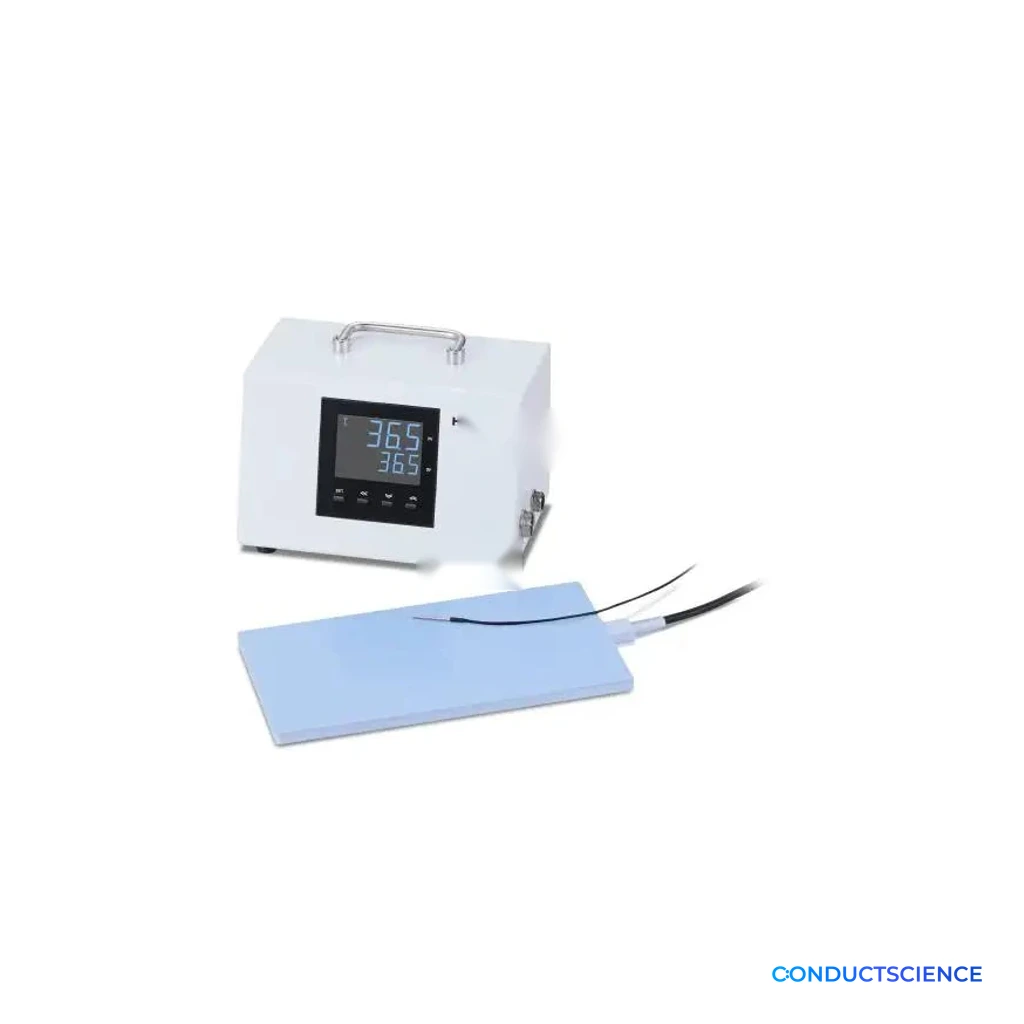
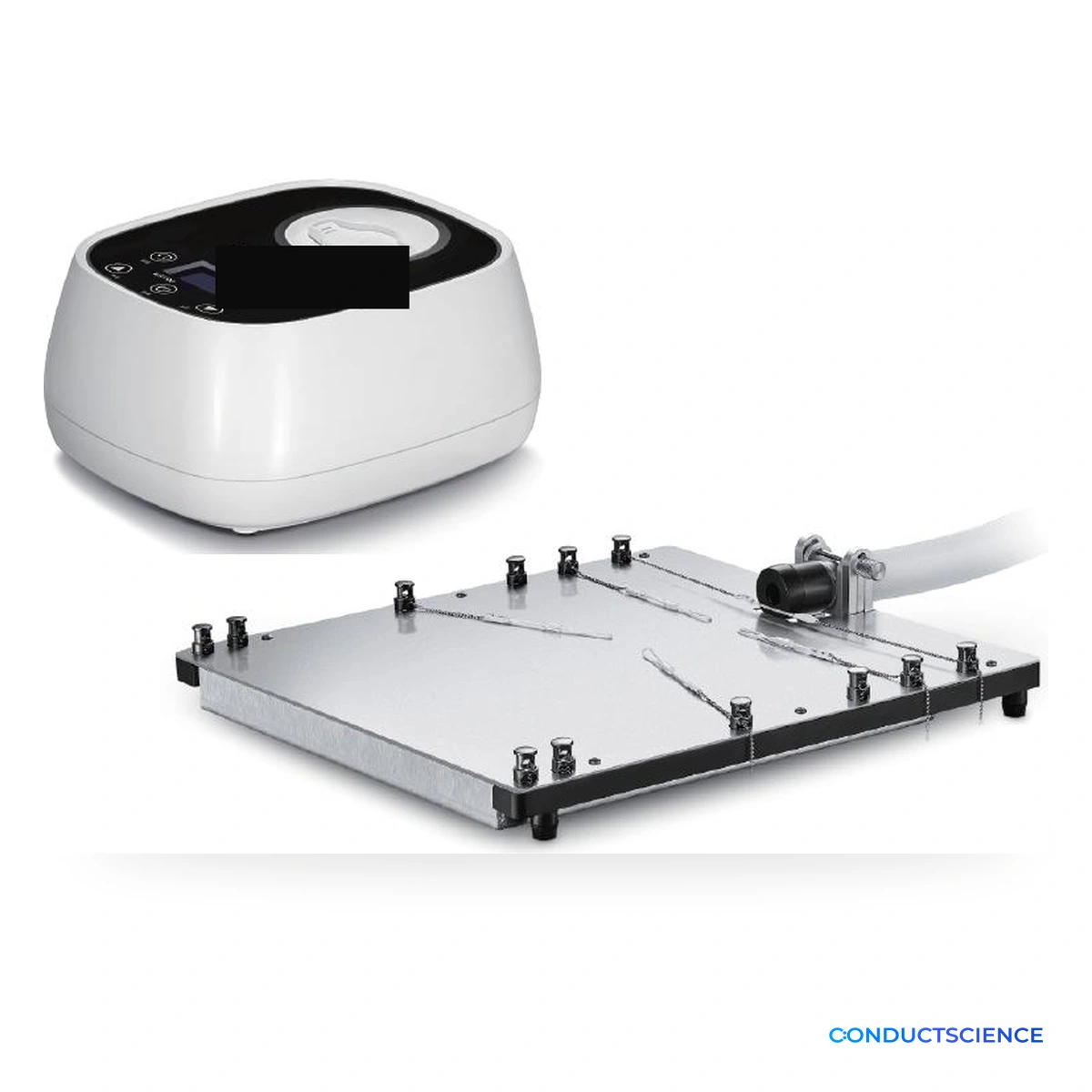

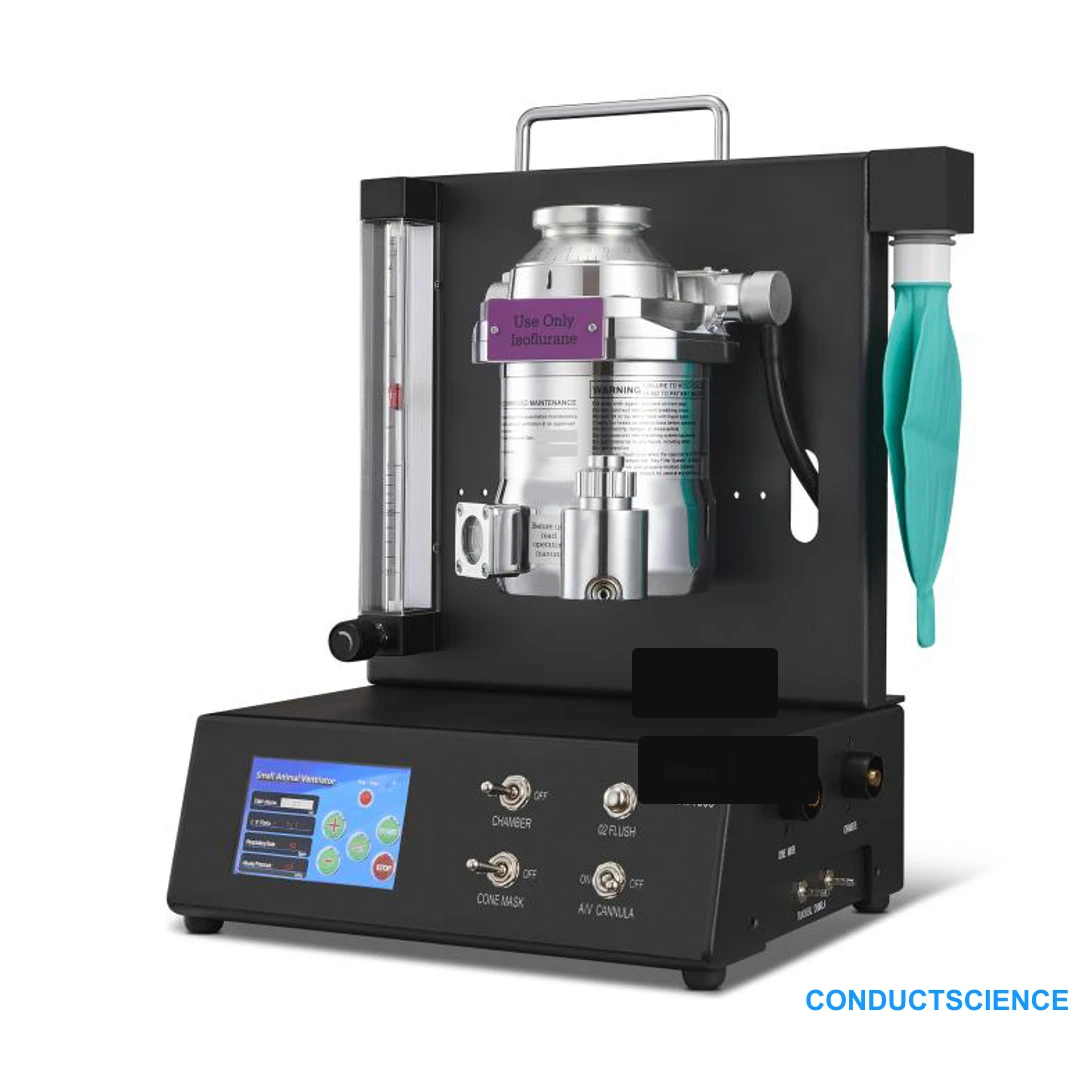
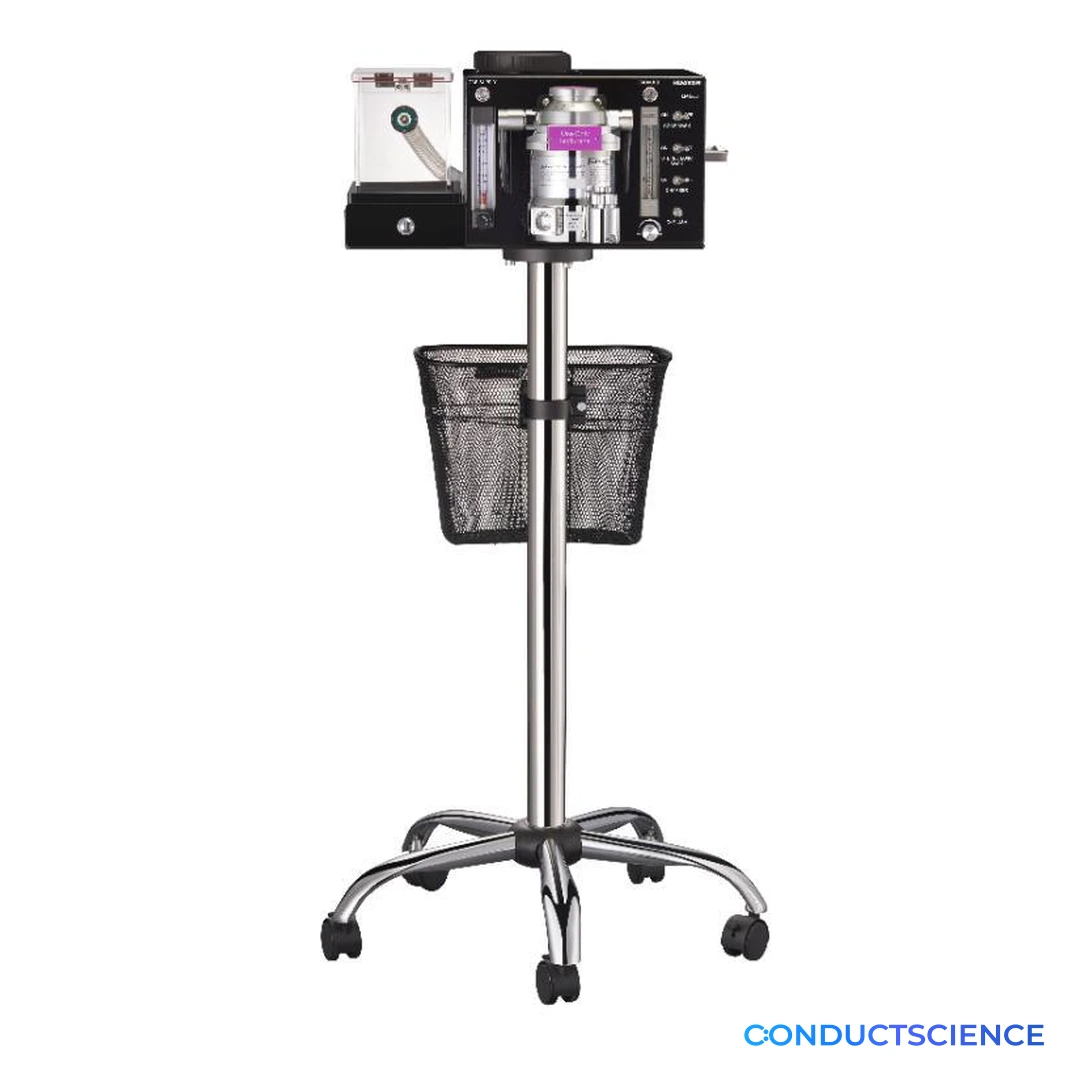
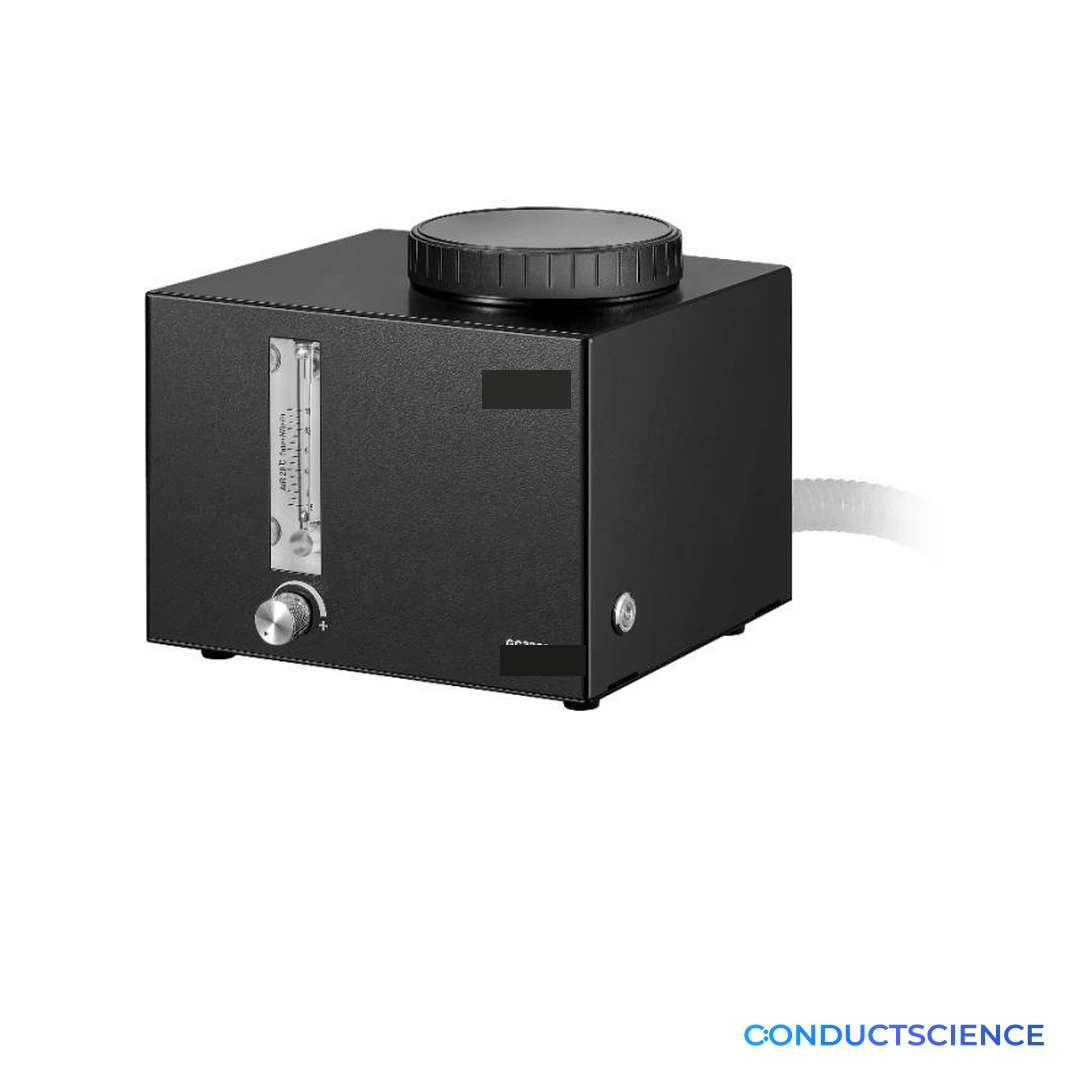
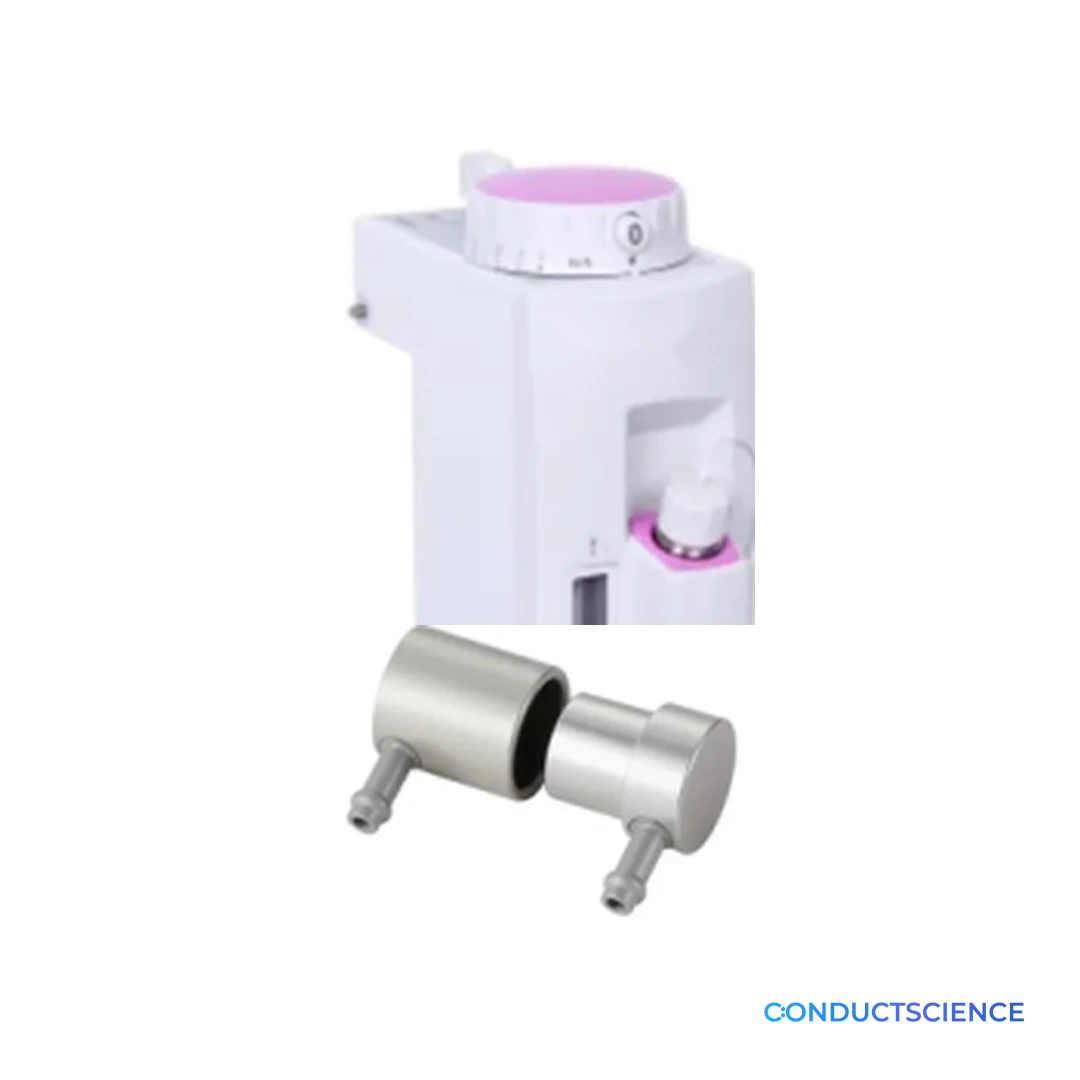

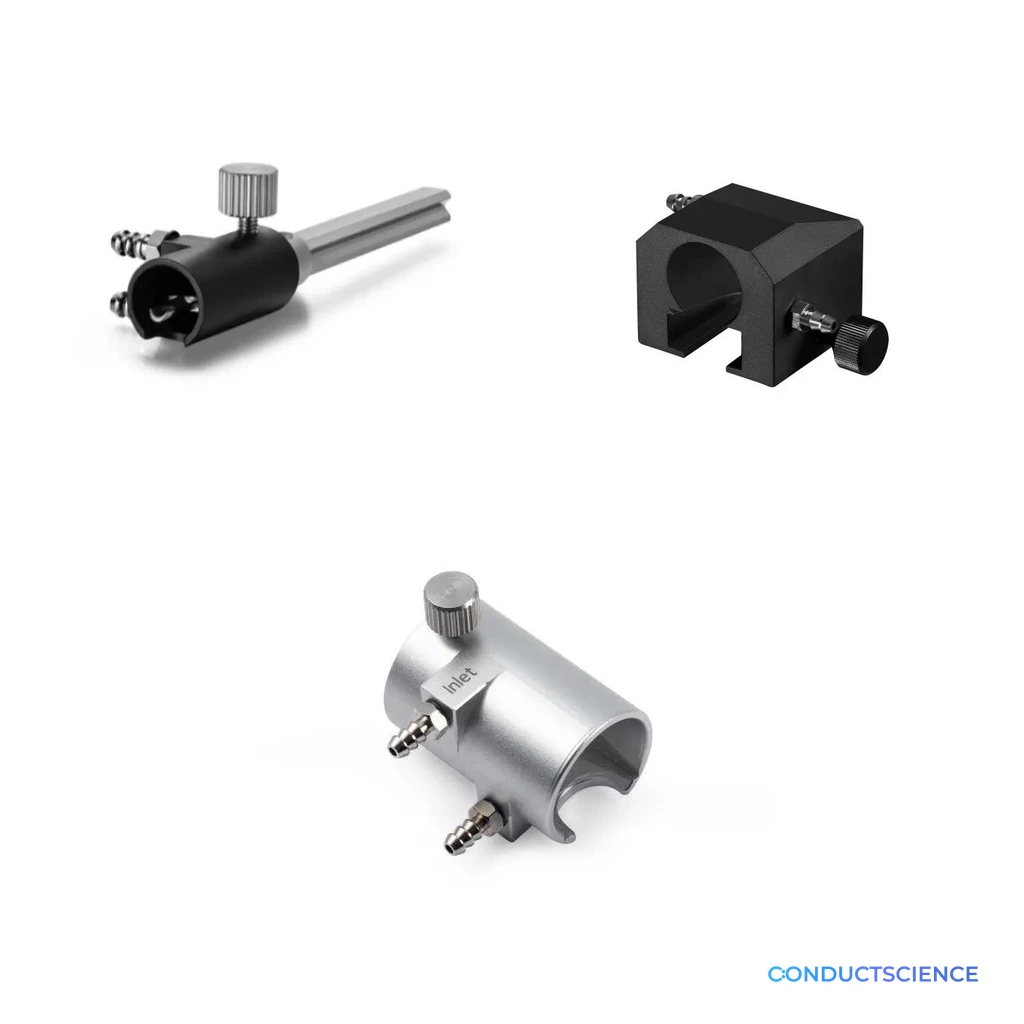
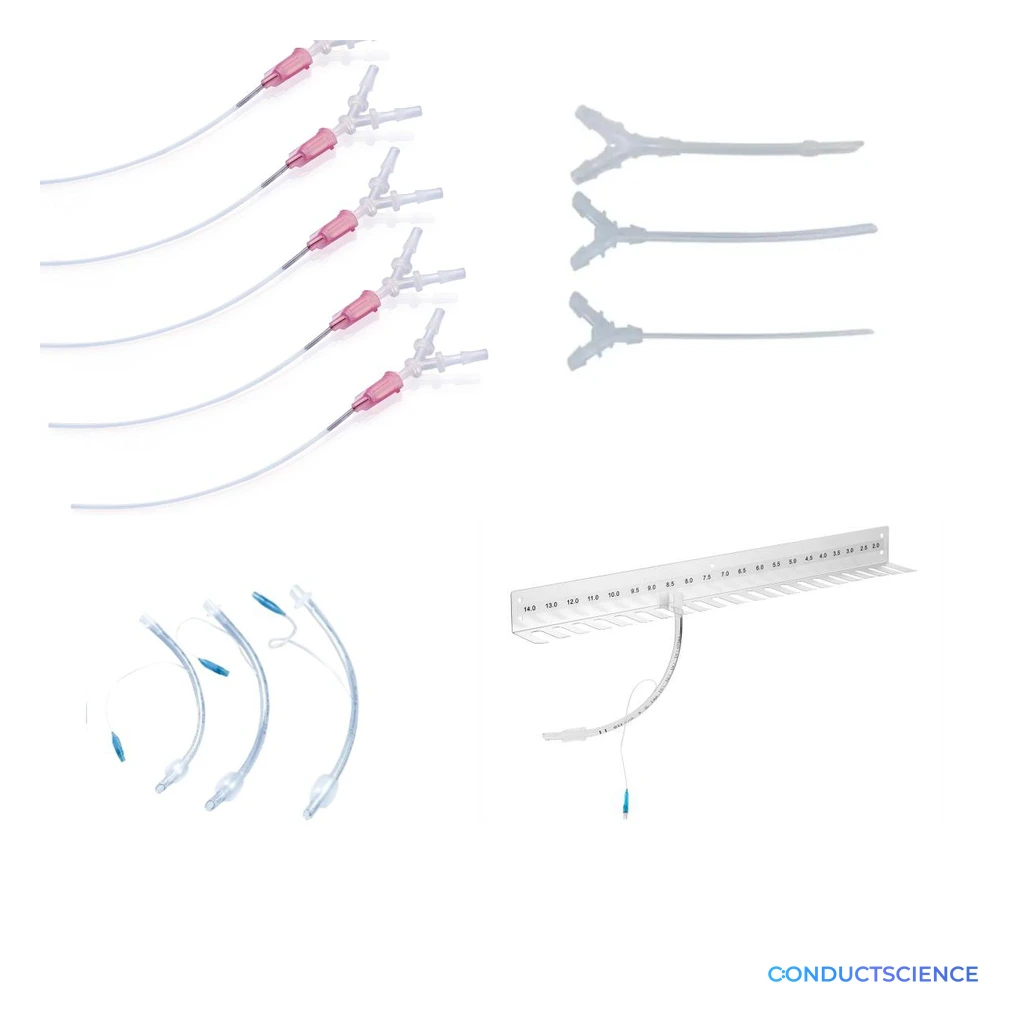

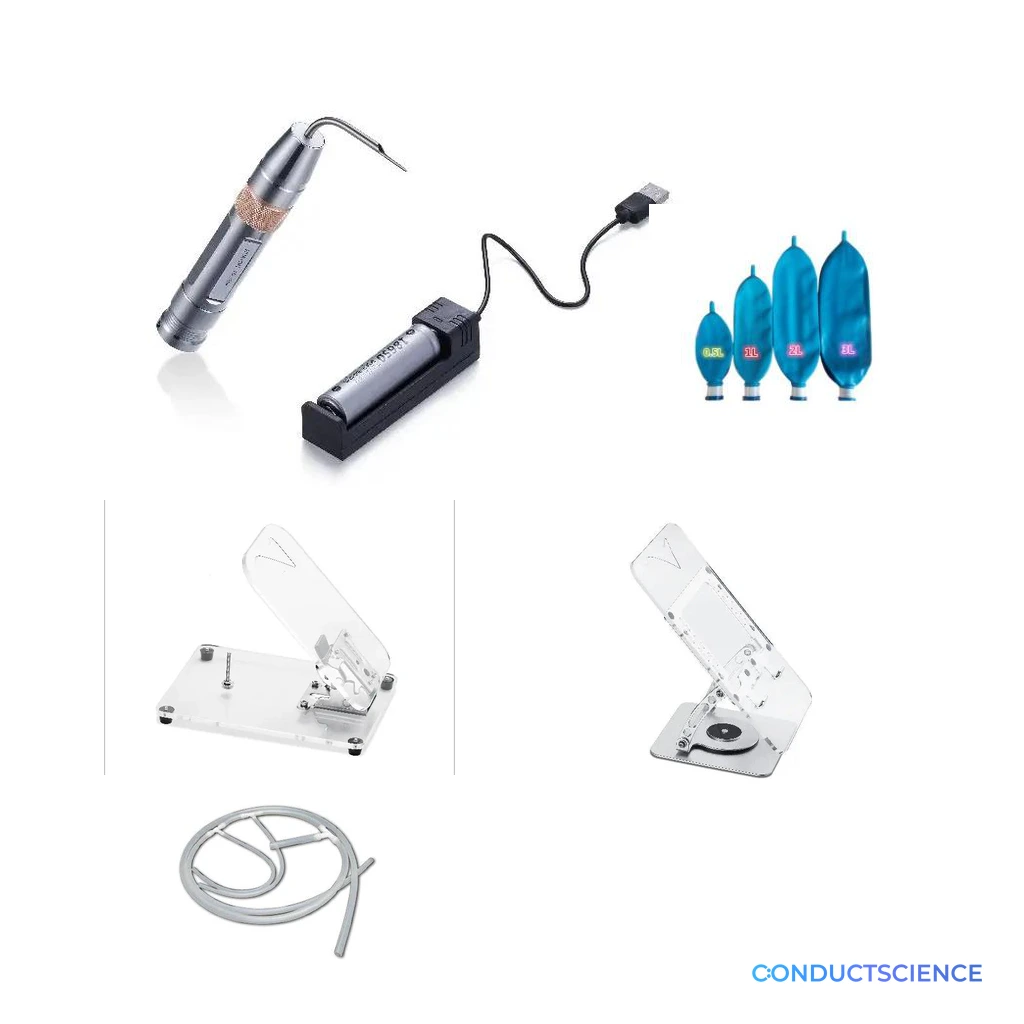
Compare product families
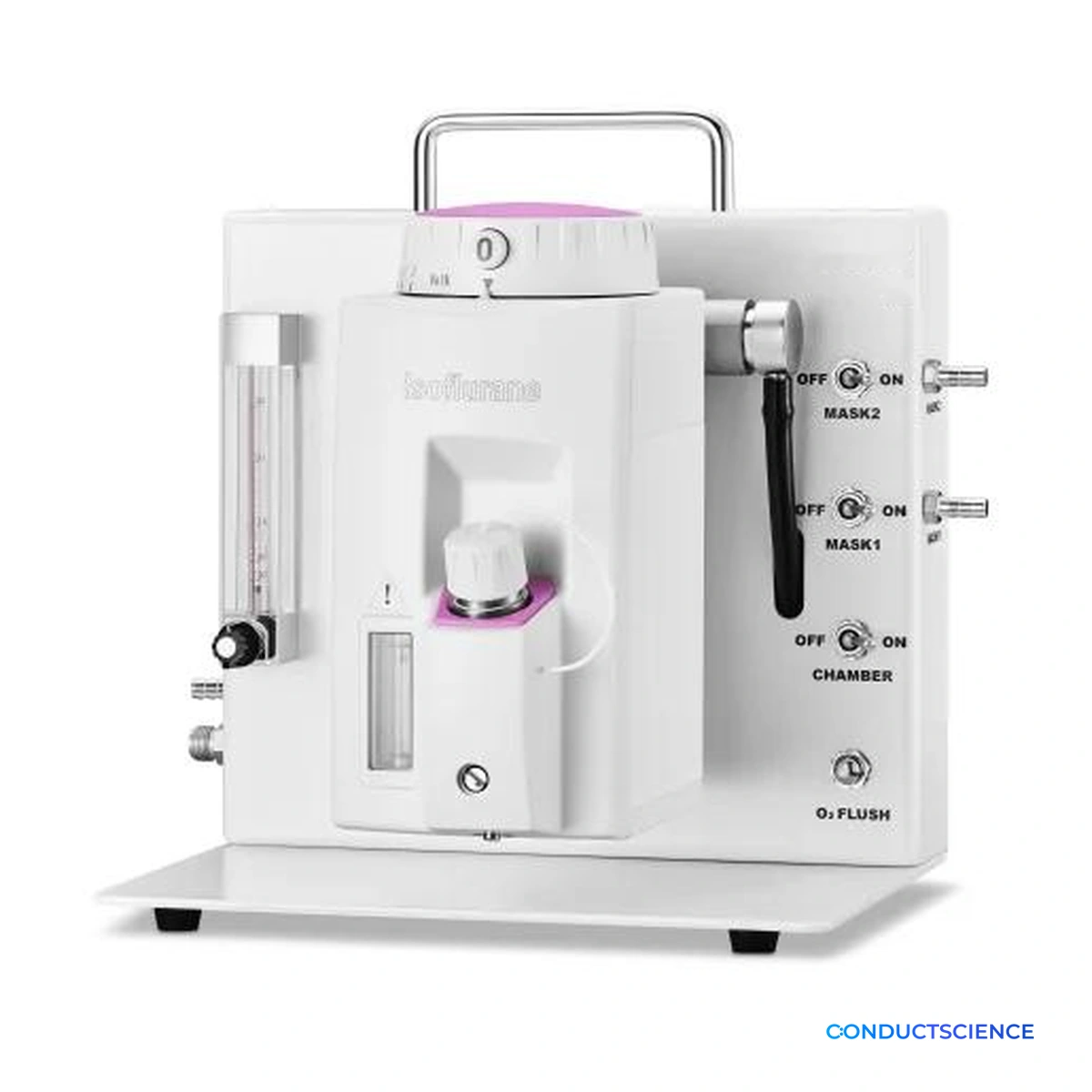
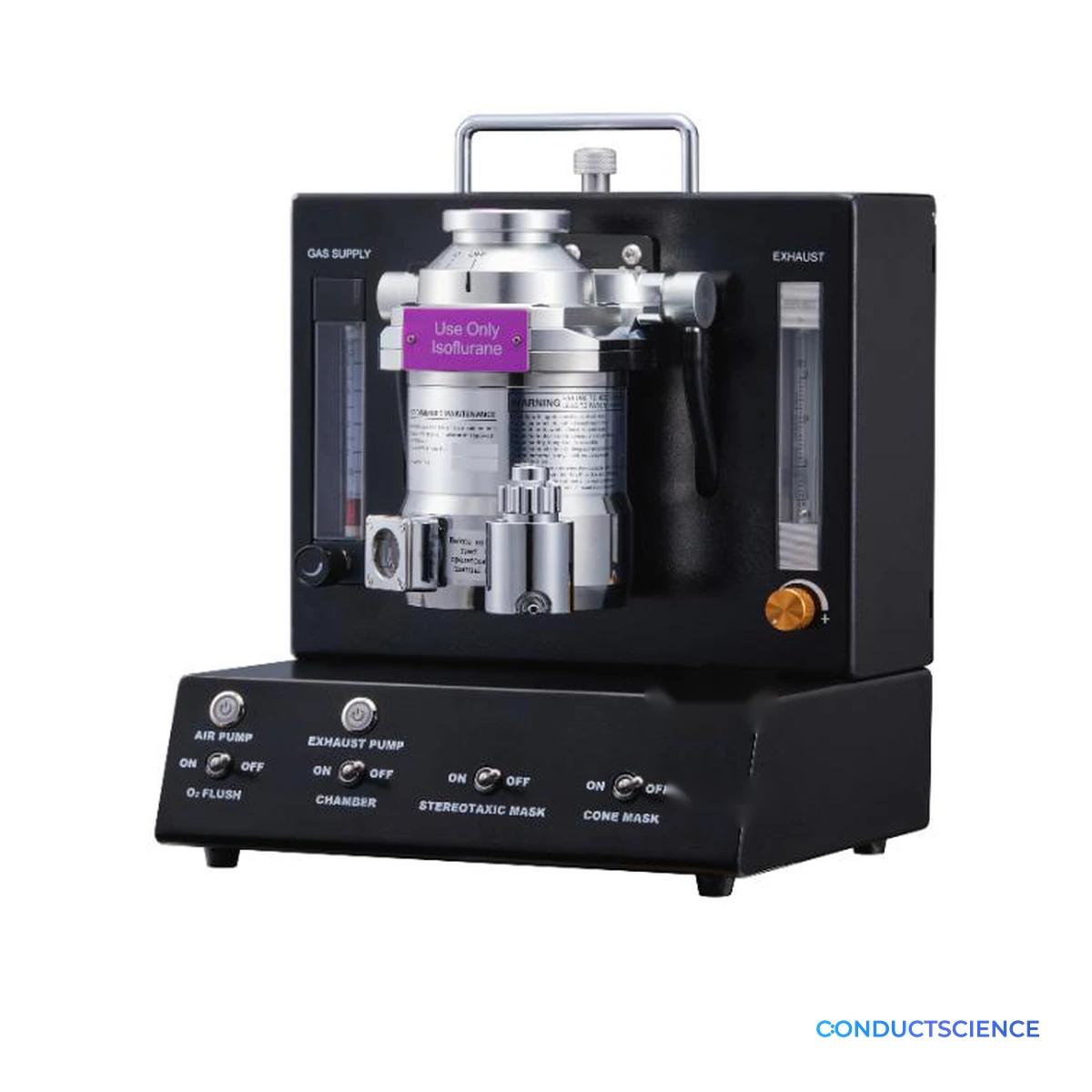
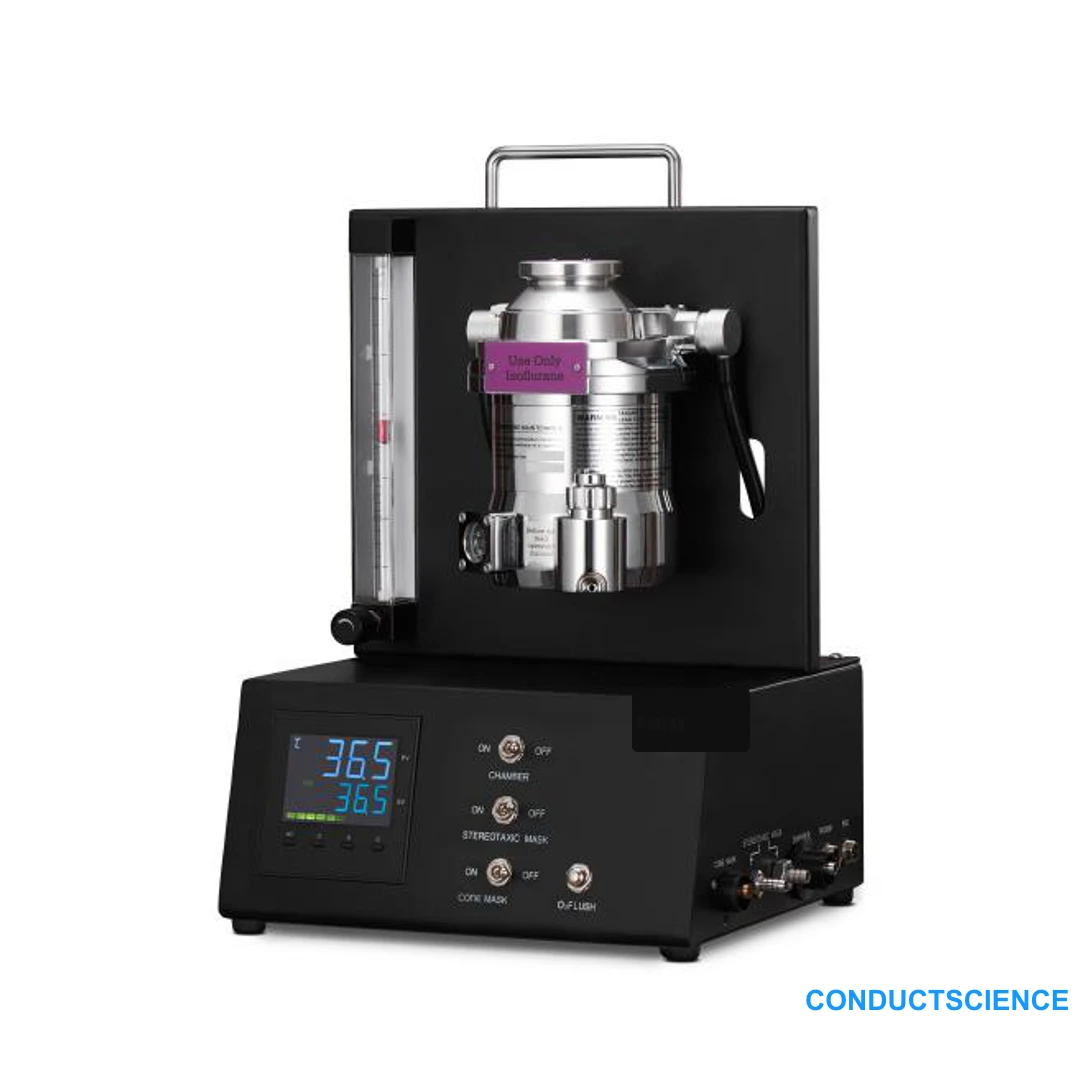
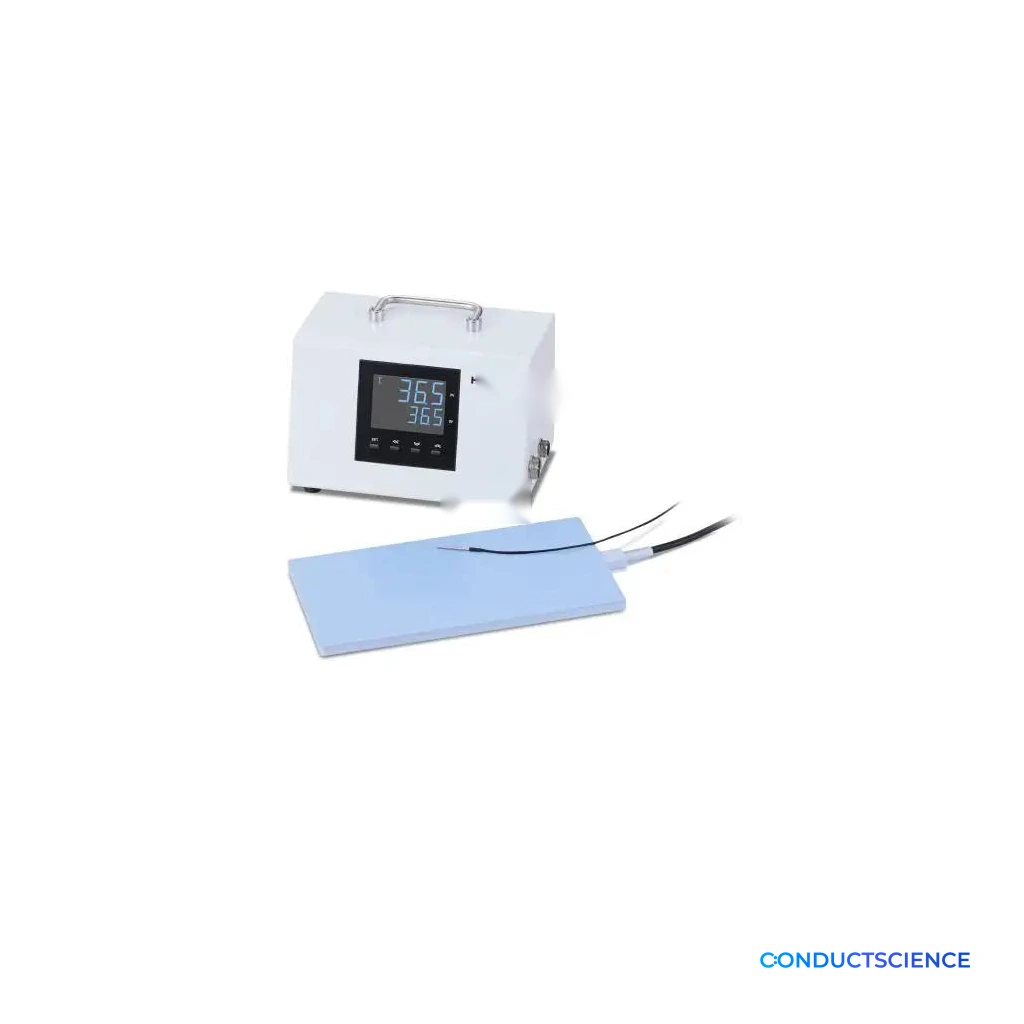
An anesthesia station is a gas path: a source, a vaporizer, a delivery interface, and scavenging. Each link has to match the species and the procedure. The live product grid above is the source for current models, prices, and stock.
| Component | What it does | Typical choice | Watch-out |
|---|---|---|---|
| Anesthesia machine | Meters oxygen and agent into the circuit | Single or multi-station | Station count drives fresh gas flow and agent use |
| Vaporizer | Delivers a set agent concentration | Agent-specific, temperature compensated | Calibrated for one agent; do not swap agents |
| Induction chamber | Induces anesthesia before the animal is handled | Sized to species | Needs its own scavenging path on opening |
| Ventilator | Controls tidal volume and rate | Rodent or large animal | Required for thoracic surgery and paralytics |
| Scavenging | Captures waste gas | Active line or charcoal canister | Canister capacity is consumed by agent mass, not by time |
Calculator
Isoflurane use and canister planner
Estimate liquid agent use, waste-vapour load, and how long a scavenging canister lasts at your flow rate, vaporizer setting, and caseload. A planning estimate, not a protocol.
Free calculators & tools
Plan, score, and analyze your study
Quote checklist
Send an anesthesia quote that can be answered quickly
Anesthesia is quoted as a gas path, not a device. The species, the procedure, the gas source, and the scavenging method together determine every component.
FAQ
Common questions
Chamber induction or mask induction?
Chamber induction is faster and less stressful for rodents, and is the norm before stereotaxic or survival surgery. Mask or nose-cone induction avoids moving the animal and suits short imaging or handling procedures. Most setups use a chamber for induction and a nose cone for maintenance.
Active scavenging or a charcoal canister?
An active line is preferable where the building provides one, since its capacity is not consumed. Charcoal canisters are portable and simple, but they saturate by agent mass rather than by time. Use the planner above to see how quickly your caseload consumes one.
Can I use one vaporizer for different agents?
No. Vaporizers are calibrated for a single agent, and delivering a different agent through one produces an unknown concentration. Buy a vaporizer for the agent you intend to run.
When do I need a mechanical ventilator?
Whenever spontaneous breathing cannot be relied on: thoracic surgery, paralytic agents, or long procedures where respiratory depression is expected. Ventilators are also used to control end-tidal CO2 in imaging studies.
What does the planner actually tell me?
It converts fresh gas flow, vaporizer setting, procedure length, caseload, and station count into liquid agent use, waste-vapour load, and an approximate canister life. It is a planning estimate for budgeting and scavenging design. Vaporizer settings and canister policy remain under veterinary, EHS, and institutional protocol control.