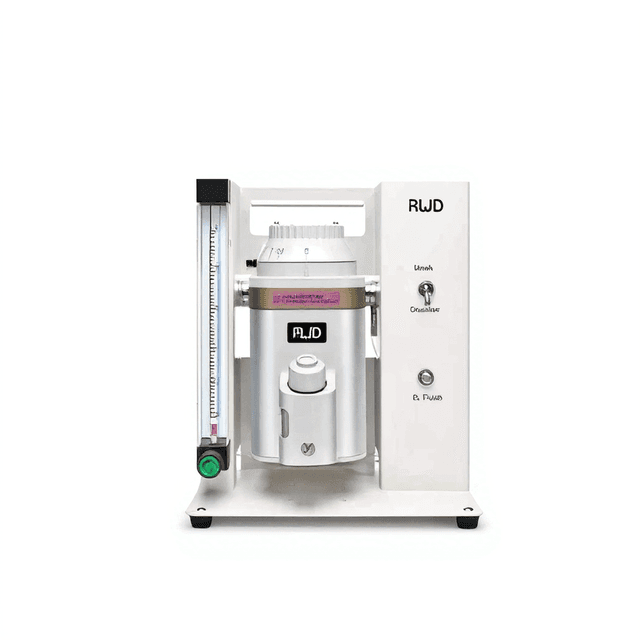
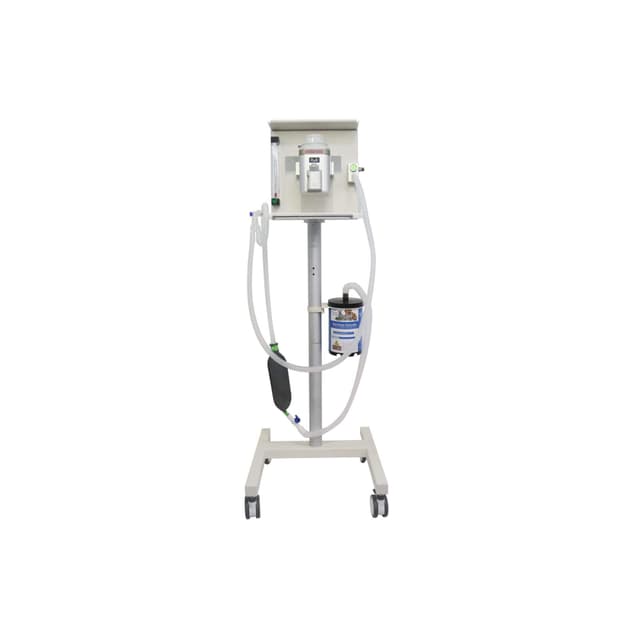
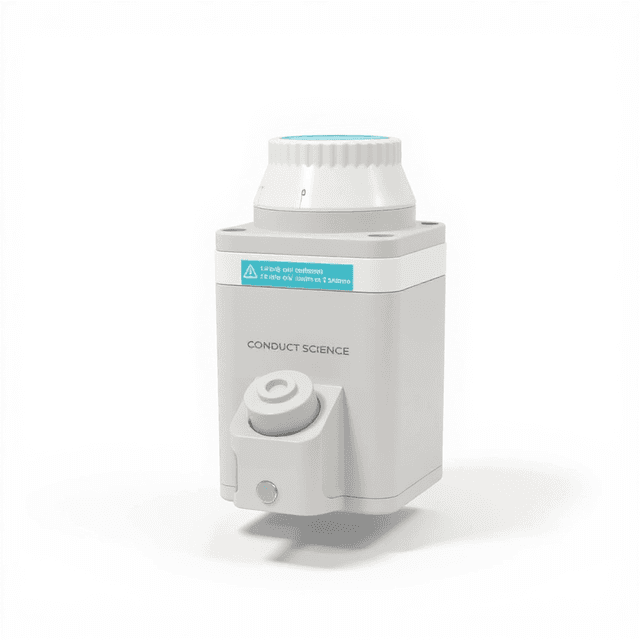
Two-Channel Flowmeter (Range 0.1-1 L / min)
Rodent anesthesia systems typically use a two-channel flowmeter to monitor and control the flow of gases, such as oxygen and anesthesia, to the rodent.
The two channels allow for separate measurement and control of the flow of each gas, ensuring proper and safe delivery of the gases during the surgical procedure.

Louise Corscadden, PhD
Director of Science · ConductScience
Ask Louise about Two-Channel Flowmeter (Range 0.1-1 L / min) fit, setup, configuration, or quote prep.
Already working with us? Sign in to connect this with My Scientist.
Key Specifications
Full details →- Model fit
- Mouse, Rat
- SKU family
- RWD-R510-09
- Shipping box
- 34.0 x 39.0 x 33.0 cm
- Ordering
- Online checkout and quote request available
- Category
- Anesthesia & Ventilation
- Build notes
- Confirm accessories, station layout, and support needs before purchase
Flowmeters are used to assess the flow rate of gases that pass through them. These delicate instruments are always calibrated for one gas only in an anesthetic system.
The flowmeter system consists of a control valve and flow meter sub-assembly. A needle valve is used as the control value and is responsible for controlling the flow of gas passing through the flow meter. Aggressive handling of these instruments can lead to breakage or false readings. Thus, flow meters should always be operated by hand and with care.
Manufacturer Source: https://www.rwdstco.com/product-item/vaporizers-and-accessories/
How It Works
The flowmeter operates on the variable area principle, utilizing a tapered glass tube containing a float indicator. As gas flows upward through the tube, the float rises to a position where the upward force from gas flow balances the downward gravitational force. The float position directly correlates to volumetric flow rate, with scale markings providing quantitative readings.
Each channel is factory-calibrated for a specific gas (nitrous oxide or oxygen) to account for differences in gas density and viscosity. The needle valve control system provides fine adjustment of flow restriction, allowing precise regulation of gas delivery rates. The dual-channel design enables independent control and monitoring of two gas streams simultaneously.
Flow measurement accuracy depends on maintaining proper orientation, stable temperature conditions, and using the flowmeter only with its calibrated gas type. The instrument provides real-time visual indication of flow rates, enabling immediate adjustment of anesthetic delivery parameters during procedures.
Features & Benefits
Automation Level
- manual
Research Domain
- Behavioral Pharmacology
- Cardiovascular
- Metabolic Research
- Neuroscience
- Pain Research
- Toxicology
Species
- Mouse
- Rat
Shipping weight
- 2.2 lb
Shipping box
- L: 34.0 cm
- W: 39.0 cm
- H: 33.0 cm
| Feature | This Product | Typical Alternative | Advantage |
|---|---|---|---|
| Channel Configuration | Dual-channel design for simultaneous two-gas monitoring | Single-channel models require separate units for multi-gas applications | Reduces system complexity and provides integrated monitoring of both carrier gas and anesthetic agent flows. |
| Flow Range | 0.1-1 L/min measurement range | Entry-level models often offer higher minimum flow rates | Enables precise low-flow applications essential for small animal anesthesia protocols. |
| Gas Compatibility | Factory-calibrated for nitrous oxide and oxygen | Generic calibrations may offer reduced accuracy | Ensures measurement accuracy for the specific gases used in animal anesthesia applications. |
| Control Mechanism | Precision needle valve system | Basic valve designs may offer coarser adjustment | Provides fine flow control necessary for maintaining consistent anesthetic depth during procedures. |
This dual-channel flowmeter offers integrated monitoring of two gas streams with precision calibration for nitrous oxide and oxygen applications. The 0.1-1 L/min range and needle valve control system provide the accuracy and adjustability required for small animal anesthesia protocols.
Practical Tips
Verify zero reading with gas supply closed before each use session to detect float sticking or scale drift.
Why: Ensures baseline accuracy and identifies potential calibration issues early.
Clean glass tubes monthly with appropriate solvents to remove any gas residue or particulate buildup.
Why: Maintains float movement smoothness and prevents measurement drift from contamination.
Allow gas flow to stabilize for 30 seconds after valve adjustment before reading flow rates.
Why: Ensures float has reached equilibrium position for accurate flow measurement.
Handle glass flow tubes carefully during installation and maintenance to prevent breakage.
Why: Broken tubes compromise measurement accuracy and may create safety hazards in anesthetic systems.
If float sticks at zero position, gently tap the glass tube or increase flow momentarily to dislodge the float.
Why: Mechanical sticking can occur from static buildup or particulate contamination.
Record flow rates at eye level with the float indicator to minimize parallax reading errors.
Why: Viewing angle affects apparent float position and can introduce systematic measurement errors.
Use only the designated gases for each calibrated channel to maintain measurement accuracy.
Why: Different gas densities and viscosities will cause significant measurement errors with wrong gas assignment.
Setup Guide
What’s in the Box
- Two-channel flowmeter assembly (typical)
- Needle valve control set (typical)
- Mounting hardware (typical)
- Gas connection fittings (typical)
- Calibration documentation (typical)
- User manual (typical)
Warranty
ConductScience provides a standard one-year manufacturer warranty covering defects in materials and workmanship, along with technical support for proper installation and operation.
Compliance
What gases is this flowmeter calibrated for?
The flowmeter is factory-calibrated for nitrous oxide and oxygen gases. Using it with other gases will result in inaccurate flow measurements due to differences in gas density and viscosity properties.
Can I use this flowmeter for gases other than nitrous oxide and oxygen?
No, the flowmeter should only be used with its calibrated gases (nitrous oxide and oxygen). Each channel is specifically calibrated for one gas type, and using different gases will compromise measurement accuracy.
What is the minimum flow rate this instrument can accurately measure?
The minimum measurable flow rate is 0.1 L/min on both channels. Below this threshold, float movement becomes insufficient for reliable reading, and measurement uncertainty increases significantly.
How often should the flowmeter be recalibrated?
Consult product datasheet for specific recalibration intervals. Generally, annual calibration verification is recommended, or more frequently if the instrument experiences physical shock or shows inconsistent readings.
Can both channels be used simultaneously?
Yes, the dual-channel design allows simultaneous operation of both gas flow measurements. This enables real-time monitoring of carrier gas and anesthetic agent delivery during procedures.
What happens if the flowmeter is not mounted vertically?
Non-vertical mounting will cause measurement errors because the float indicator relies on gravitational force for proper positioning. The instrument must be mounted vertically and level for accurate readings.
How precise is the flow control with the needle valves?
Needle valves provide fine flow adjustment typically allowing changes of 0.05 L/min or smaller within the measurement range. Precision depends on valve quality and operator technique.
Have a question about this product?
Have a question? Just ask.
Send it over and we'll email you a personalized answer — no call, no scheduling.
Prefer to talk it through?
Frequently Bought Together
Upgrade Options