1 / 10
Mechanical Conflict Test
SKU MCT-1L
$4,885.00
IncludesStandard care
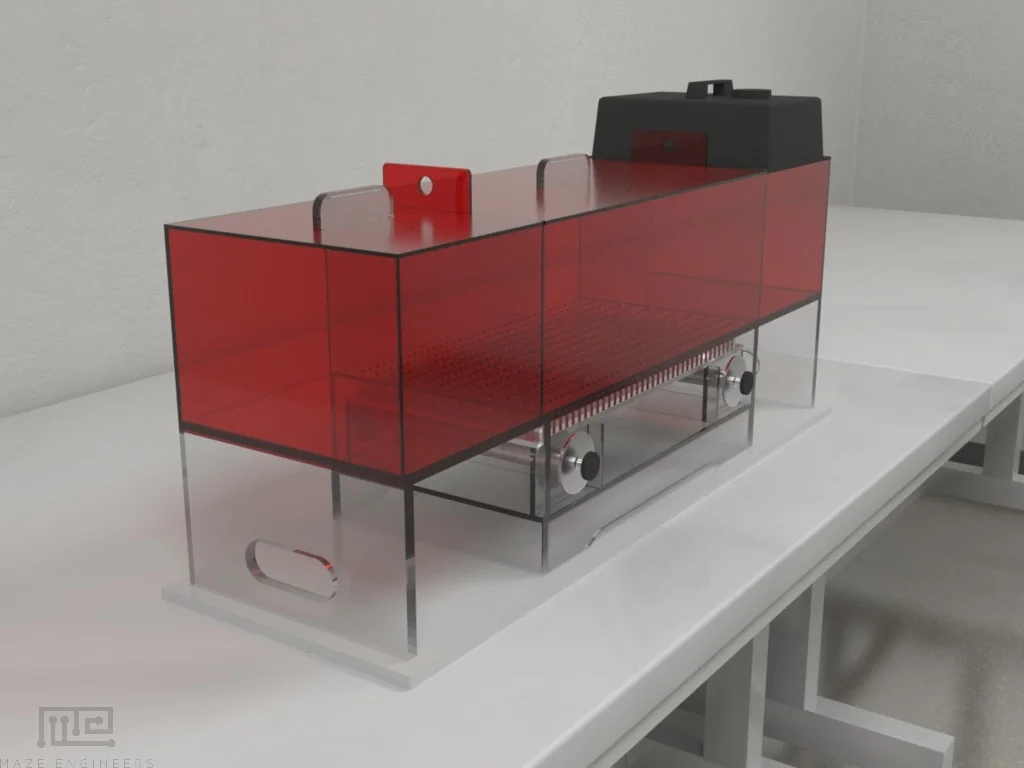
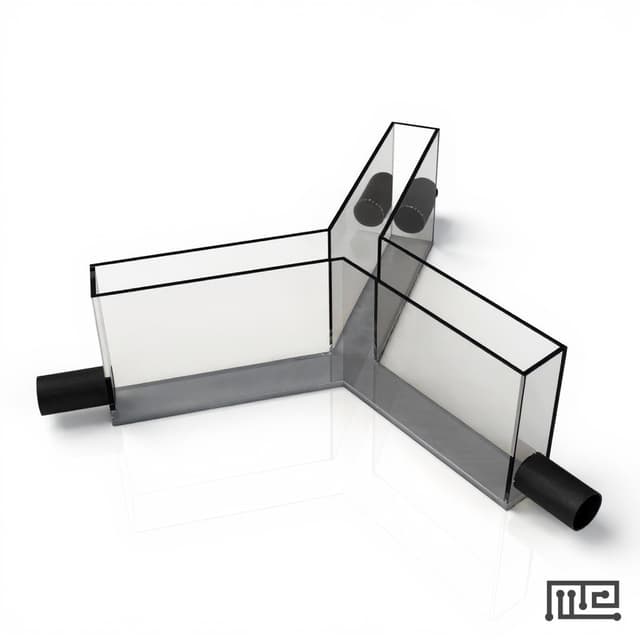
The Mechanical Conflict Test (MCT) is a behavioral neuroscience apparatus that evaluates pain-related decision making in rodents by creating a conflict between light avoidance and crossing mechanically challenging surfaces.
This system is essential for neuropathic pain research and mechanical hypersensitivity studies.
Scientist guidance

Louise Corscadden, PhD
Director of Science · ConductScience
Ask Louise about Mechanical Conflict Test fit, setup, configuration, or quote prep.
Already working with us? Sign in to connect this with My Scientist.
Key Specifications
Full details →- Model fit
- Mouse, Rat
- SKU family
- MCT-1L
- Shipping box
- 43.2 x 15.0 x 27.9 cm
- Ordering
- Online checkout and quote request available
- Category
- Behavioral Mazes
- Build notes
- Confirm accessories, station layout, and support needs before purchase
Overview
The Mechanical Conflict Test (MCT) is a specialized behavioral neuroscience apparatus designed to evaluate pain-related decision making and nociceptive responses in rodents. This innovative system creates a controlled conflict scenario where animals must choose between remaining in an aversive brightly lit chamber or crossing a mechanically challenging surface with sharp probes to reach a preferred dark environment. The MCT is particularly valuable for studying neuropathic pain models and mechanical hypersensitivity, providing researchers with quantitative measures of pain avoidance behavior. The system ships as a single-lane apparatus and includes the Conduct MCT software for automated control and multi-endpoint behavioral scoring.
Key Features
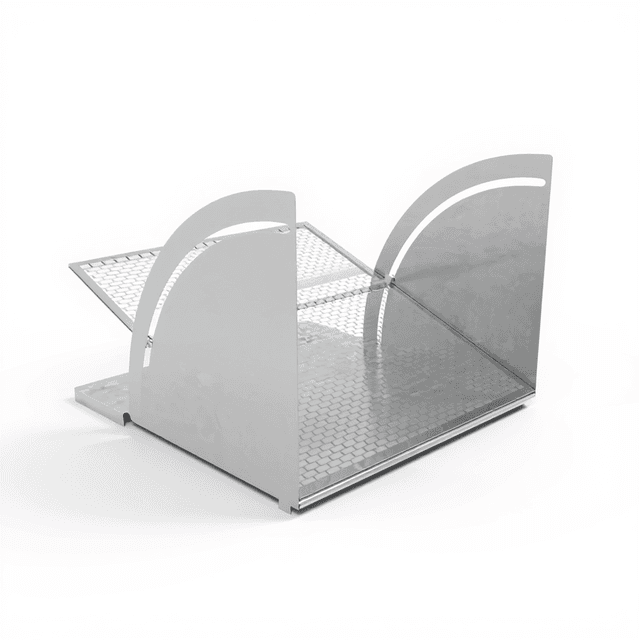
The apparatus features dual 12 × 12 × 18 cm chambers connected by a 6 cm wide runway containing the critical probe section. The 15 cm probe plate contains approximately 1,000 stainless steel pins arranged in a high-density pattern (3 mm center-to-center spacing) that prevents animals from stepping between probes. This design ensures consistent mechanical stimulation across the testing surface. The system includes interchangeable probe plates offering variable protrusion heights from 0 to 5 mm, allowing researchers to adjust stimulus intensity based on experimental requirements.
Applications
The MCT serves as a comprehensive tool for pain research applications, including nociception evaluation, mechanical hypersensitivity testing, and allodynia assessment. Its primary strength lies in evaluating pain-related decision making processes, where animals must weigh the aversive nature of bright light against mechanical discomfort. This paradigm is particularly relevant for neuropathic pain models, where researchers can quantify changes in pain threshold and avoidance behavior following various interventions or treatments.
Species Compatibility
Optimized for both mouse and rat studies, the MCT accommodates the natural light-dark preference behaviors common to these species. The chamber dimensions and probe specifications are appropriately scaled for rodent locomotion patterns, ensuring reliable behavioral responses across different experimental models. The automated sensor detection system accurately tracks chamber entrances and exits, providing precise temporal measurements of conflict resolution behavior.
How It Works
Each trial pits two competing motivations against one another. The animal starts in a brightly lit start chamber — aversive to a rodent, which naturally prefers the dark — and can only reach the preferred dark chamber by crossing a floor studded with sharp probes. The animal must weigh the discomfort of the light against the mechanical discomfort of the probe field, so its choice reports the affective and motivational dimension of pain rather than a simple reflex.
Interchangeable plates raise the probes to a set height (0–5 mm). At 0 mm the floor is flat and neutral, establishing each animal's baseline light-avoidance; taller probes add graded mechanical challenge. Animals with mechanical hypersensitivity or allodynia hesitate longer at the probe edge, retreat more often, or refuse to cross — shifts that are sensitive to analgesic treatment in neuropathic and inflammatory pain models.
A typical run proceeds automatically: the animal is placed in the light chamber, the Conduct MCT software turns on the light and opens the door after a set delay, and infrared sensors time the animal from door-open through the runway into the dark chamber. Each trial ends when the animal crosses or the cutoff time elapses, and the software prompts the operator to reset for the next trial.
Features & Benefits
Two-chamber design with light/dark preference conflict
Leverages natural rodent behaviors to create measurable conflict scenarios for pain research
Interchangeable probe plates with variable protrusion heights
Allows precise control of mechanical stimulus intensity for dose-response studies
High pin density preventing stepping between probes
Ensures consistent mechanical stimulation and prevents avoidance behaviors that compromise data quality
Automated light control
Standardizes environmental conditions and reduces experimental variability
Sensor detection for chamber entrances and exits
Provides objective, automated behavioral measurements without observer bias
Software-based behavioral measurements
Enables comprehensive data analysis and statistical evaluation of pain-related behaviors
Multiple material construction options
Allows selection of appropriate materials for specific experimental requirements and cleaning protocols
Standardized probe spacing (3 mm center-to-center)
Ensures reproducible stimulation patterns across experiments and research facilities
Conduct MCT software with serial (USB/RS-232) control
Automates door timing, light intensity and per-trial data capture, with one-click CSV export for analysis
Validated multi-endpoint scoring (escape latency, retreats, crossing success)
Captures both the sensory and affective/motivational dimensions of pain that reflexive tests miss
Single-lane apparatus driven from one control box
One control box and one Conduct MCT software instance run multiple single-lane units in parallel, scaling throughput without extra licenses or I/O boxes
Apparatus Dimensions
| Light (start) chamber | 12 × 12 × 18 cm |
| Dark (goal) chamber | 12 × 12 × 18 cm |
| Runway width | 6 cm |
| Probe section length | 15 cm |
| Probe plate lane width | 6 cm |
| Probe spacing | 3 mm center-to-center |
| Probe diameter | 0.5 mm |
| Interchangeable plate heights | 0, 1, 2, 3, 4, 5 mm protrusion |
Probe Field & Plate Design
A 6 × 15 cm probe area at 3 mm spacing carries roughly 20 pins across × 50 pins along — about 1,000 stainless-steel probes. The dense array forms a near-continuous aversive surface so the animal cannot simply step between pins, keeping mechanical stimulation consistent across the crossing.
Each interchangeable plate is a machined base (acrylic, aluminum, Delrin, or stainless steel) carrying the pin array, with mounting holes for quick swaps and a flat underside for stable installation.
Automation
- Automated overhead light with software-set intensity (0–100)
- Infrared sensor detection of chamber entries and exits
- Motorized door with configurable open delay, open/close speed and travel distance
- USB (USB-to-RS232) connection to the Conduct MCT control box
Behavioral Measurements
The Conduct MCT software scores both the sensory and affective/motivational dimensions of pain across five endpoints:
| Escape latency (primary) | Time from door-open until the animal begins crossing the probe floor — the most sensitive and most commonly reported endpoint. Longer latency = greater aversion to the probes. |
| Crossing time | Time to traverse the probe section once movement begins; slower crossing can indicate cautious stepping. |
| Crossing success rate | Percentage of trials in which the animal crosses; severe pain models may show refusal to cross. |
| Number of refusals | Times the animal approaches the probe floor and retreats — a direct index of pain-avoidance conflict. |
| Time spent hesitating | Time at the edge of the probe section before committing to cross — a strong indicator of decision conflict. |
Configuration
The Mechanical Conflict Test is a single-lane apparatus — the standard configuration in the published literature. One control box and one Conduct MCT software instance can drive multiple single-lane units in parallel, so throughput scales without additional software licenses or I/O boxes.
Pain research
Pain-related decision making assessment in neuropathic pain models
Nociception studies
Nociception evaluation and threshold determination in rodent models
Neuropharmacology
Pain avoidance behavior testing for analgesic drug development
Neuropathy research
Mechanical hypersensitivity testing in diabetic and chemotherapy-induced neuropathy
Sensory neuroscience
Allodynia assessment in chronic pain and inflammatory models
Behavioral neuroscience
Conflict behavior analysis in pain and stress research paradigms
Practical Tips
Baseline first
Run each animal on the 0 mm (flat) plate before adding probe height.
Why: Separates innate light-avoidance from mechanical sensitivity, so escape-latency changes can be attributed to the probes rather than to individual differences in light aversion.
Primary endpoint
Use escape latency (time from door-open to crossing) as the main outcome.
Why: It is the most sensitive and widely reported MCT measure in neuropathic pain studies; crossing time is less sensitive.
Probe height
Start moderate (2–3 mm) for neuropathic models and reserve 4–5 mm for severe phenotypes or analgesic-efficacy studies.
Why: Matches stimulus intensity to the expected effect size and avoids floor/ceiling effects.
Conflict measures
Track retreats and time-spent-hesitating at the probe edge alongside latency.
Why: These capture the decision-conflict component of pain that reflexive tests miss.
Cutoff handling
Set a fixed trial cutoff and record refusals (FailedToExit) rather than discarding them.
Why: Refusal to cross is itself informative in severe pain models and preserves the crossing-success-rate denominator.
Setup Guide
Install the software
Install the Conduct MCT application (default C:\MazeEngineers\appConductMct\bin) and launch MazeOriginWpf.exe.
Connect the hardware
Connect the MCT to the PC with the supplied USB-to-RS232 cable and power on the unit. If Windows does not detect the COM port, install the included UNITEK driver disc.
Establish the COM connection
In the Comport Status panel choose the COM port shown in Device Manager and click Connect. A green Status field confirms the link.
Create a protocol
Right-click "All Protocols", choose New, name the experiment and set the trial count, then Save.
Set parameters
Configure trial cutoff (0–600 s), number of trials (1–30), open-door delay, door open/close speed and distance, and light intensity (0–100).
Run the session
Double-click the protocol, place the animal in the light chamber, enter a run name and click Start. The software opens the door after the delay and tracks the crossing.
Advance trials
When the animal crosses to the dark chamber or the cutoff elapses, the trial completes; on the prompt, replace the animal in the light chamber and click OK to begin the next trial.
Review & export data
View Result-by-Trial, Retreat Details and Activity Details grids, then click Export to save the data. Logs are written to bin\Log for troubleshooting.
What’s in the Box
- Light chamber
- Dark chamber
- Probe plate with stainless-steel pins
- Interchangeable probe plates (0–5 mm heights)
- Automated light system
- Sensor detection system
- Conduct MCT control box
- USB-to-RS232 cable and UNITEK driver disc
- Conduct MCT software license
References
Background reading relevant to this product:
1.Harte SE, Meyers JB, Donahue RR, Taylor BK, Morrow TJ (2016) “Mechanical Conflict System: A Novel Operant Method for the Assessment of Nociceptive Behavior” PLoS ONE 11(2):e0150164 doi:10.1371/journal.pone.0150164
2.Gaffney CM, Muwanga G, Shen H, Tawfik VL, Shepherd AJ (2022) “Mechanical Conflict-Avoidance Assay to Measure Pain Behavior in Mice” Journal of Visualized Experiments (180):63454 doi:10.3791/63454
3.Ferland S, Wang F, De Koninck Y, Ferrini F (2024) “An improved conflict avoidance assay reveals modality-specific differences in pain hypersensitivity across sexes” Pain 165(6):1304–1316 doi:10.1097/j.pain.0000000000003132
Q
What probe heights are most appropriate for different pain models?
A
The interchangeable plates offer 0-5 mm protrusion options. Start with 0 mm for baseline measurements, then use 2-3 mm for moderate mechanical stimulation in neuropathic models. Higher protrusions (4-5 mm) may be needed for severe pain phenotypes or when assessing analgesic efficacy.
Q
How does the high pin density affect experimental outcomes?
A
The approximately 1,000 pins with 3 mm center-to-center spacing prevent animals from avoiding mechanical stimulation by stepping between probes. This ensures consistent contact with the testing surface and improves data reliability compared to sparse probe arrangements.
Q
What behavioral parameters does the MCT measure?
A
The sensor detection system tracks chamber entrances, exits, and time spent in each compartment. Key measurements include crossing latency, time in light vs. dark chambers, number of crossing attempts, and conflict resolution patterns over time.
Q
How should I clean the apparatus between subjects?
A
The choice of construction materials (acrylic, aluminum, Delrin, or stainless steel) allows for appropriate cleaning protocols. Stainless steel components can withstand stronger disinfectants, while acrylic surfaces require gentler cleaning agents to prevent damage.
Q
Is the MCT suitable for both acute and chronic pain studies?
A
Yes, the MCT is designed for both paradigms. For acute studies, use higher probe heights to elicit immediate avoidance. For chronic pain models, lower probe heights can detect hypersensitivity and allodynia that develop over time.
Q
What is the recommended acclimation protocol?
A
Allow animals to explore the apparatus with 0 mm probe plates first to establish baseline preference patterns. This helps distinguish pain-induced changes from natural exploration behaviors and chamber preferences.
Q
How does chamber size affect rodent behavior in the MCT?
A
The 12 × 12 × 18 cm chambers provide sufficient space for natural movement while maintaining the light-dark conflict. The dimensions are optimized for both mice and rats, ensuring appropriate scaling for different species sizes.
Q
What software runs the apparatus and what does it record?
A
The included Conduct MCT application controls the light, motorized door and trial timing over USB (RS-232) and records per-trial escape latency, light-chamber duration, runway duration, retreat episodes (enter/exit runway times), crossing success and full activity logs. Results export to CSV.
Q
Is the MCT single-lane or multi-lane?
A
The MCT is a single-lane apparatus — the standard configuration in the published literature. A single control box and one Conduct MCT software instance can drive multiple single-lane units in parallel, so you can scale throughput without additional software licenses.
Q
Which parameters can I configure per protocol?
A
Trial cutoff time (0–600 s), number of trials (1–30), open-door delay, door open/close speed and travel distance, and light intensity (0–100).
Q
Which outcome should I use as the primary endpoint?
A
Escape latency — the time from door-open to the animal crossing the probe floor — is the most sensitive and most commonly reported endpoint. Retreats and time spent hesitating add information about decision conflict; crossing time is less sensitive.
Q
Is the Conduct MCT software included?
A
Yes — the Conduct MCT software is included with every system; the apparatus is not sold without it. The software controls the light, motorized door and trial timing over USB (RS-232) and records escape latency, retreats, crossing success, entry into the dark chamber and full activity logs, exporting to CSV.
Have a question about this product?
Track rodents with ConductVision
ConductVision is our video-tracking software. Record your sessions on video, and it scores standard rodent tests, such as those listed below.
Examples of tests it scores
To check whether ConductVision scores your protocol in this apparatus, ask in your quote request.
Ask a question
Have a question? Just ask.
Send it over and we'll email you a personalized answer — no call, no scheduling.
Personalized email reply
Usually within one business day
Helpful answers published here
Prefer to talk it through?

Mechanical Conflict Test
$4,885.00
Added to quoteView Quote