
1 / 3
Social Cooperation Chamber
SKU ME-3814
$2,990.00
IncludesStandard care
Dual-lane behavioral chamber with perforated divider for studying cooperative behaviors in mice and rats, featuring IR beam detection and automated lickometers.
Scientist guidance

Louise Corscadden, PhD
Director of Science · ConductScience
Ask Louise about Social Cooperation Chamber fit, setup, configuration, or quote prep.
Already working with us? Sign in to connect this with My Scientist.
Key Specifications
Full details →- Model fit
- Mouse, Rat
- SKU family
- ME-3814
- Sizing
- Mouse/Rat: Width 40 cm · Length 120 cm
- Ordering
- Online checkout and quote request available
- Category
- Behavioral Mazes
- Build notes
- Confirm accessories, station layout, and support needs before purchase
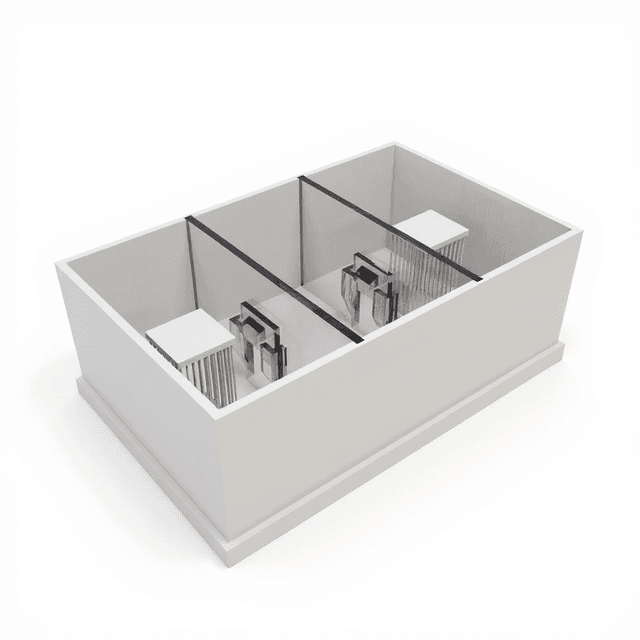
The Social Cooperation Chamber (ME-3814) is a specialized behavioral testing apparatus designed to assess cooperative behaviors in mice and rats. The chamber features a dual-lane design with a perforated divider that allows animals to interact while maintaining spatial separation, enabling controlled studies of social cooperation, coordination, and decision-making processes.
The system incorporates six infrared beam detectors arranged across three distinct regions for precise spatial tracking and two automated lickometers for synchronized reward delivery. This configuration allows researchers to study cooperative tasks where animals must coordinate their behaviors to achieve mutual goals, such as simultaneous lever pressing or coordinated timing tasks. The chamber dimensions (120cm length × 40cm width × 50cm height) provide adequate space for natural movement while constraining the experimental environment for consistent data collection.
How It Works
The Social Cooperation Chamber operates on the principle of spatially controlled social interaction, where two animals are placed in adjacent lanes separated by a perforated divider. This design allows for visual, auditory, and limited tactile communication while preventing direct physical interaction that could confound behavioral measurements. The perforated barrier maintains experimental control while preserving essential social cues necessary for cooperative behavior.
Six infrared beam detectors monitor animal positioning across three defined regions within the chamber, providing real-time spatial data with millisecond precision. The automated lickometers detect drinking behaviors and can be programmed to deliver rewards contingent on coordinated actions between animals. This system enables researchers to implement various cooperative paradigms, such as requiring simultaneous presence in specific zones or coordinated timing of behaviors for reward access.
Data collection integrates spatial tracking with behavioral events, allowing researchers to analyze temporal relationships between animal positions and cooperative responses. The system can quantify cooperation success rates, response latencies, spatial preferences, and coordination patterns across experimental sessions.
Features & Benefits
Dual-lane design with perforated divider
Enables controlled social interaction while maintaining experimental precision and preventing direct physical interference between test subjects.
Six infrared beam detectors across three regions
Provides high-resolution spatial tracking for detailed analysis of positioning patterns and movement coordination during cooperative tasks.
Two automated lickometers
Allows simultaneous monitoring of drinking behaviors from both animals with precise timing for coordinated reward paradigms.
120cm chamber length
Accommodates natural movement patterns while providing sufficient space for complex behavioral protocols and spatial preference testing.
Mouse and rat compatibility
Supports comparative studies across species and enables flexibility in model selection based on research objectives.
50cm chamber height
Prevents escape while allowing natural posture and rearing behaviors essential for social signaling and communication.
Regional beam detection system
Enables zone-specific analysis of cooperation behaviors and spatial coordination patterns between animal pairs.
Sizes by model
| Measurement | Mouse/Rat |
|---|---|
| Width | 40 cm |
| Length | 120 cm |
| Height | 50 cm |
- 6 IR Beams divided into 3 regions
- 2 automated water lickometers
Behavioral Construct
- Social Cooperation
- Coordinated Behavior
- Social Decision-Making
- Cooperative Learning
- Social Interaction
- Behavioral Synchronization
Automation Level
- semi-automated
Species
- Mouse
- Rat
Research Domain
- Addiction Research
- Behavioral Pharmacology
- Developmental Biology
- Learning and Memory
- Neurodegeneration
- Neuroscience
- Social Behavior
Compatible Tracking Software
- ConductVision
Shipping weight
- 21.0 lb
Shipping box
- L: 43.2 cm
- W: 38.0 cm
- H: 27.9 cm
| Feature | This Product | Typical Alternative | Advantage |
|---|---|---|---|
| Spatial Detection System | Six infrared beams across three defined regions for zone-specific tracking | Basic systems often use single beam detection or manual observation methods | Provides quantifiable spatial coordination data essential for cooperation analysis. |
| Chamber Configuration | Dual-lane design with perforated divider (120cm × 40cm × 50cm) | Standard chambers may use solid barriers or completely open designs | Balances social communication with experimental control for reliable cooperation testing. |
| Reward Delivery System | Two automated lickometers for synchronized behavioral monitoring | Manual reward systems or single-point delivery mechanisms | Enables coordinated reward paradigms and simultaneous behavioral measurement from both subjects. |
| Species Compatibility | Designed for both mouse and rat testing | Many systems are optimized for single species | Supports comparative studies and provides flexibility in model selection. |
The Social Cooperation Chamber provides automated spatial tracking and dual-subject monitoring capabilities in a controlled dual-lane environment. The combination of IR beam detection across three regions and synchronized lickometer systems enables quantitative analysis of cooperative behaviors while maintaining experimental precision through the perforated divider design.
Social Neuroscience Research
Investigating neural mechanisms underlying cooperative decision-making by testing pairs of animals in coordinated reward tasks while monitoring spatial positioning through IR beam detection.
Behavioral Pharmacology
Evaluating drug effects on social cooperation by administering compounds and measuring changes in coordinated behaviors and spatial interaction patterns.
Learning and Memory
Assessing cooperative learning acquisition and retention by training animal pairs to perform synchronized tasks for mutual reward access.
Addiction Research
Studying how substance exposure affects social cooperation and decision-making in addiction models using coordinated operant tasks.
Developmental Biology
Examining age-related changes in cooperative behaviors by testing juvenile and adult animals in standardized coordination tasks.
Neurodegeneration
Monitoring progressive changes in social cooperation abilities in disease models through longitudinal testing of coordinated behaviors.
Practical Tips
Calibration
Test all IR beams daily before experiments by systematically blocking each detector and verifying software response.
Why: Consistent beam calibration ensures accurate spatial tracking and prevents data loss from detection failures.
Maintenance
Clean beam emitters and detectors weekly with appropriate solvents to remove dust and debris accumulation.
Why: Contaminated optical surfaces reduce detection sensitivity and can cause false positive or missed beam breaks.
Best Practices
Conduct individual habituation sessions before cooperation testing to establish baseline behavior patterns for each animal.
Why: Individual baselines provide essential controls for interpreting cooperation-specific behavioral changes.
Data Quality
Monitor lickometer sensitivity settings to ensure consistent detection across different animal sizes and drinking styles.
Why: Calibrated detection thresholds prevent missed contacts in smaller animals and false positives from vibrations.
Troubleshooting
If animals show position bias toward one side, verify chamber leveling and check for environmental asymmetries like lighting or airflow.
Why: Spatial biases can confound cooperation measurements and reduce the validity of coordination analyses.
Safety
Ensure the perforated divider is securely fastened before each session to prevent animal access to adjacent lanes.
Why: Divider integrity maintains experimental control and prevents aggressive interactions that could injure subjects.
Best Practices
Use consistent animal pairing protocols and document social hierarchies to control for dominance effects in cooperation tasks.
Why: Social dynamics can significantly influence cooperation outcomes and must be controlled for reproducible results.
Setup Guide
Unpack and Inspect
Remove chamber components from packaging and inspect for damage, ensuring all IR beam emitters and detectors are clean and properly aligned.
Chamber Assembly
Position the chamber on a level surface and install the perforated divider, verifying secure attachment and proper alignment with the dual-lane configuration.
IR Beam Calibration
Power on the system and verify all six IR beams are functioning by testing beam breaks across the three detection regions using the calibration procedure.
Lickometer Setup
Install and calibrate both automated lickometers, testing detection sensitivity and ensuring proper connection to the reward delivery system.
Software Configuration
Configure data collection software with appropriate sampling rates and define experimental parameters for cooperation task protocols.
System Testing
Perform a complete system test using test objects to verify IR beam detection, lickometer response, and data logging functions.
Environmental Conditioning
Allow the chamber to equilibrate to room conditions and conduct habituation sessions to establish baseline behavioral patterns.
What’s in the Box
- Social Cooperation Chamber with perforated divider
- Six infrared beam detection units (typical)
- Two automated lickometers
- Power supply and control electronics (typical)
- Data acquisition interface cable (typical)
- User manual and setup guide (typical)
- Calibration accessories (typical)
Warranty
ConductScience provides a standard one-year manufacturer warranty covering defects in materials and workmanship, with technical support for setup and operation guidance.
Compliance
ARRIVE Guidelines 2.0Supports standardized reporting of animal research through controlled experimental conditions and quantifiable behavioral measurements.
Guide for Care and Use of Laboratory AnimalsChamber design accommodates appropriate spatial requirements and environmental conditions for rodent behavioral studies.
Good Laboratory Practice (GLP)Automated data collection and standardized protocols support reproducible behavioral assessments in regulated research environments.
Q
What cooperative paradigms can be implemented with this chamber design?
A
The chamber supports various cooperation tasks including simultaneous zone occupation, coordinated timing protocols, sequential behavior chains, and mutual reward contingencies using the IR beam detection and dual lickometer system.
Q
How does the perforated divider affect social communication between animals?
A
The perforated barrier permits visual, auditory, and limited tactile cues essential for social signaling while preventing direct physical interaction that could confound behavioral measurements or cause aggression.
Q
What spatial resolution is achieved with the three-region IR beam system?
A
The six IR beams across three regions provide zone-specific detection capabilities, though exact spatial resolution depends on beam spacing and should be confirmed from the product datasheet.
Q
Can the system accommodate different body sizes within mouse and rat species?
A
The 40cm width and 50cm height accommodate various strains and ages of mice and rats, though beam detection sensitivity may require adjustment for smaller juvenile animals.
Q
What data outputs are generated during cooperation testing?
A
The system generates timestamped records of beam breaks, lickometer contacts, zone occupancy patterns, and coordination metrics, though specific data formats should be confirmed from technical specifications.
Q
How is baseline individual behavior established before cooperation testing?
A
Individual habituation sessions using single animals per lane establish baseline locomotor patterns, zone preferences, and drinking behaviors that serve as controls for cooperative task performance.
Q
What maintenance is required for the IR beam detection system?
A
Regular cleaning of beam emitters and detectors maintains detection accuracy, while periodic calibration verification ensures consistent spatial tracking performance across experimental sessions.
Have a question about this product?
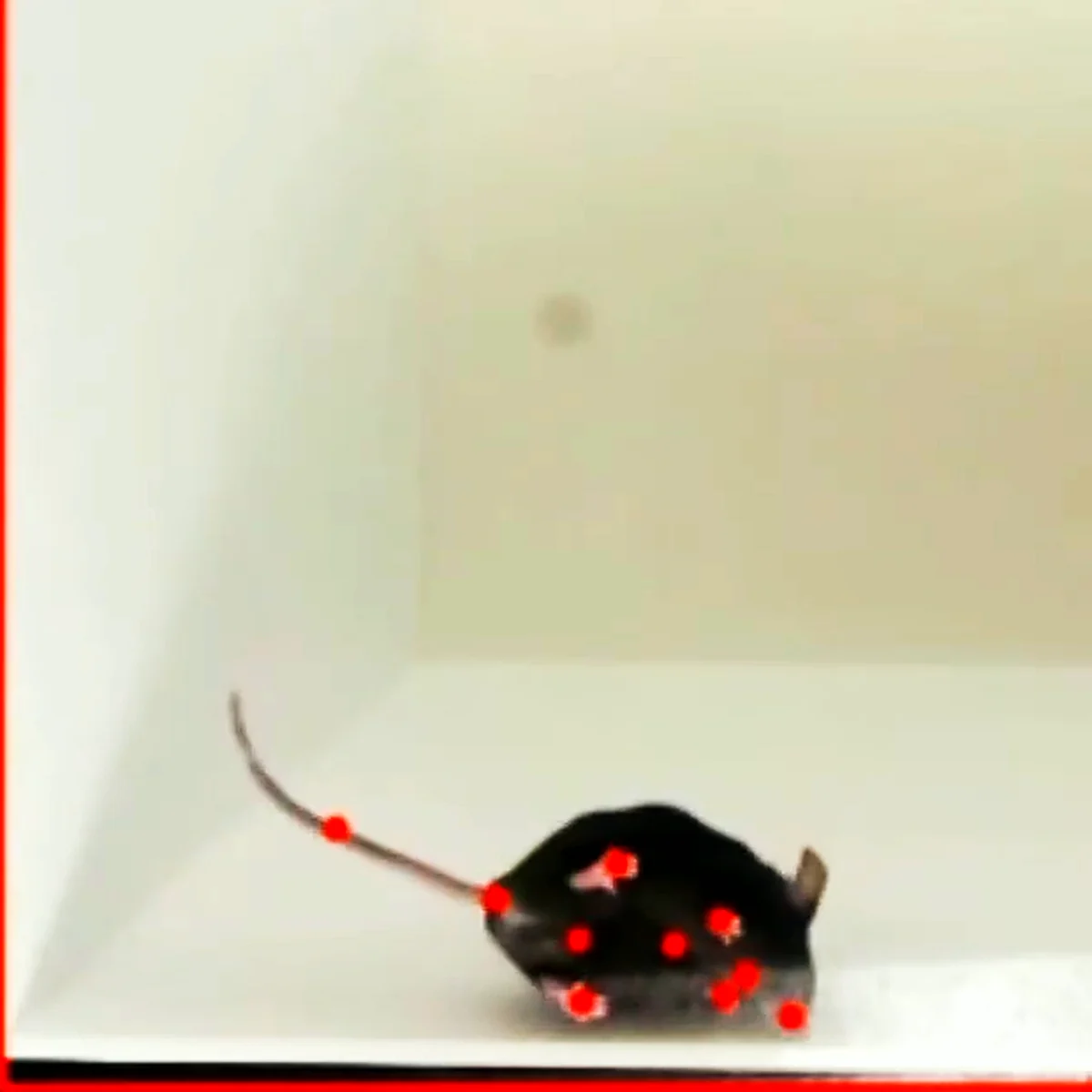
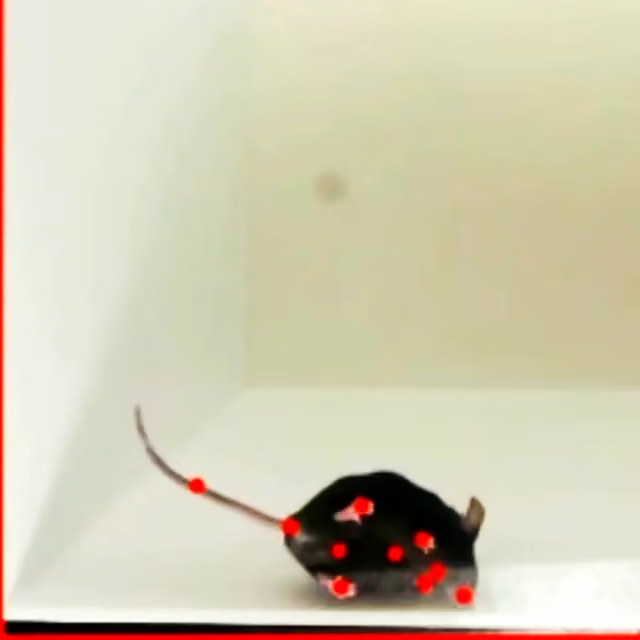
Track rodents with ConductVision
ConductVision is our video-tracking software. Record your sessions on video, and it scores standard rodent tests, such as those listed below.
Examples of tests it scores
To check whether ConductVision scores your protocol in this apparatus, ask in your quote request.
Ask a question
Have a question? Just ask.
Send it over and we'll email you a personalized answer — no call, no scheduling.
Personalized email reply
Usually within one business day
Helpful answers published here
Prefer to talk it through?
Accessories
Enhance your setup with compatible accessories
Total: $0.00
Frequently Bought Together
Total: $3,230.00

Social Cooperation Chamber
$2,990.00
Added to quoteView Quote