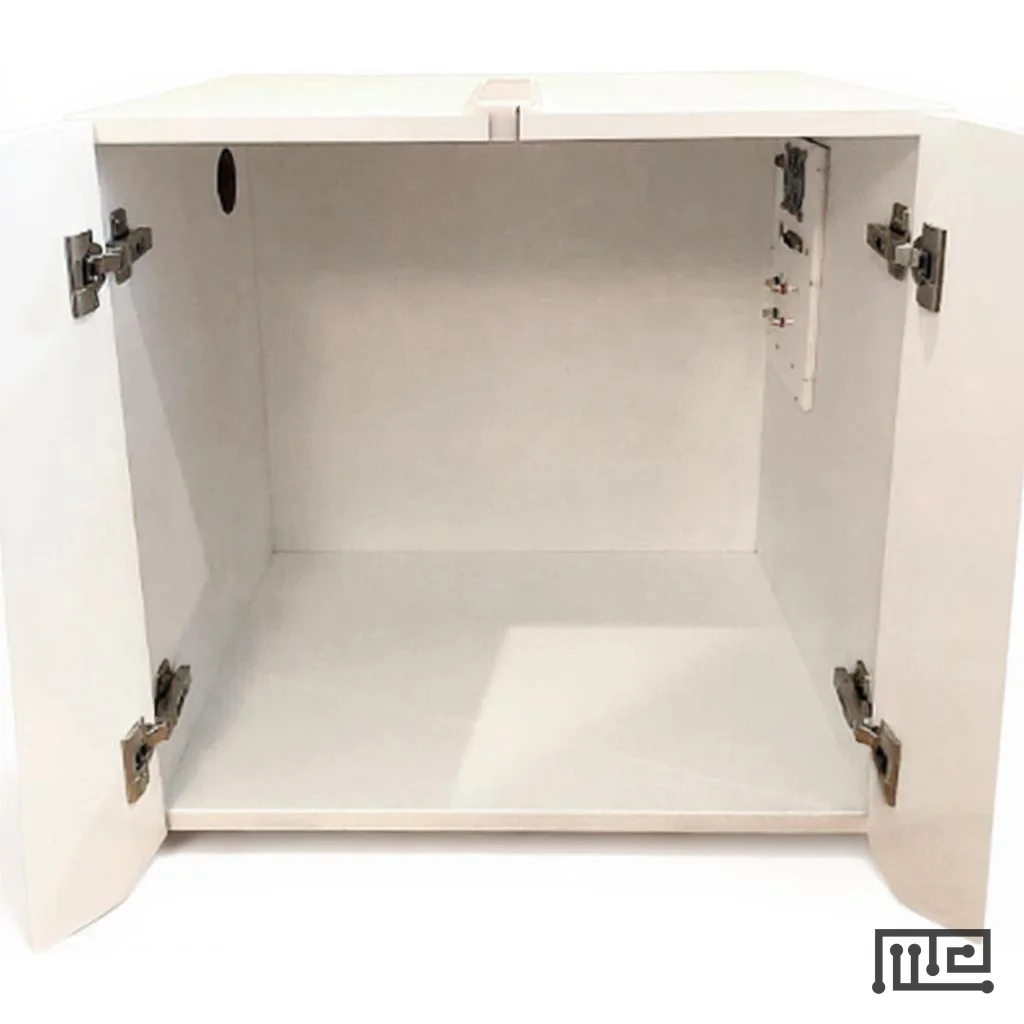
Sound Attenuating Chamber
SKU ME-5831
$1,490.00
IncludesStandard care
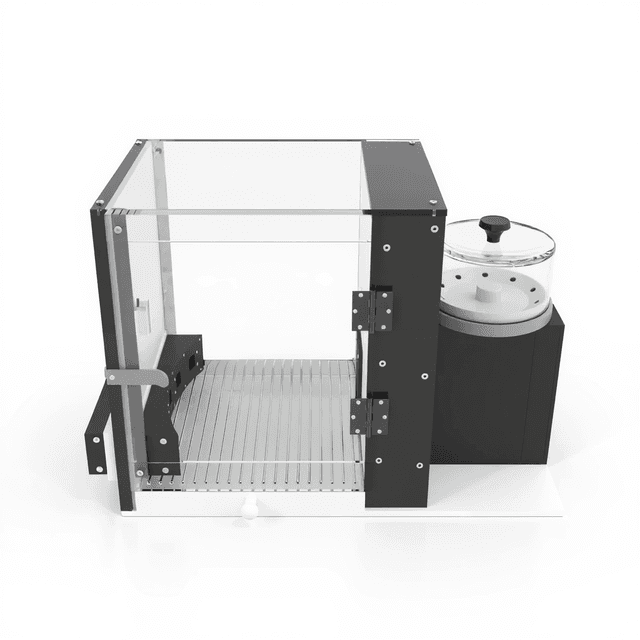
Multi-layer soundproof isolation chamber for operant conditioning and self-administration studies, with optional behavioral testing components for mouse and rat research.
Scientist guidance

Louise Corscadden, PhD
Director of Science · ConductScience
Ask Louise about Sound Attenuating Chamber fit, setup, configuration, or quote prep.
Already working with us? Sign in to connect this with My Scientist.
Key Specifications
Full details →- Model fit
- Mouse, Rat
- SKU family
- ME-5831
- Shipping box
- 43.2 x 38.0 x 27.9 cm
- Ordering
- Online checkout and quote request available
- Category
- Behavioral Mazes
- Build notes
- Multi-layer sound-proof insulation material, Stainless Steel
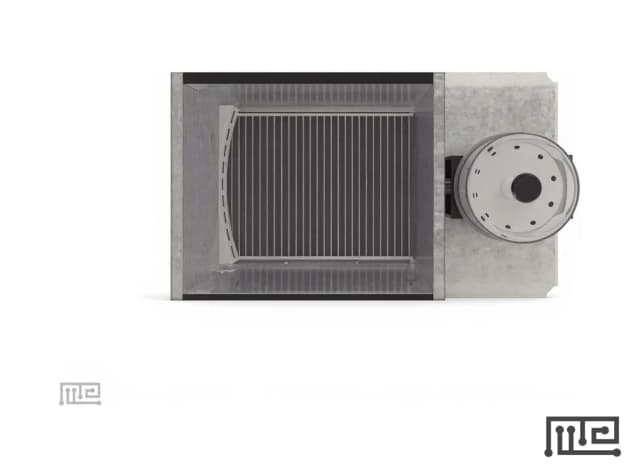
The Sound Attenuating Chamber provides acoustic and electromagnetic isolation for behavioral research applications requiring controlled sensory environments. The system consists of a multi-layer soundproof isolation cubicle (55cm x 42cm x 55cm) constructed with specialized insulation materials that attenuate environmental disturbances during operant conditioning, self-administration, and behavioral testing protocols.
Optional self-administration chamber components include dual levers or nose poke apertures with configurable cue lights, pellet dispensers (20mg or 45mg), infusion pumps, and programmable stimuli delivery systems. The chamber accommodates both mouse and rat studies with species-specific grid floors and lever configurations, supporting wireless communication and USB connectivity for automated data collection during behavioral experiments.
How It Works
The Sound Attenuating Chamber operates through multi-layer acoustic isolation that reduces environmental sound transmission and electromagnetic interference. The soundproof insulation materials create a controlled acoustic environment by absorbing and reflecting sound waves across multiple frequency ranges, preventing external auditory stimuli from confounding behavioral measurements.
Optional operant conditioning components utilize response-contingent reinforcement delivery through automated pellet dispensers or infusion pumps. Nose poke apertures employ infrared beam detection to register animal responses, while lever systems provide mechanical feedback calibrated for mouse (1cm width) or rat (1.6cm width) studies. Programmable cue lights (white, red, green, blue) provide visual stimuli synchronized with reinforcement schedules.
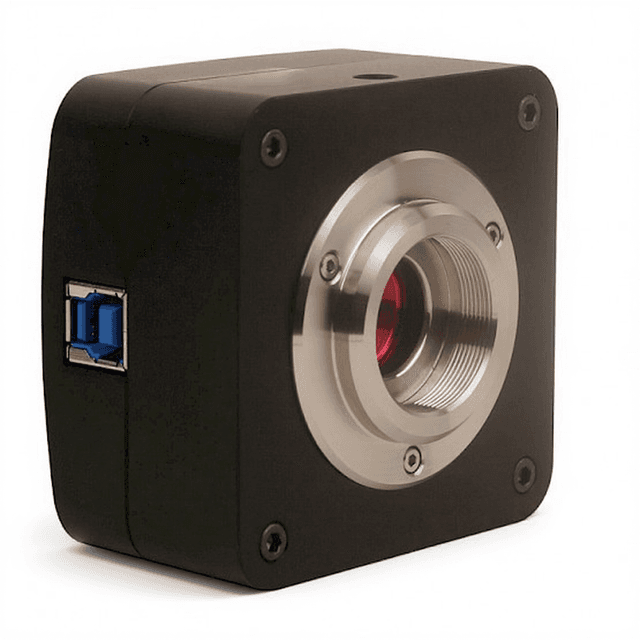
The wireless communication system enables real-time data transmission to control software, while the isolation cubicle maintains consistent environmental conditions throughout extended behavioral sessions. Camera mounting systems support video tracking integration for comprehensive behavioral analysis.
Features & Benefits
Multi-layer soundproof insulation
Attenuates environmental acoustic disturbances to maintain consistent testing conditions across experimental sessions
Customizable chamber dimensions
Accommodates specific experimental protocols and animal housing requirements beyond standard 55x42x55cm configuration
Dual response modalities
Supports both lever press and nose poke paradigms for diverse operant conditioning protocols and species preferences
Configurable cue light colors
Enables complex discrimination studies with white, red, green, or blue visual stimuli for multi-component behavioral tasks
Species-specific components
Optimized grid floors (4mm/5mm spacing for mice, 6mm/10mm for rats) and lever widths ensure appropriate response requirements
Integrated infusion pump system
Delivers precise volumes for self-administration studies with 12mm interior diameter syringe compatibility
Wireless communication
Eliminates cable-related acoustic transmission while maintaining real-time data collection and stimulus control
Programmable shock delivery
Provides aversive stimuli from 0.1 to 4.0 mA in 0.1 mA increments for punishment-based conditioning protocols
Depth
- 42cm
Nose Poke Aperture Dimensions
- 1.3 x 1.2 x 1.2 cm width x height x depth
Nose Poke Height Above Floor
- 1 cm
Lever Width Rats
- 1.6 cm
Lever Width Mice
- 1 cm
Pellet Dispenser Default
- 20 mg
Pellet Dispenser Alternative
- 45 mg
Syringe Pump Interior Diameter
- 12 mm
Shock Current Range
- 0.1 to 4.0 mA in 0.1 mA steps
Mouse Grid Rod Diameter
- 4mm
Mouse Grid Spacing
- 5 mm
Rat Grid Rod Diameter
- 6mm
Rat Grid Spacing
- 10mm
Cage Id Range
- 0 up to 31
Control Box Connections
- Five cables
Communication Type
- wireless
Pc Connection
- USB (RS-232) cable
Customizable Dimensions
- yes
Behavioral Construct
- operant conditioning
- self-administration
- reinforcement schedules
- extinction learning
- discrimination learning
- punishment learning
Automation Level
- semi-automated
Material
- Multi-layer sound-proof insulation material
- Stainless Steel
Color
- Blue
- Green
- Red
- White
Speed/RPM
- 0.5 – 60
Species
- Mouse
- Rat
Dimensions
- 55cm x 55cm
Research Domain
- Addiction Research
- Anxiety and Depression
- Behavioral Pharmacology
- Learning and Memory
- Neuroscience
- Toxicology
Compatible Tracking Software
- ConductVision
Shipping weight
- 21.0 lb
Shipping box
- L: 43.2 cm
- W: 38.0 cm
- H: 27.9 cm
| Feature | This Product | Typical Alternative | Advantage |
|---|---|---|---|
| Acoustic Isolation | Multi-layer soundproof insulation materials with electromagnetic shielding | Basic acoustic foam or single-layer soundproofing in entry-level models | Superior environmental control reduces confounding variables that can affect behavioral consistency across experimental sessions. |
| Response Modalities | Dual configuration options for either lever press or nose poke protocols | Fixed single response modality in basic systems | Experimental flexibility accommodates diverse behavioral paradigms and species-specific response preferences. |
| Communication System | Wireless data transmission with USB connectivity | Hardwired connections that can transmit vibration and sound | Eliminates cable-mediated acoustic artifacts while maintaining real-time stimulus control and data collection. |
| Cue Light Configuration | Programmable four-color options (white, red, green, blue) | Single color or limited dual-color systems | Enhanced discrimination training capabilities for complex behavioral protocols requiring multiple visual stimuli. |
| Species Accommodation | Optimized components for both mouse and rat studies with appropriate sizing | Single species optimization in basic models | Laboratory flexibility for researchers working with multiple rodent species without requiring separate equipment purchases. |
| Chamber Customization | Customizable dimensions beyond standard 55x42x55cm configuration | Fixed chamber dimensions in standard systems | Accommodates specialized experimental protocols requiring non-standard chamber configurations or animal housing needs. |
The Sound Attenuating Chamber provides comprehensive acoustic isolation with flexible operant conditioning configurations, wireless communication capabilities, and species-specific optimization for both mouse and rat behavioral studies. The system's multi-layer soundproofing and customizable components support diverse behavioral pharmacology and neuroscience protocols requiring precise environmental control.
Behavioral Pharmacology
Self-administration studies examining drug-seeking behavior in rodents, utilizing lever press or nose poke responses paired with infusion pump delivery systems for controlled substance administration.
Addiction Research
Operant conditioning protocols for substance abuse models, providing isolated testing environments for measuring reinforcement schedules and extinction behaviors without acoustic interference.
Learning and Memory
Conditioning experiments requiring precise stimulus control and acoustic isolation to eliminate environmental confounds during acquisition, retention, and retrieval testing phases.
Neuroscience
Behavioral phenotyping studies where consistent acoustic environments are critical for measuring baseline behaviors and treatment effects in genetic or lesion models.
Anxiety and Depression
Operant testing paradigms for evaluating anxiolytic or antidepressant compounds, utilizing controlled lighting and acoustic conditions to minimize stress-related confounds.
Toxicology
Neurotoxicity assessments using operant performance as behavioral endpoints, requiring standardized acoustic conditions for reliable dose-response measurements.
Practical Tips
Calibration
Verify pellet dispenser accuracy weekly by weighing 20-30 delivered pellets and calculating mean weight deviation from nominal values.
Why: Consistent reinforcement delivery is critical for maintaining stable operant responding across experimental sessions.
Maintenance
Inspect soundproofing materials monthly for tears or compression that could compromise acoustic isolation performance.
Why: Degraded insulation allows environmental noise penetration that introduces uncontrolled variables into behavioral measurements.
Best Practices
Allow 10-15 minutes for chamber environmental equilibration before beginning behavioral sessions, particularly after cleaning procedures.
Why: Temperature and humidity stabilization ensures consistent conditions that minimize stress-related behavioral artifacts.
Troubleshooting
If wireless communication becomes intermittent, check for electromagnetic interference sources within 3-meter radius of the isolation chamber.
Why: Equipment like centrifuges, autoclaves, or other wireless devices can disrupt data transmission and stimulus timing precision.
Data Quality
Record ambient laboratory conditions (temperature, humidity, noise levels) in session logs to identify potential environmental confounds.
Why: Environmental monitoring helps interpret behavioral variability and ensures experimental reproducibility across testing days.
Safety
Test shock grid continuity and current output monthly using appropriate electrical testing equipment before animal studies.
Why: Electrical safety verification prevents equipment malfunctions that could cause animal injury or compromise experimental validity.
Best Practices
Program cage IDs sequentially when operating multiple chambers to avoid wireless communication conflicts during concurrent sessions.
Why: Proper ID management ensures independent data streams and prevents stimulus delivery errors between chambers.
Maintenance
Clean infusion pump components with appropriate solvents after each experimental cohort to prevent drug residue accumulation.
Why: Residual compounds can alter subsequent drug delivery concentrations and create carryover effects between studies.
Setup Guide
Unpack and Inspect
Remove isolation cubicle and components from packaging, inspecting soundproofing materials and interior surfaces for damage during shipping.
Position Chamber
Place isolation cubicle in designated testing area, ensuring adequate ventilation access and proximity to computer workstation for data collection.
Install Optional Components
Mount self-administration chamber components including levers or nose poke apertures, pellet dispensers, and cue lights according to experimental protocol requirements.
Connect Control System
Establish wireless communication links and USB connections between chamber components and control computer, verifying data transmission integrity.
Calibrate Response Systems
Test lever sensitivity, nose poke detection thresholds, and pellet dispenser accuracy using manufacturer calibration protocols.
Configure Environmental Settings
Program lighting schedules, ventilation cycles, and acoustic parameters according to experimental design specifications.
Validate System Function
Conduct test sessions with known response patterns to verify proper stimulus delivery, data recording, and acoustic isolation performance.
What’s in the Box
- Isolation cubicle with multi-layer soundproofing
- Camera mount assembly
- Control system components (typical)
- USB communication cable
- Installation hardware (typical)
- User manual and setup guide (typical)
Warranty
ConductScience provides a standard one-year manufacturer warranty covering defects in materials and workmanship, with technical support for installation and operation guidance.
Compliance
AAALAC International GuidelinesCommonly used in behavioral research facilities subject to laboratory animal care accreditation standards.
NIH Guidelines for Research Involving AnimalsSupports controlled environmental conditions required for federally-funded behavioral studies.
ARRIVE Guidelines 2.0Facilitates standardized experimental conditions necessary for reproducible behavioral research reporting.
Q
What level of acoustic attenuation does the soundproofing provide?
A
The multi-layer soundproof insulation attenuates environmental disturbances, though specific decibel reduction values should be confirmed in the product datasheet for your required frequency ranges.
Q
Can the chamber accommodate both lever press and nose poke protocols simultaneously?
A
The chamber can be configured with either two levers or two nose poke apertures, but not both modalities simultaneously in the standard configuration.
Q
How is response detection accuracy maintained for nose poke systems?
A
Nose poke apertures utilize infrared beam detection positioned 1cm above floor level with aperture dimensions of 1.3 x 1.2 x 1.2 cm for reliable response registration.
Q
What data parameters are transmitted wirelessly during experiments?
A
The wireless system transmits response timestamps, stimulus delivery events, and chamber status information, with specific data formats detailed in the control software documentation.
Q
How frequently should pellet dispenser accuracy be verified?
A
Pellet dispenser calibration should be checked weekly during active use, weighing delivered pellets to ensure consistent 20mg or 45mg delivery accuracy.
Q
Can multiple chambers operate simultaneously without wireless interference?
A
The system supports cage IDs from 0 to 31, enabling multi-chamber installations with independent wireless communication channels.
Q
What maintenance is required for the soundproofing materials?
A
Inspect insulation materials monthly for damage and clean interior surfaces with appropriate disinfectants between experimental cohorts to maintain acoustic performance.
Have a question about this product?
Track rodents with ConductVision
ConductVision is our video-tracking software. Record your sessions on video, and it scores standard rodent tests, such as those listed below.
Examples of tests it scores
To check whether ConductVision scores your protocol in this apparatus, ask in your quote request.
Ask a question
Have a question? Just ask.
Send it over and we'll email you a personalized answer — no call, no scheduling.
Personalized email reply
Usually within one business day
Helpful answers published here
Prefer to talk it through?
Accessories
Enhance your setup with compatible accessories
Total: $0.00
Frequently Bought Together
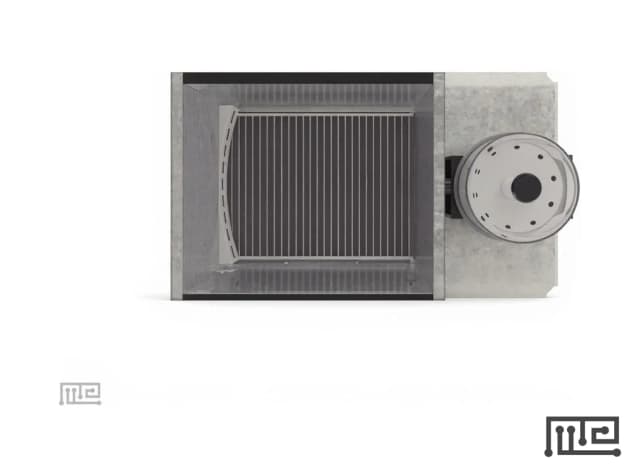
Total: $17,670.00
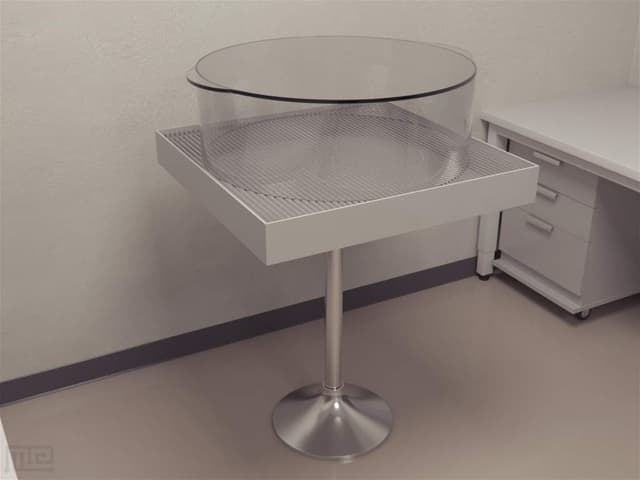
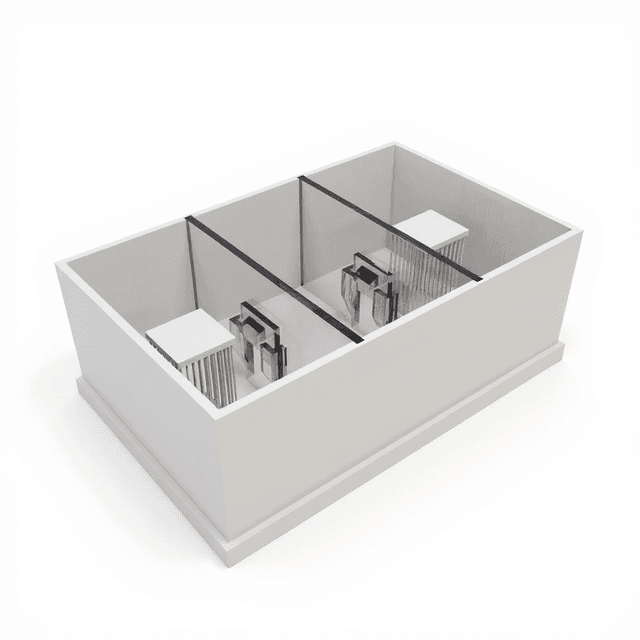

Use this apparatus with
The complete Sound Attenuating Chamber workflow
Track behavior
No exact ConductVision sound-attenuating-chamber page is currently published. The chamber is testing infrastructure rather than a tracked task, so acoustic and light isolation are verified with sound-level and lux meters rather than overhead tracking; keep this as a roadmap gap.
Supporting page not yet builtRun protocol
No exact ConductMaze sound-attenuating-chamber protocol is currently published. Isolation commissioning, background-noise mapping, and ventilation-QC routines are apparatus-specific environmental checks; keep this as a roadmap gap.
Supporting page not yet builtAnalyze output
No exact chamber-QC analysis tool is currently published. Noise-reduction fractions, residual interior levels, and vibration logs are summarized from meter readings rather than a dedicated analyzer; keep this as a roadmap gap.
Supporting page not yet builtConfiguration considerations
Common Sound Attenuating Chamber setup decisions
Use these notes to scope species, cohort, tracking, and automation needs. Only verified product or support routes are linked from this section.
This productSingle-station
Sound Attenuating Chamber
Double-walled isolation cabinet with acoustic foam lining, quiet ventilation, and an internal lighting and power feed-through
Standard configuration for acoustic and photic isolation of a single testing station, reporting interior noise level and light level as the environmental quality-control baseline.
Quote
Request QuoteBuyableSized to apparatus
Apparatus-Scaled Chamber
Interior volume scaled to the enclosed apparatus and its cabling and camera mounts
Interior dimensions and feed-through placement change what apparatus fits and how cleanly it isolates, so the cabinet size should match the test rig being enclosed.
Quote
View options ->SpecialtyHigh-attenuation
High-Attenuation / Anechoic Chamber
Reinforced double-wall build with anechoic wedges and vibration-isolated base
Best when the question demands very low residual interior noise or controlled acoustics, with anechoic lining and a decoupled base to suppress vibration.
Quote
Request automation help§ 1
Introduction
The Sound Attenuating Chamber is testing infrastructure that isolates a behavioral station from facility noise, light, and vibration so that recorded behavior reflects the experimental manipulation rather than the ambient environment. Hearing and stress in laboratory animals are sensitive to background sound, which makes acoustic isolation a measurable quality-control parameter rather than an afterthought. 1
The core function is to lower interior ambient noise and stabilize light and temperature, and the core readouts are environmental: interior sound level in decibels, light level, ventilation-fan background, and residual vibration. Because facility noise, cage cleaning, and in-house transport measurably raise stress and behavioral variability, isolating the station tightens the conditions under which a task is run. 1
Facility background noise, ventilation-fan tone, mechanical vibration, light leakage, and rodent-audible ultrasound all change the interior environment independent of the experiment. A defensible commissioning protocol measures the noise-reduction the cabinet provides, maps residual interior levels including ultrasonic frequencies, and logs light and vibration so the chamber can be treated as a controlled, documented condition. 1
§ 2
Methods
2.1 Procedure
Chamber commissioning with noise-reduction measurement, interior environmental mapping, and ventilation and vibration quality control.
Pre-test setup
- 1.Baseline the open room: Measure ambient noise, light, and vibration in the open testing room with the chamber doors open so the uncontrolled baseline is documented before isolation is engaged.
- 2.Verify isolation build: Confirm the door seal, wall construction, feed-through ports, and acoustic lining are intact, since gaps and unsealed cable ports are the usual cause of poor attenuation.
- 3.Set ventilation and lighting: Define the ventilation rate and interior lighting in advance and confirm the fan tone and lux level are stable, because these are part of the controlled condition rather than incidental.
- 4.Define the QC thresholds: Fix the target interior noise level, acceptable light leakage, and vibration limits before testing so each session can be checked against documented thresholds.
Trial sequence
- 1.Close and seal the chamber: Close the cabinet with the apparatus and cabling routed through the sealed feed-throughs, then allow the interior environment to settle before measuring.
- 2.Measure interior noise: Record the interior sound level with the ventilation running and compute the noise-reduction relative to the open-room baseline.5
- 3.Check ultrasonic band: Measure the rodent-audible ultrasonic range separately, since equipment can emit ultrasound that a standard A-weighted reading misses.3
- 4.Log light and vibration: Record interior light level and residual vibration so photic and mechanical conditions are documented alongside the acoustic measurement.
- 5.Document and clean: Save the environmental log for the session and wipe down the interior to remove odor and residue before the next subject is enclosed.
Critical methodological constraints
- Seal integrity. Attenuation depends on an intact door seal and sealed feed-throughs. Unsealed cable ports and worn gaskets are the most common cause of residual interior noise.1
- Ventilation noise. The ventilation fan is itself a noise source inside the sealed cabinet. Measure interior noise with the fan running, not with it switched off.5
- Ultrasonic emissions. Equipment can emit ultrasound audible to rodents but not to a standard A-weighted meter. Measure the ultrasonic band explicitly during commissioning.3
- Environmental documentation. Acoustic isolation is only useful if it is recorded. Log interior noise, light, and vibration per session so the chamber is a documented condition, not an assumption.
2.2 Measurement & Analysis
Core chamber environmental parameters for acoustic isolation, photic control, and station quality control.
Ambient Noise Level
Acoustic isolation
Interior sound level in decibels with ventilation running, the primary readout of how well the cabinet isolates the station from facility noise.5
Light Level
Photic control
Interior lux at the apparatus surface, controlled and logged because lighting directly shapes anxiety-like and locomotor behavior.2
Ventilation Noise
Background QC
Fan-generated background noise measured inside the sealed cabinet, since the ventilation system is the dominant interior noise source.
Vibration
Mechanical isolation
Residual mechanical vibration at the apparatus base, logged because building and equipment vibration transmit through an otherwise quiet cabinet.
Temperature Stability
Environmental QC
Interior temperature drift over a session, monitored because a sealed cabinet with active ventilation can shift thermally during long runs.
+ Additional metrics: humidity, door-seal condition, feed-through count, ultrasonic-band level, fan duty cycle, and per-session environmental notes.
2.3 noise-reduction fraction (analysis)
A compact fraction of the open-room noise that the sealed cabinet removes at the apparatus surface.
2.4 sample-size planning
Estimate the N per group needed to detect a literature-anchored environmental effect at the parameter you plan to report. Override the defaults with your own pilot numbers.
§ 3
Results
PubMed publication counts, sample apparatus output, and recent papers from a dated PubMed snapshot.
3.2 Sample apparatus output
Representative environmental log comparing an open testing room with a sealed sound-attenuating chamber.
3.3 Recent findings (PubMed)
- 2025PMID: 41560852
Noise-induced vestibular dysfunction in rats: longitudinal assessment using cVEMP and behavioral testing after low-frequency acoustic trauma.
Komur FN, Genc B, Cassinotti LR, et al.. Front Integr Neurosci. 2025.
High-intensity noise exposure is a well-established risk factor for auditory dysfunction; however, its effects on the vestibular system remain poorly understood. This is an important question due to the anatomical proximity and shared vulnerability of cochlear and vestibular structures.
- Dec 2023PMID: 37983568
PAC1 receptor modulation of freezing and flight behavior in periaqueductal gray.
Yavas E, Zhuravka I, Fanselow MS. Genes Brain Behav. 2023 Dec.
The midbrain periaqueductal gray (PAG) region is a critical anatomical regulator of fear-related species-specific defensive reactions (SSDRs). Pituitary adenylate-cyclase-activating polypeptide (PACAP), and its main receptor PAC1, play an important role in fear-related behavior and anxiety disorders.
- Feb 2021PMID: 33246065
Differential Plasticity in Auditory and Prefrontal Cortices, and Cognitive-Behavioral Deficits Following Noise-Induced Hearing Loss.
Wieczerzak KB, Patel SV, MacNeil H, et al.. Neuroscience. 2021 Feb 10.
Excessive exposure to loud noise causes hearing loss and neural plasticity throughout the auditory pathway.
- Apr 2020PMID: 31927604
Decreased mesolimbic dopaminergic signaling underlies the waning of maternal caregiving across the postpartum period in rats.
Grieb ZA, Vitale EM, Morrell JI, et al.. Psychopharmacology (Berl). 2020 Apr.
Mesolimbic dopamine (DA) signaling is essential for the high maternal caregiving characteristic of the early postpartum period, but little is known about dopamine's role in the expression of maternal caregiving thereafter.
- May 2018PMID: 28925013
An animal model of deep brain stimulation for treating tinnitus: A proof of concept study.
Ahsan SF, Luo H, Zhang J, et al.. Laryngoscope. 2018 May.
This proof-of-concept study aimed to demonstrate therapeutic effects of deep brain stimulation (DBS) on noise-induced tinnitus. Experimental animal study. After Institutional Animal Care and Use Committee approval, nine adult rats were implanted in the caudate nucleus with custom-made electrode array.
- 2016PMID: 27835697
A Conditioned Behavioral Paradigm for Assessing Onset and Lasting Tinnitus in Rats.
Pace E, Luo H, Bobian M, et al.. PLoS One. 2016.
Numerous behavioral paradigms have been developed to assess tinnitus-like behavior in animals.
§ 4
Discussion
Limitations of the paradigm, methodological caveats, and current directions.
4.1 Common confounds
Variables that can shift Sound Attenuating Chamber results apart from the effect under study.
Facility background noise
Room HVAC, corridor traffic, and equipment raise baseline noise. Measure the open-room level so the chamber's attenuation is expressed against a documented baseline.
Ventilation-fan noise
The cabinet ventilation fan is a noise source inside the sealed space. Interior readings must be taken with the fan running, not switched off.
Mechanical vibration
Building and equipment vibration transmit through the cabinet base even when airborne noise is well attenuated. Log vibration separately from sound.
Light leakage
Gaps around the door and feed-throughs let light in, shifting anxiety-like and locomotor behavior. Verify interior lux with the chamber sealed.
Ultrasonic noise
Equipment can emit ultrasound audible to rodents but invisible to a standard A-weighted meter. Measure the ultrasonic band explicitly.
Preview exported markdown
## Sound Attenuating Chamber — methods controls

Confounds controlled in this protocol:

- **Facility background noise.** Room HVAC, corridor traffic, and equipment raise baseline noise. Measure the open-room level so the chamber's attenuation is expressed against a documented baseline.
- **Ventilation-fan noise.** The cabinet ventilation fan is a noise source inside the sealed space. Interior readings must be taken with the fan running, not switched off.
- **Mechanical vibration.** Building and equipment vibration transmit through the cabinet base even when airborne noise is well attenuated. Log vibration separately from sound.
- **Light leakage.** Gaps around the door and feed-throughs let light in, shifting anxiety-like and locomotor behavior. Verify interior lux with the chamber sealed.
- **Ultrasonic noise.** Equipment can emit ultrasound audible to rodents but invisible to a standard A-weighted meter. Measure the ultrasonic band explicitly.
4.2 Construct validity caveats
A sound-attenuating chamber is only a controlled condition when its isolation is measured and logged. Report interior noise with ventilation running, the rodent-audible ultrasonic band, light level, and residual vibration before claiming the station is isolated, and re-check seals because attenuation degrades as gaskets and feed-throughs wear. 1
4.3 Special considerations
Do I need to measure ultrasound separately?
Yes. Standard A-weighted meters underweight or miss the ultrasonic frequencies that rodents hear, so equipment ultrasound can disturb animals even when the audible reading looks quiet. Measure the ultrasonic band during commissioning.
Should the ventilation fan be on when I measure noise?
Yes. The ventilation fan runs during testing and is the dominant interior noise source, so the meaningful interior reading is taken with the fan running rather than with it switched off.
How often should I re-verify the chamber?
Re-verify on a fixed schedule and after any move or seal change. Door gaskets and feed-through seals wear, so attenuation that was commissioned correctly can drift below threshold over time.
4.4 Current directions
Quarterly editorial review of emerging Sound Attenuating Chamber methodology. Q2 2026
Methods
Standardized commissioning logs
Recording interior noise, ultrasonic band, light, and vibration on a fixed commissioning sheet makes the chamber a documented condition that can be compared across rigs and labs.
Emerging
Continuous environmental monitoring
In-cabinet sensors that log noise, light, and temperature throughout a session capture transient disturbances a single spot-check measurement misses.
Methods
Ultrasonic-band reporting
Reporting the rodent-audible ultrasonic level alongside the A-weighted reading is increasingly expected because ultrasound disturbs animals independent of audible noise.
Emerging
Vibration-isolated bases
Decoupled and damped cabinet bases are paired with acoustic lining to suppress transmitted vibration that airborne attenuation alone does not address.
§ 5
References
5 selected methods and validation references for Sound Attenuating Chamber.
- Turner JG, Parrish JL, Hughes LF, Toth LA, Caspary DM. Hearing in laboratory animals: strain differences and nonauditory effects of noise. Comp Med. 2005;55(1):12-23. PMID:15766204
- Castelhano-Carlos MJ, Baumans V. The impact of light, noise, cage cleaning and in-house transport on welfare and stress of laboratory rats. Lab Anim. 2009;43(4):311-327. doi:10.1258/la.2009.0080098
- Sales GD, Wilson KJ, Spencer KE, Milligan SR. Environmental ultrasound in laboratories and animal houses: a possible cause for concern in the welfare and use of laboratory animals. Lab Anim. 1988;22(4):369-375. doi:10.1258/002367788780746188
- Reynolds RP, Kinard WL, Degraff JJ, Leverage N, Norton JN. Noise in a laboratory animal facility from the human and mouse perspectives. J Am Assoc Lab Anim Sci. 2010;49(5):592-597. PMID:20858360
- Milligan SR, Sales GD, Khirnykh K. Sound levels in rooms housing laboratory animals: an uncontrolled daily variable. Physiol Behav. 1993;53(6):1067-1076. doi:10.1016/0031-9384(93)90361-i

Sound Attenuating Chamber
$1,490.00
Added to quoteView Quote