Empathy Assay
Dual-chamber behavioral apparatus for studying observational fear learning and empathetic responses in mice and rats through controlled fear transmission paradigms.

Louise Corscadden, PhD
Director of Science · ConductScience
Ask Louise about Empathy Assay fit, setup, configuration, or quote prep.
Already working with us? Sign in to connect this with My Scientist.
Key Specifications
Full details →- Model fit
- Mouse, Rat
- SKU family
- CS-958378
- Sizing
- Mouse: Single chamber length 18 cm · Single chamber width 18 cm; Rat: Single chamber length 24 cm · Single chamber width 24 cm
- Ordering
- Online checkout and quote request available
- Category
- Behavioral Mazes
- Build notes
- Confirm accessories, station layout, and support needs before purchase
The Empathy Assay is a specialized behavioral testing apparatus designed for investigating observational fear learning and empathy-related behaviors in rodents. This two-chamber system enables controlled studies of fear transmission between demonstrator and observer animals, facilitating research into social learning mechanisms and empathetic responses.
The apparatus features species-specific dimensions with separate chamber configurations for mice (18×18×25 cm) and rats (24×24×30 cm), each equipped with stainless steel rod flooring for fear conditioning protocols. The dual-chamber design allows researchers to examine how fear-related behaviors are transmitted between conspecifics through visual, auditory, and olfactory cues while maintaining experimental control over environmental variables.
How It Works
The Empathy Assay operates on the principle of observational fear conditioning, where a naive observer animal learns to associate environmental cues with aversive outcomes by observing the responses of a previously conditioned demonstrator animal. The apparatus consists of two adjacent chambers that allow visual and auditory communication while preventing direct physical contact between subjects.
During testing, the demonstrator animal (previously fear-conditioned to specific stimuli) is placed in one chamber while the observer animal occupies the adjacent chamber. When conditioned stimuli are presented, the demonstrator exhibits fear responses (freezing, vocalizations) that can be observed by the naive animal. The observer's behavioral responses are then measured to assess fear transmission and empathetic behavior acquisition.
The stainless steel rod flooring enables delivery of controlled foot shock stimuli for fear conditioning protocols, while the species-specific chamber dimensions ensure appropriate spatial constraints for reliable behavioral measurements. The system supports various experimental paradigms including fear generalization studies and social buffering assays.
Features & Benefits
Sizes by model
| Measurement | Mouse | Rat |
|---|---|---|
| Single chamber length | 18 cm | 24 cm |
| Single chamber width | 18 cm | 24 cm |
| Single chamber height | 25 cm | 30 cm |
| Diameter stainless steel | 4 mm | 6 mm |
- Mouse: rods (5 mm apart)
- Rat: rods (10 mm apart)
Warranty Length
- 1 YEAR
Storage Included
- Yes
Assembly Required
- Yes
Behavioral Construct
- Empathy
- Fear conditioning
- Observational learning
- Social learning
- Fear transmission
- Emotional contagion
Automation Level
- manual
Research Domain
- Anxiety and Depression
- Behavioral Pharmacology
- Developmental Biology
- Learning and Memory
- Neurodegeneration
- Neuroscience
- Social Behavior
Compatible Tracking Software
- ConductVision
Shipping weight
- 6.06 lb
Shipping box
- L: 65.0 cm
- W: 36.0 cm
- H: 27.0 cm
| Feature | This Product | Typical Alternative | Advantage |
|---|---|---|---|
| Chamber Configuration | Dual-chamber system with species-specific dimensions (18×18×25 cm for mice, 24×24×30 cm for rats) | Single-chamber systems typically used for traditional fear conditioning | Enables controlled study of social fear transmission while maintaining standardized experimental conditions for each species. |
| Rod Flooring Specifications | Species-optimized stainless steel rods (4mm diameter, 5mm spacing for mice; 6mm diameter, 10mm spacing for rats) | Standard grid floors often use uniform spacing across species | Provides species-appropriate shock delivery parameters for consistent fear conditioning across different animal models. |
| Assembly Design | Modular assembly-required construction with included storage | Many systems ship as pre-assembled fixed units | Facilitates thorough cleaning between subjects and organized laboratory storage while reducing shipping costs. |
| Multi-Species Compatibility | Dedicated configurations for both mouse and rat research | Some systems require separate purchases for different species | Allows laboratories to conduct empathy research across multiple rodent models with species-appropriate dimensional parameters. |
| Warranty Coverage | 1-year comprehensive manufacturer warranty | Warranty terms vary by manufacturer | Provides extended coverage for equipment reliability and technical support during initial research implementation. |
The Empathy Assay offers a specialized dual-chamber configuration specifically designed for observational fear learning research, with species-optimized dimensions and rod spacing parameters. The modular design facilitates maintenance and storage while supporting standardized empathy research protocols across mouse and rat models.
| Model | Size | SKU | Listed price | Status | Shipping box |
|---|---|---|---|---|---|
| Mouse | Single chamber length 18 cm · Single chamber width 18 cm · Single chamber height 25 cm · Diameter stainless steel 4 mm | CS-958378 | $5,990.00 | Available | 65.0 x 36.0 x 27.0 cm |
| Rat | Single chamber length 24 cm · Single chamber width 24 cm · Single chamber height 30 cm · Diameter stainless steel 6 mm | CS-958378 | $6,490.00 | Available | 65.0 x 36.0 x 27.0 cm |
Practical Tips
Verify shock delivery parameters using a multimeter before each experimental session to ensure consistent stimulus intensity across trials.
Why: Parameter drift can introduce variability in fear conditioning effectiveness and compromise experimental reproducibility.
Disassemble and thoroughly clean all components with appropriate disinfectants between different experimental cohorts.
Why: Residual olfactory cues can influence animal behavior and confound social learning measurements.
Allow animals 5-10 minutes habituation time in chambers before beginning experimental protocols to establish baseline activity levels.
Why: Initial exploratory behavior can mask fear-related responses if not properly controlled through habituation periods.
Position video recording equipment to capture both chambers simultaneously with sufficient resolution to detect freezing behaviors.
Why: Accurate behavioral scoring requires clear visualization of both demonstrator and observer responses throughout the testing session.
Check rod alignment and electrical connections if animals show inconsistent responses to shock delivery.
Why: Loose connections or misaligned rods can create uneven current distribution affecting fear conditioning reliability.
Ensure proper grounding of the apparatus and use appropriate electrical isolation between chambers during setup.
Why: Electrical safety protocols protect both animals and researchers while preventing cross-contamination of stimuli between chambers.
Counterbalance demonstrator-observer assignments across experimental groups to control for individual animal differences.
Why: Individual variation in fear sensitivity can bias results if the same animals consistently serve in demonstrator or observer roles.
Record environmental conditions (temperature, humidity, lighting) for each session to identify potential confounding variables.
Why: Environmental factors can influence stress responses and social learning behaviors, affecting the reliability of empathy measurements.
Setup Guide
What’s in the Box
- Dual-chamber assembly components (typical)
- Stainless steel rod flooring sets for mouse and rat configurations (typical)
- Assembly hardware and fasteners (typical)
- Storage components
- Setup and operation manual (typical)
- Electrical connection components for shock delivery (typical)
Warranty
ConductScience provides a comprehensive 1-year manufacturer warranty covering defects in materials and workmanship, with technical support available for setup and operational guidance.
Compliance
Protocol and background
Introduction
The observational fear-conditioning assay is used to assess empathy in the subject by evaluating social observational fear learning. Empathy, in humans, is defined as the ability to recognize and share emotions with others. In many mental disorders such as Psychopathy and Antisocial Personality Disorder (ASPD), the individual’s empathetic abilities are impaired. Impairments in empathetic abilities of an individual can have a significant effect on their social-emotional health. Despite empathetic abilities being crucial to the quality of life of an individual, rodent models of emotional empathy impairments are rare, largely due to lack of robust behavioral assay systems.
Emotional empathy can be studied in rodents as a precursor to fear response arising from observing a conspecific experiencing an aversive stimulus. A simple protocol to observe social fear in rodents, suggested by Jeon et al., 2011, includes a two-chambered Fear Conditioning Chamber. One of the chambers holds the observer subject, and the other holds a demonstrator conspecific that receives foot shocks. The chambers are separated by a clear wall to allow the subject to view the conspecific. The observer subject is observed for its response to the same set-up after 24 hours. Other assays that use subject sociability are the Sociability Chamber, the Social Defeat Apparatus and the Social Reward Chamber.
Apparatus & Equipment
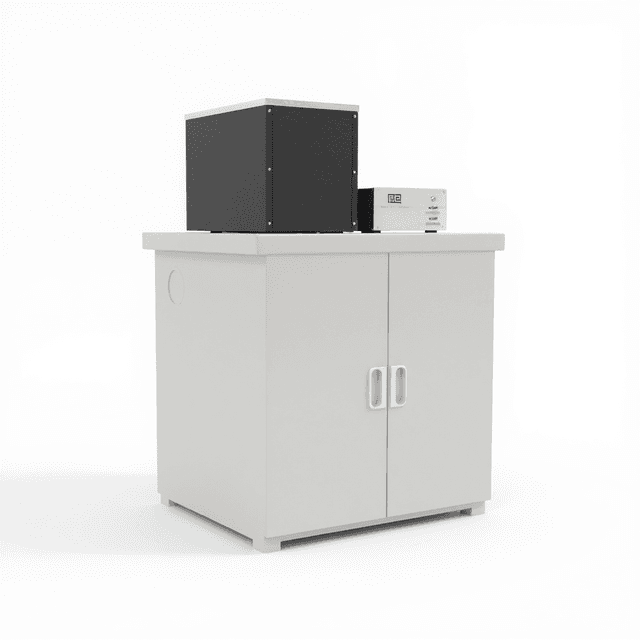
The apparatus for Empathy assay includes a sound-attenuating cubicle with fan within which an observational fear-conditioning chamber is placed. The fear-conditioning chamber is composed of two chambers that are separated by a transparent Plexiglas divider. The chambers are 18 x 17.5 x 38 cm each with 5 mm diameter stainless steel rods (0.7 cm apart) placed parallel on the floor.
A programmable, computer controlled shocking system is also used to administer foot shock to the demonstrator conspecific. Two plates are included and both plates can be controlled separately.
Training Protocol
Before beginning the experiments, the equipment is cleaned to with 70% ethanol solution. Video recording and tracking software, such as Noldus Ethovision XT, are set-up, ensuring continual recording during the sessions.
Selection of Observer-Demonstrator pairs
- Non-sibling pair: Non-sibling subjects that are housed separately are used in the experiment of non-familiar animal observational fear conditioning.
- Sibling pair: Experimental pairs are chosen from the same group of siblings. The subjects have been maintained in groups of 2 or 3 per housing cage after weaning. As control demonstrators, an unrelated conspecific is used.
- Mating pair: One male and two female conspecifics are co-housed for 10 weeks or longer in mating cages. A pair consisting of the male and a female is chosen for the experiments.
The assay lasts for two days and is composed of two trials: Training trial and Memory test.
Training Trial
Place the subjects in their respective chambers facing the clear partition. The 5-minute habituation period is initiated, during which the demonstrator subject does not receive any foot shocks. Immediately after the habituation period begin the training trial. The demonstrator receives the foot shocks as programmed. The training trial lasts for 4-minutes, during which the observer subject will develop freezing behaviors as a response to the demonstrator subject showing typical behavioral responses (running, vocalization, and jumping) to the shocking.
24-hour Memory Test
At the end of the 9-minute training trial, house the observer-demonstrator pair individually for 24 hours. On the expiration of the 24 hours, place the observer subject back in the same chamber of the apparatus. As a memory response to previous day fear-conditioning, the observer subject will display freezing behaviors. Observe the subject for 4 minutes.
Evaluation of Observational Fear Learning and the Empathetic Response
Using C57BL/6J mice Jeon et al., 2011 performed experiments to assess empathy responses. Mice aged 10 to 15 weeks were used for experiments using sibling pairs and unfamiliar pairs. Another set of a mating pair was also used in the experiments. The familiar pairs were separated just before the experiments. In their experiments, they observed that observational fear-conditioning elicited the same freezing behaviors under both the training and 24-hour contextual memory trials. Further, it was observed that familiar pairs (sibling and mating) showed a higher degree of freezing behaviors as compared to the unfamiliar pairs.
Data Analysis
The following data are observed during the Empathy Assay.
- Duration of freezing behaviors during training trial
- Duration of freezing behavior during 24-hour memory trial
- Number of fecal droppings (an indirect measure of fear response)
Freezing behavior is characterized by the lack of movement, except for respiratory movements for 2 seconds or longer. Familiar pairs tend to show heightened freezing responses.
Strengths & Limitations
Strengths
The Empathy assay brings us one step closer to understanding how human empathy works. The test analyzes empathy as a precursor to observational fear conditioning. It can be observed that subjects that are familiar with the demonstrator conspecific show heightened response to their sufferings. It can also be seen that co-housing period for the pairs has a graded effect on the development of observational fear, with longer periods resulting in stronger responses. The test also allows analyzing the effect of novel environment (such as placing the observer in the other compartment or using an opaque divider wall) in the 24-hour contextual memory test. It can be seen that changing the environment for the memory test shows a reduced memory-based fear response to the previous day fear-conditioning. The test can be easily adapted to study different scenarios of empathy-based behaviors, such as observing the performance of observers who have experienced aversive stimulus before the Empathy assay (Atsak et al., 2011).
Limitations
For the trials, it is important not to use juveniles or young adults as there are likely to show reduced responses. Further, pairings (exception of mating pairs) should be of same-sex conspecifics with similar size and weight. It is important to house the observer and the demonstrator separately after the habituation and training period to prevent the social transfer of fear. It must be understood that this model cannot take into account the large range of human emotions; thus care must be taken while interpreting the data for translational research. Other factors that can influence the performance of the subjects may include the co-housing periods for sibling and mating pairs, handling procedures and presences of any undesired cues (olfactory, auditory or visual).
Summary & Key Points
- Emotional empathy can be studied as a precursor to fear response arising from observing a conspecific experiencing an aversive stimulus.
- Freezing behavior is characterized by lack of movement, except for respiratory movements for 2 seconds or longer.
- Familiarity between the observer and the demonstrator leads to a heightened fear response from the observer when the demonstrator is subjected to aversive stimulus.
- Co-housing period of sibling and mating pairs has a significant effect on the fear responses.
- Subjects of the same size and weight should be paired to avoid any abnormal behaviors.
- The novel environment tends to reduce the effect of previous day fear conditioning during the 24-hour memory test.
- Pairs should not be housed together after the habituation and training trial to avoid social transfer of fear.
- Care should be taken to avoid influencing the observers during the 24-hour waiting period before the memory test.
- It must be understood that animal models cannot fully portray the entire range of human emotions.
References
Atsak P, Orre M, Bakker P, Cerliani L, Roozendaal B, Gazzola V, Moita M, Keysers C (2011). Experience modulates vicarious freezing in rats: a model for empathy. PLoS One. 6(7):e21855. doi: 10.1371/journal.pone.0021855.
Jeon D, Shin HS (2011). A mouse model for observational fear learning and the empathetic response. Curr Protoc Neurosci. Chapter 8:Unit 8.27. doi: 10.1002/0471142301.ns0827s57.
From the Maze Engineers documentation for this apparatus.
What is the optimal distance between chambers for effective fear transmission?
The chambers are designed as adjacent units allowing visual and auditory communication while preventing direct contact. Specific inter-chamber spacing should be verified from the assembly instructions to ensure standardized conditions across experiments.
Can the apparatus accommodate simultaneous testing of multiple animal pairs?
Each unit consists of a dual-chamber system for testing one demonstrator-observer pair at a time. Multiple units can be operated simultaneously in separate testing environments for increased throughput.
What shock parameters are typically used for fear conditioning protocols?
Shock parameters should be determined based on established protocols for each species and strain. The stainless steel rod configuration enables delivery of controlled stimuli, but specific voltage and duration settings must be calibrated according to experimental requirements.
How should the apparatus be cleaned between subjects to prevent contamination?
Thorough cleaning with appropriate disinfectants is essential between subjects to eliminate olfactory cues that could confound behavioral measurements. The assembly-required design facilitates complete disassembly for comprehensive sanitation.
What behavioral measures are typically recorded during empathy assay protocols?
Common measures include freezing behavior, locomotor activity, vocalizations, and approach-avoidance behaviors. Video recording systems should be positioned to capture both chambers simultaneously for comprehensive behavioral analysis.
Can the system be modified for different experimental paradigms beyond empathy testing?
While designed specifically for empathy assays, the dual-chamber configuration can potentially support other social learning paradigms. Modifications should maintain the core design principles of controlled inter-animal communication.
What are the power requirements for the shock delivery system?
Consult the product datasheet for specific electrical requirements. The system requires appropriate shock generator compatibility and proper grounding for safe operation.
How does this system compare to single-chamber fear conditioning protocols?
Unlike traditional single-chamber fear conditioning that requires direct shock exposure, this system enables investigation of vicarious fear learning where animals acquire fear responses through observation rather than direct experience, providing insights into social learning mechanisms.
Have a question about this product?
Have a question? Just ask.
Send it over and we'll email you a personalized answer — no call, no scheduling.
Prefer to talk it through?
Accessories
Enhance your setup with compatible accessories
Frequently Bought Together