Ant Colony Maze
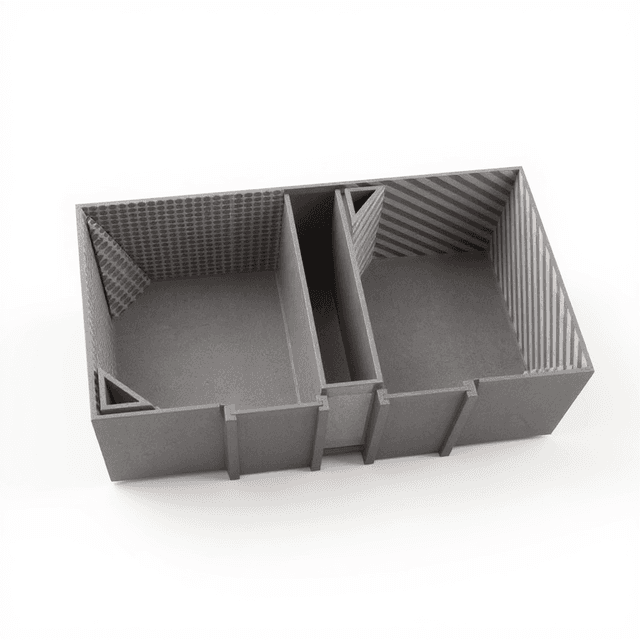
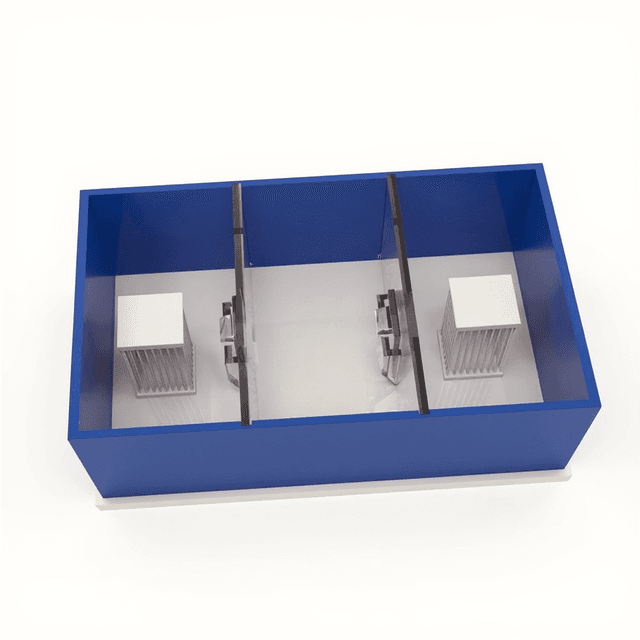
Open arena maze system (25cm × 20cm) for studying ant colony navigation, collective learning, and spatial problem-solving behaviors in controlled laboratory conditions.

Louise Corscadden, PhD
Director of Science · ConductScience
Ask Louise about Ant Colony Maze fit, setup, configuration, or quote prep.
Already working with us? Sign in to connect this with My Scientist.
Key Specifications
Full details →- Model fit
- Ants
- SKU family
- ME-8904
- Sizing
- Ant Colony Maze: Length 25 cm · Width 20 cm
- Ordering
- Online checkout and quote request available
- Category
- Behavioral Mazes
- Build notes
- Confirm accessories, station layout, and support needs before purchase
The Ant Colony Maze is a specialized behavioral apparatus designed for investigating collective intelligence, navigation strategies, and colony-level learning in ant populations. This open arena system provides a controlled environment for studying how ant colonies solve spatial problems, develop foraging pathways, and exhibit emergent behaviors during maze navigation tasks.
The apparatus features a 25cm × 20cm open arena configuration that allows researchers to observe natural ant movement patterns while maintaining experimental control. The system is based on validated protocols from Saar et al. (2017), enabling standardized assessments of colony size effects on maze-solving performance, learning dynamics, and memory consolidation at the population level. Custom pathway configurations can be implemented to adjust maze complexity according to specific research requirements.
How It Works
The Ant Colony Maze operates on principles of collective intelligence and emergent behavior observation. Ant colonies are introduced into the open arena where they encounter spatial challenges that require coordinated navigation and decision-making. Individual ants explore the maze environment while depositing pheromone trails, which serve as chemical communication signals for colony members.
The system allows researchers to observe how colonies develop optimal pathways through trial-and-error learning, with successful routes being reinforced through increased pheromone deposition and traffic. The open arena design enables unobstructed observation of movement patterns, trail formation dynamics, and collective problem-solving strategies as they emerge naturally during experimental sessions.
Maze complexity can be adjusted through custom pathway configurations, allowing researchers to systematically vary task difficulty and assess how different spatial challenges affect colony performance, learning rates, and memory retention over multiple trials.
Features & Benefits
Sizes by model
| Measurement | Ant Colony Maze |
|---|---|
| Length | 25 cm |
| Width | 20 cm |
- Open arena
- For maze complexity as in the sentinel Saar et al, paper, please contact us as this requires customization of complexity pathways
Research Reference
- Saar M, Gilad T, Kilon-Kallner T, Rosenfeld A, Subach A, Scharf I (2017) The interplay between maze complexity, colony size, learning and memory in ants while solving a maze: A test at the colony level. PLoS ONE 12(8)
Behavioral Construct
- Spatial Navigation
- Collective Learning
- Social Foraging
- Problem Solving
- Memory Formation
- Trail Following
- Exploration Behavior
Automation Level
- manual
Species
- Ants
Research Domain
- Animal Behavior
- Behavioral Ecology
- Developmental Biology
- Entomology Research
- Neuroscience
- Social Behavior Research
Compatible Tracking Software
- ConductVision
Shipping weight
- 21.0 lb
Shipping box
- L: 43.2 cm
- W: 38.0 cm
- H: 27.9 cm
| Feature | This Product | Typical Alternative | Advantage |
|---|---|---|---|
| Arena Dimensions | 25cm × 20cm open arena | Smaller enclosures often limit natural colony movement | Sufficient space allows natural foraging behaviors while maintaining experimental control |
| Colony Accommodation | Designed for complete ant colonies | Individual tracking systems focus on single specimens | Enables study of collective intelligence and emergent social behaviors |
| Customization Options | Configurable pathway complexity through consultation | Fixed maze configurations limit experimental flexibility | Allows systematic manipulation of task difficulty for controlled behavioral studies |
| Observation Access | Open-top design for unobstructed viewing | Enclosed systems may restrict observation angles | Comprehensive visual access enables detailed behavioral documentation |
This colony-level maze system provides a specialized platform for investigating collective intelligence and social navigation behaviors in ant populations. The open arena design and customizable complexity options support systematic behavioral research while accommodating natural colony dynamics.
Practical Tips
Allow ant colonies to acclimate to the maze environment for 15-30 minutes before beginning formal data collection.
Why: Acclimation reduces stress-induced behavioral artifacts and enables observation of natural exploration patterns
Clean the arena thoroughly between trials using ethanol or similar solvent to remove pheromone trails completely.
Why: Residual chemical signals from previous experiments can influence colony navigation and confound experimental results
Record ambient temperature and humidity during each experimental session for inclusion in data analysis.
Why: Environmental conditions significantly affect ant activity levels and behavioral responses during maze navigation
Use appropriate containment procedures to prevent ant escape during transfer and experimental procedures.
Why: Proper containment protects laboratory personnel and prevents establishment of unwanted ant populations in research facilities
If colonies show reduced activity, verify that environmental conditions match species-specific temperature and humidity requirements.
Why: Suboptimal environmental conditions can suppress natural behaviors and reduce experimental validity
Document colony composition including worker numbers and size distribution before each experimental session.
Why: Colony demographics influence collective behavior patterns and should be controlled variables in behavioral studies
Establish baseline movement patterns for each colony before introducing maze complexity modifications.
Why: Baseline data enables assessment of learning effects and behavioral changes throughout experimental protocols
Setup Guide
What’s in the Box
- Ant Colony Maze arena (25cm × 20cm)
- User manual with setup instructions
- Protocol guidelines based on Saar et al. methodology
- Cleaning and maintenance guide (typical)
Warranty
ConductScience provides a standard one-year manufacturer warranty covering defects in materials and workmanship, along with technical support for proper setup and operation procedures.
Compliance
References
Background reading relevant to this product:
What ant species are compatible with this maze system?
The maze accommodates various ant species commonly used in laboratory research. Colony size and species-specific behaviors should be considered when selecting appropriate populations for testing.
How is maze complexity customized for different experiments?
Custom pathway configurations require consultation with the manufacturer to design specific complexity levels. Standard configurations support basic navigation studies while advanced setups can replicate conditions from published research protocols.
What is the recommended colony size for optimal experimental results?
Colony size effects are a primary research variable in this system. The Saar et al. reference study examined multiple colony sizes to determine optimal populations for different experimental objectives.
How should the maze be cleaned between experimental trials?
Thorough cleaning with appropriate solvents removes residual pheromone trails between trials. Complete drying is essential before introducing new colonies to prevent behavioral interference from previous experiments.
What environmental controls are necessary for consistent results?
Maintain stable temperature, humidity, and lighting conditions. Avoid vibrations and chemical contaminants that could influence ant behavior or pheromone trail formation during testing sessions.
Can the system accommodate longitudinal learning studies?
Yes, the design supports repeated trials with the same colony to assess learning progression and memory retention over extended experimental periods.
What data collection methods are recommended for this apparatus?
Video recording with behavioral analysis software enables comprehensive documentation of movement patterns, trail formation dynamics, and temporal changes in colony navigation strategies.
Have a question about this product?
Have a question? Just ask.
Send it over and we'll email you a personalized answer — no call, no scheduling.
Prefer to talk it through?