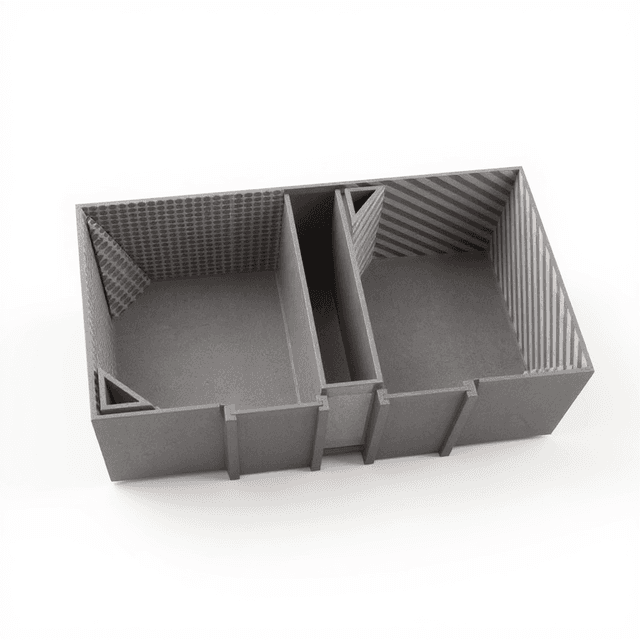
Pig 8 Arm Radial
Eight-arm radial maze specifically designed for spatial memory and cognitive assessment in porcine subjects, featuring central octagonal arena and food reward systems.

Louise Corscadden, PhD
Director of Science · ConductScience
Ask Louise about Pig 8 Arm Radial fit, setup, configuration, or quote prep.
Already working with us? Sign in to connect this with My Scientist.
Key Specifications
Full details →- Model fit
- Pig
- SKU family
- ME-8603
- Sizing
- Pig: Wall thickness 0.75 cm · Wall height 50 cm
- Ordering
- Online checkout and quote request available
- Category
- Behavioral Mazes
- Build notes
- solid rubber
The Pig 8 Arm Radial Maze is a specialized behavioral assessment apparatus designed for spatial memory and cognitive evaluation in porcine subjects. Constructed with a central octagonal area (91 cm diameter) and eight radiating arms (30 cm length × 17.8 cm width), this maze enables researchers to assess working memory, reference memory, and spatial navigation capabilities in pigs. Each arm terminates in a reward zone (35.6 cm diameter) equipped with PVC bowls and covered lids for food reward placement.
The apparatus features 50 cm high walls with 0.75 cm thickness to prevent visual cues between arms, while solid rubber flooring provides secure footing for large animal subjects. The maze accommodates both spatial and non-spatial learning paradigms, making it suitable for neuroanatomy research leveraging the similarities between porcine and human brain structure. Standard protocols include 8-day assessment periods with acquisition and reversal phases.
How It Works
The radial arm maze operates on the principle of spatial reference memory assessment through food-motivated exploration. Pigs are trained to navigate from the central starting position to locate food rewards placed in specific arm locations. The maze design eliminates intramaze cues while allowing extramaze spatial landmarks to guide navigation, requiring subjects to develop cognitive maps of the environment.
During testing, pigs demonstrate working memory by avoiding previously visited arms within a session and reference memory by consistently returning to arms that contain rewards across sessions. The 60-second trial duration and standardized starting position (Arm 2) ensure consistent testing conditions. Performance metrics include arm entry patterns, latency to reward acquisition, and error frequencies during both acquisition and reversal phases.
The maze configuration forces subjects to make spatial decisions at the central choice point, engaging hippocampal-dependent navigation systems. The eight-arm design provides sufficient complexity to challenge porcine cognitive abilities while allowing quantitative assessment of memory performance across multiple spatial locations.
Features & Benefits
Sizes by model
| Measurement | Pig |
|---|---|
| Wall thickness | 0.75 cm |
| Wall height | 50 cm |
| Central octagon diameter | 91 cm |
| Arm width | 17.8 cm |
| Arm length | 30 cm |
| Diameter | 35.6 cm |
- Reward Zone
- 8 PVC bowls with covered lids
Number of Arms
- 8
Wall Height
- 0.5 m
Wall Thickness
- 0.75 cm
Central Area Diameter
- 0.91 m
Arm Width
- 17.8 cm
Arm Length
- 30 cm
Floor Material
- solid rubber
Bowl Material
- polyvinylchloride
Curtain Material
- polyvinylchloride
Starting Arm
- Arm 2
Trial Duration
- 60 seconds maximum
Assessment Duration
- 8 days
Trials per Day
- 8
Acquisition Phase
- 4 consecutive days
Reversal Phase
- 4 consecutive days
Behavioral Construct
- spatial memory
- working memory
- reference memory
- spatial navigation
- cognitive flexibility
Automation Level
- manual
Material
- polyvinylchloride
- rubber
Color
- Blue
- White
Species
- Pig
Research Domain
- Aging Research
- Behavioral Pharmacology
- Developmental Biology
- Learning and Memory
- Neurodegeneration
- Neuroscience
Shipping weight
- 21.0 lb
Shipping box
- L: 43.2 cm
- W: 38.0 cm
- H: 27.9 cm
| Feature | This Product | Typical Alternative | Advantage |
|---|---|---|---|
| Number of Arms | 8 radial arms | Simple maze designs often offer 4-6 arms or linear configurations | Greater spatial complexity enables more sophisticated assessment of working memory capacity and spatial navigation strategies |
| Central Arena Size | 91 cm diameter octagonal area | Smaller central areas in rodent-scaled mazes | Accommodates porcine subject size while maintaining proper spatial decision-making requirements |
| Wall Height | 50 cm height walls | Lower walls suitable for smaller species | Prevents visual cues between arms while containing large animal subjects effectively |
| Arm Dimensions | 30 cm length × 17.8 cm width | Narrower arms designed for rodent navigation | Optimized for porcine locomotion patterns while maintaining spatial memory task validity |
| Flooring System | Solid rubber construction | Basic plastic or metal flooring | Provides secure traction for large animals and reduces noise during behavioral testing |
| Reward System | Eight PVC bowls with covered lids | Simple food wells or open containers | Standardized reward concealment ensures consistent motivational conditions across all arm locations |
This maze provides specialized dimensions and features specifically designed for porcine cognition research, addressing the unique requirements of large animal behavioral assessment. The robust construction and standardized reward systems support reliable spatial memory evaluation in translational neuroscience applications.
Practical Tips
Establish consistent extramaze spatial landmarks before beginning experiments and maintain their positions throughout testing periods.
Why: Spatial navigation relies on environmental cues that must remain stable for valid memory assessment.
Clean rubber flooring with non-slip disinfectants between subjects and inspect for wear patterns that could affect navigation.
Why: Maintained surface conditions ensure consistent traction and prevent confounding factors in behavioral performance.
Use standardized food rewards of consistent size and palatability across all trials and subjects.
Why: Motivation levels directly impact spatial learning performance and must be controlled for valid comparisons.
If subjects show arm bias or stereotyped behavior patterns, verify wall heights block visual cues and randomize reward placement.
Why: Non-spatial strategies can confound spatial memory assessment and indicate procedural issues.
Record ambient lighting conditions and maintain consistent illumination throughout testing sessions.
Why: Visual cue availability affects spatial navigation strategies and must be standardized for reliable data.
Ensure all wall connections are secure before introducing subjects and check for protruding hardware that could cause injury.
Why: Large animal subjects can generate significant forces during navigation that could compromise apparatus integrity.
Allow adequate inter-trial intervals to prevent fatigue effects that could impact spatial memory performance.
Why: Cognitive performance degrades with fatigue, potentially masking true spatial memory capabilities.
Video record sessions from multiple angles to capture complete navigation patterns and verify manual scoring accuracy.
Why: Comprehensive behavioral documentation enables detailed analysis of spatial strategies and error patterns.
Setup Guide
What’s in the Box
- Central octagonal arena (91 cm diameter)
- Eight radial arm sections (30 cm length × 17.8 cm width)
- Eight PVC reward bowls with covered lids
- Wall sections (50 cm height, 0.75 cm thickness)
- Solid rubber flooring components
- Assembly hardware and connectors
- Operating manual with standard protocols (typical)
Warranty
ConductScience provides a standard one-year manufacturer warranty covering defects in materials and construction, with technical support for setup and protocol implementation.
Compliance
Protocol and background
Introduction
The pig radial arm maze is different from the rodent radial arm as it is adapted to work with non-spatial tasks as well (Digler et al., 2010).
Due to the similarities between human and porcine neuroanatomy, pigs are a desirable subject to use in neuroscience experiments. Compared to rodents, pigs show much closer cognitive abilities to humans (Gieling et al., 2011). In particular, the similarities can be seen in the neural growth patterns of neonatal piglets and human infants. Furthermore, neonatal piglets are easy to wean and do not suffer from separation anxiety from their mothers. They can also be artificially reared and trained using a reward based system. All these factors make piglets an ideal subject to carry out learning and memory tasks. These tasks require the proper functioning of the hippocampus. However, many cytokine receptors reside in the hippocampus, making it particularly sensitive to excess production of central pro-inflammatory cytokines. These pro-inflammatory cytokines can adversely affect the hippocampus and can reduce the learning and memory capacity of this structure. This is of particular concern when brain growth is not yet complete as it could lead to potentially significant deficiencies in the ability to process and retain information effectively. (Digler, et al., 2010)
An excellent apparatus to carry out behavioral tasks which measure learning and memory is the pig 8 arm radial maze. The 8 arm design allows for the formation of several variations according to bait (in this case, milk) being placed alternatively in front of different arms. The visual cue used is different colored curtains placed in front of the arm. The piglets need to learn which color corresponds to the accessible milk and use this information in future tasks. The pig radial arm is different from the rodent radial arm as it is adapted to work with non-spatial tasks as well. (Digler, et al., 2010)
Apparatus & Equipment
The radial maze consists of 8 arms, an octagonal central area, a reward zone, 8 polyvinylchloride bowls, polyvinylchloride walls and polyvinylchloride curtains. The walls are 0.5 m tall and are made of an opaque polyvinyl chloride which is 0.75 cm thick. The walls are mounted on a solid rubber floor which allows for easy and comfortable movement of the subjects. The subjects are prevented from seeing the observer due to the polyvinylchloride curtains which surround the maze completely and extend from the floor to the ceiling. The octagonal central area is 0.91 m across and is connected to the arms which are 17.8 cm wide and 30 cm long. The arms lead to a reward zone which has a diameter of 35.6 cm. The reward zone has a stationary polyvinylchloride bowl located at the back of each arm which is identical to the bowl found in the home cage of the subjects. The entryway of each arm is covered with colored polyvinylchloride curtains which serve as intra-maze cues. (Digler, et al., 2010)
Training Protocol
The activity of the subjects is recorded via a video camera mounted to the ceiling directly above the central octagonal area. Prior to testing, the subjects are fed a nutritionally complete, medicated commercial piglet milk which is automatically delivered using a digital timer to mimic natural feeding patterns. The piglets are given milk every hour for 14 hours and then no milk for 10 hours. Behavioral assessment is conducted during the period of starvation so that hunger serves as a motivator. Additionally, a bowl of milk is placed behind the curtain in every arm to prevent the smell from becoming a cue. However, the bowl placed behind incorrect arms is covered, and only the bowl behind the correct arm is accessible to the subjects to serve as motivation and to help with the learning process. (Digler, et al., 2010)
Behavioral Assessment
Arm 2 serves as the starting location for the subjects when carrying out the behavioral assay. The subjects are assessed for 8 days and are assigned two tasks: acquisition and reversal. Each task is carried out over a period of 4 consecutive days with 8 trials occurring every day. In the acquisition task, the single correct arm is shielded by a blue curtain, whereas the other 7 incorrect arms are shielded by white curtains. After the completion of the acquisition task, the reversal task takes place. In this task, the color pattern is reversed, with the incorrect arms being covered by blue curtains and the correct arm being covered by a white curtain.
If the subjects are unable to complete a task in the allotted time they are gently guided to find the milk reward in the correct arm as a shaping procedure. This shaping, however, is only restricted to the acquisition phase and the maximal trial time (60s) is recorded for these subjects.
In each testing day, each of the 8 arms serves as the correct arm only once. The arm order is randomized between the days of testing but remained the same within one day of testing. Even though arm 2 is designated as the permanent starting arm, it is also part of the rotation of being the correct arm on any given day. (Digler, et al., 2010)
Establishment of Normal Learning Curves
A few subjects served as a control and are taken from separate litters and are reared according to the same pattern described above. However, they are not given any experimental treatments to assess their response to the behavioral assessment. (Digler, et al., 2010)
Effects of Peripheral Immune Activation
After the acquisition phase, the subjects are divided into two experimental groups on the basis of weight, gender, and the litter of origin. The subjects are then injected i.p with either sterile saline or poly I:C. After 3 hours post injection, the subjects then take part in the reversal testing.
Following the 8-day behavioral assessment, the control subjects are randomly assorted into two treatment groups and are given i.p injections of either sterile saline or poly I:C. Four hours after the injection, the subjects are anesthetized and are then sacrificed. Blood and tissue sampling occurs right after sacrifice. (Digler, et al., 2010)
Quantitative Reverse Transcriptase-Polymerase Chain Reaction
Total RNA is isolated from the tissue samples. The total RNA concentration is quantified using spectrophotometry, and the purified samples are then subjected to a DNAse I digestion procedure, followed by being reverse transcribed to cDNA.
Quantitative RT-PCR is performed in which the sample cDNA and reference cDNA is amplified via PCR. (Digler, et al., 2010)
Determination of Plasma Cytokine Protein Concentrations
Determination of plasma concentrations of cytokine is done using porcine-specific antibodies in enzyme immunoassays. This allows the evaluation of which cytokines become elevated and can cause possible disruption to the learning tasks. (Digler, et al., 2010)
Data Analysis
Several variables and parameters are recorded to carry out the data analyses:
- Latency to trial completion (this is averaged per piglet over 8 consecutive trials per day)
- Total distance moved (this is averaged per piglet over 8 consecutive trials per day)
- Number of incorrect arm entries (this number is totaled over the 8 consecutive trials per piglet each day)
- Amount and types of cytokines produced in piglets injected with sterile saline compared to those injected with poly I:C
- Comparison of amounts and types of cytokines produced between male and female piglets
- Comparison of amount and types of cytokines produced to the completion of behavioral tasks
The behavioral data is presented as daily averages for each variable. (Digler, et al., 2010)
Strengths & Limitations
Strengths
The piglet has similar neural biochemistry to human infants, making it an ideal candidate for carrying out experiments. Furthermore, piglets can be weaned soon after birth and do not experience the same separation anxiety that rodents do. (Digler et al., 2010)
The radial arm allowed the employment of paradigms that called for active response inhibition. This made it possible to detect even the smallest disruption of hippocampal activity. (Digler, et al., 2010)
Limitations
A non-spatial version of the radial arm has to be adopted as neonatal piglets lack sufficient visual acuities or sufficient development of certain brain regions that would allow their learning behavior to be measured in the spatial version of the radial arm. (Digler, et al., 2010)
Furthermore, the experiment is unable to detect sexually dimorphic effects of the cytokines. (Digler, et al., 2010)
Summary & Key Points
- Human and porcine neuroanatomy is similar, making it possible to test factors that affect learning and memory.
- Learning and memory are important functions of the hippocampus, which has many cytokine receptors. Pro-inflammatory cytokines can bind to these receptors and bring about dysfunctional changes in the hippocampus.
- The 8 arm radial maze allows the testing of piglets which have been injected with poly I:C compared to those only injected with sterile saline.
- The 8 arms in the maze allow the experimenters to come up with various combinations that can allow the testing of the subjects' learning abilities and retention.
- After the behavioral assessment, PCR and immunoassays allow the experimenters to determine the amount and type of cytokines produced and compare these findings to performance in the behavioral task
References
Digler, R. N. & Johnson, R. W. (2010). Behavioral assessment of cognitive function using a translational neonatal piglet model. Brain, Behavior, and Immunity, 24(7), 1156-1165.
Gieling, E.T., Nordquist, R. E., & Staay, F. J. (2011). Assessing learning and memory in pigs. Animal Cognition, 14(2), 151-173
From the Maze Engineers documentation for this apparatus.
What are the standard training protocols for naive pigs in this maze?
Standard protocols include 4-day acquisition phases followed by 4-day reversal phases, with 8 trials per day and 60-second maximum trial durations. Subjects typically start from Arm 2 position for consistency.
How does this maze accommodate the size differences between juvenile and adult pigs?
The 17.8 cm arm width and 91 cm central area accommodate pigs ranging from juvenile to adult sizes, though researchers should verify subject dimensions match maze specifications for optimal navigation.
What measures prevent subjects from seeing into adjacent arms?
The 50 cm wall height with 0.75 cm thickness effectively blocks visual communication between arms while allowing extramaze spatial cues to guide navigation.
How is the reward system standardized across trials?
Each arm features identical PVC bowls with lids positioned within 35.6 cm diameter reward zones, allowing consistent food placement and concealment protocols.
What maintenance is required for the rubber flooring system?
The solid rubber flooring requires regular cleaning with appropriate disinfectants between subjects and periodic inspection for wear or damage that could affect traction.
Can this maze be modified for non-spatial learning tasks?
Yes, the design accommodates both spatial and non-spatial paradigms by altering reward contingencies and cue placements according to experimental requirements.
What data collection methods are typically used with this apparatus?
Researchers typically record arm entry sequences, latency measures, error frequencies, and path efficiency using video tracking or manual observation protocols.
How does porcine performance in this maze relate to human cognitive assessment?
The similarities in porcine and human neuroanatomy, particularly hippocampal structure, make spatial memory performance in this maze relevant for translational cognitive research.
Have a question about this product?
Have a question? Just ask.
Send it over and we'll email you a personalized answer — no call, no scheduling.
Prefer to talk it through?
Accessories
Enhance your setup with compatible accessories