ConductVision Zebrafish Package
$1,990 per yearA 5-year license is $3,990 in total.
The ConductVision license for zebrafish tests. It also scores shoaling, the T-maze, the Y-maze and mirror biting.

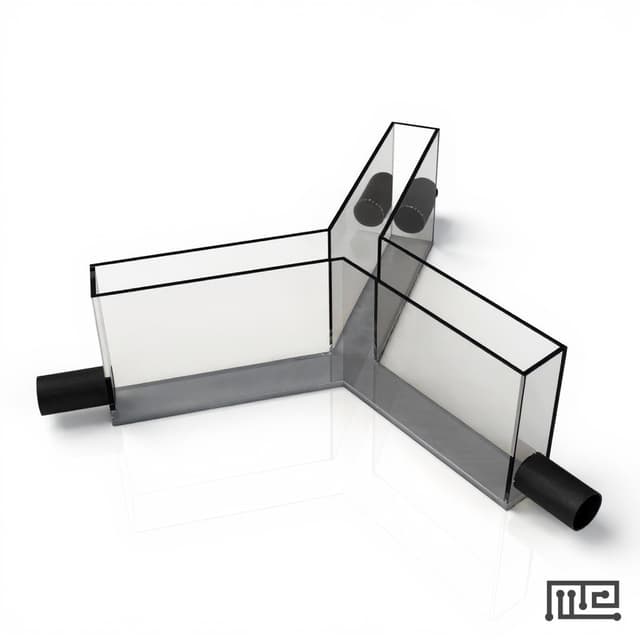
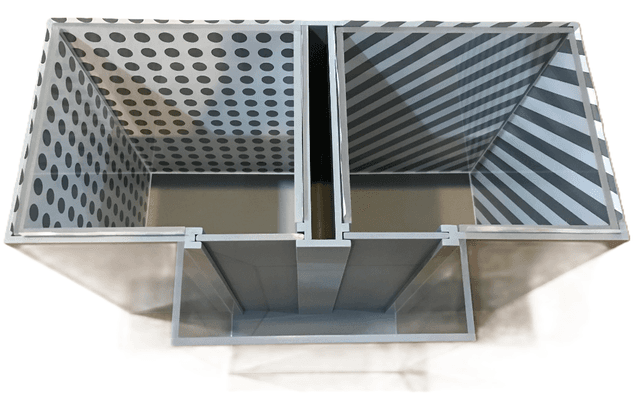
Acrylic behavioral chamber with sliding doors for zebrafish light-dark preference testing, measuring anxiety-like behaviors through scototaxis assessment.

Director of Science · ConductScience
Ask Louise about Zebrafish Light Dark fit, setup, configuration, or quote prep.
Already working with us? Sign in to connect this with My Scientist.
The Zebrafish Light Dark apparatus is a specialized behavioral testing chamber designed for anxiety and phototaxis studies in zebrafish (Danio rerio). The system consists of an acrylic tank measuring 15 cm × 10 cm × 45 cm with central sliding doors that create two equal compartments, each measuring 15 cm × 10 cm × 10 cm. This apparatus enables researchers to assess light-dark preference behaviors, a validated measure of anxiety-like responses in zebrafish models.
The light-dark preference test exploits the natural scototaxis behavior of zebrafish, where anxious fish exhibit increased preference for dark environments while showing reduced exploration of illuminated areas. The apparatus allows for controlled presentation of light and dark conditions while enabling precise measurement of time spent in each compartment, transition frequency, and latency to enter different zones.
The light-dark preference test operates on the principle of scototaxis - the natural tendency of zebrafish to prefer darker environments when experiencing anxiety or stress. The apparatus creates a controlled environment where one compartment can be illuminated while the other remains dark, allowing researchers to quantify the fish's preference for each environment. The central sliding doors enable controlled access between compartments while maintaining distinct light conditions.
During testing, zebrafish are placed in the apparatus and their movement patterns are recorded. Key behavioral metrics include time spent in light versus dark compartments, number of transitions between zones, and latency to first entry into the light compartment. Increased time in the dark compartment and reduced exploration of the light zone indicate heightened anxiety-like behavior.
The transparent acrylic construction allows for video recording and automated behavioral analysis while maintaining optical clarity for precise tracking. The compartment dimensions provide sufficient space for natural swimming behaviors while constraining the environment for accurate spatial analysis.
| Measurement | Zebrafish |
|---|---|
| Size | Acrylic tank:15 cm × 10 cm × 45 cm (height × width × length); Central sliding doors, each compartment 15 cm × 10 cm × 10 cm (height × width × length) |
| Feature | This Product | Typical Alternative | Advantage |
|---|---|---|---|
| Compartment Standardization | Equal 10 cm × 10 cm × 15 cm compartments with sliding door separation | Fixed partitions with variable dimensions or permanent barriers | Enables protocol flexibility while maintaining spatial balance for unbiased behavioral assessment. |
| Construction Material | Transparent acrylic construction throughout | Mixed materials or opaque dividers in some models | Provides complete visual access for comprehensive behavioral tracking and analysis. |
| Chamber Access Control | Central sliding door system for controlled compartment access | Open designs without controllable barriers | Allows for initial habituation phases followed by choice testing periods. |
| Overall Dimensions | 45 cm length with 15 cm height providing extended swimming space | Shorter chambers with limited swimming distance | Accommodates natural zebrafish swimming behaviors while maintaining laboratory space efficiency. |
This apparatus offers standardized dimensions matching established protocols with transparent acrylic construction for complete behavioral visibility. The sliding door system provides experimental flexibility while maintaining spatial balance between compartments.
Maintain consistent lighting conditions across testing sessions and calibrate light meters regularly.
Why: Light intensity variations can significantly affect behavioral responses and reduce experimental reproducibility.
Clean acrylic surfaces with non-abrasive cleaners to prevent scratching that could affect video tracking.
Why: Optical clarity is essential for accurate automated behavioral analysis and manual observation.
Verify compartment light levels before each experimental session using a calibrated light meter.
Why: Light intensity changes can occur due to bulb aging or ambient lighting variations affecting behavioral responses.
Record ambient laboratory conditions including temperature and background noise levels during testing.
Why: Environmental factors beyond light-dark contrast can influence zebrafish anxiety behaviors and should be documented.
If fish remain motionless, check water temperature and allow additional acclimation time.
Why: Temperature stress or insufficient habituation can suppress natural exploratory behaviors.
Ensure adequate water depth to prevent fish from jumping while avoiding overflow during active swimming.
Why: Proper water levels maintain fish welfare while preventing equipment damage from water spillage.
Use consistent water sources and maintain stable pH and conductivity across testing sessions.
Why: Water quality variations can affect fish behavior and introduce confounding variables in behavioral assessment.
ConductScience provides a standard one-year manufacturer warranty covering defects in materials and workmanship, with technical support for setup and operation guidance.
Background reading relevant to this product:
What water depth is optimal for light-dark preference testing?
Typically 8-10 cm depth provides sufficient swimming space while preventing jumping, though consult behavioral protocols for specific experimental requirements.
How long should fish acclimate before testing begins?
Standard protocols recommend 5-10 minute acclimation periods, though this varies with experimental design and fish stress levels.
What lighting conditions define the light-dark contrast?
Typical protocols use 100-300 lux for light zones with <5 lux for dark zones, though specific intensities should match published methodologies.
Can this apparatus accommodate juvenile zebrafish?
Yes, the compartment size suits both juvenile and adult zebrafish, though swimming patterns may differ between developmental stages.
How is behavioral data typically quantified?
Standard metrics include time in each compartment, transition frequency, latency to light entry, and swimming velocity in each zone.
What cleaning protocols are recommended between subjects?
Thorough rinsing with system water between trials prevents chemical cues from affecting subsequent subjects' behavior.
Is the apparatus compatible with automated tracking systems?
Yes, the transparent acrylic construction and standardized dimensions support most commercial and custom video tracking systems.
ConductVision is our video-tracking software. Record your sessions on video, and it reports the measures listed below.
A 5-year license is $3,990 in total.
The ConductVision license for zebrafish tests. It also scores shoaling, the T-maze, the Y-maze and mirror biting.
Send it over and we'll email you a personalized answer — no call, no scheduling.
Prefer to talk it through?
Enhance your setup with compatible accessories
Use this apparatus with
Automate light-zone time, latency, zone occupancy, path order, and event timing for Zebrafish Light/Dark Maze studies.
ConductVision Zebrafish Light/Dark Maze ->Stepwise aquatic light-dark preference setup, trial timing, exclusion rules, and reporting checkpoints.
ConductMaze Zebrafish Light/Dark Maze Protocol ->Summarize light-zone time, group differences, and quality-control flags before export.
Zebrafish Light/Dark Maze Calculator ->Configuration considerations
Use these notes to scope species, cohort, tracking, and automation needs. Only verified product or support routes are linked from this section.
Aquatic light/dark choice tank with controlled illumination zones
zebrafish scototaxis, anxiety-like preference, transition behavior, and aquatic screening.
Quote
Request QuoteMouse, rat, aquatic, insect, or large-animal scaling as appropriate
Use species-specific dimensions and lighting so the apparatus tests the intended construct instead of body size, visibility, or handling tolerance.
Quote
View options ->Camera, gates, sensors, cue control, or event logging as required
Best when the protocol needs reproducible timing, high-throughput scoring, or defensible endpoint extraction across cohorts.
Quote
Configure tracking ->§ 1
The Zebrafish Light/Dark Maze is a species-specific behavioral assay built around zebrafish scototaxis, anxiety-like preference, transition behavior, and aquatic screening. Interpretable data depend on matching the apparatus geometry, subject species, trial structure, and scoring rules to the behavioral construct under study. 1
Aquatic light-dark preference protocols depend on stable geometry, consistent trial timing, and pre-defined scoring rules. Without those controls, light-zone time can be shifted by motivation, locomotion, light level, odor, cue salience, or handling rather than the intended behavioral construct. 1
This methods section summarizes setup, endpoint definitions, common confounds, sample output, adjacent assays, and reporting details needed to evaluate Zebrafish Light/Dark Maze results alongside the product specifications. 1
§ 2
Aquatic light-dark preference with standardized setup, trial timing, and endpoint extraction.
Critical methodological constraints
Core Zebrafish Light/Dark Maze endpoints for behavioral interpretation and apparatus quality control.
Light-zone time
Aquatic anxiety-like preference
Transition latency
Latency and initiation
Zone transitions
Spatial or zone strategy
Freezing time
Engagement control
Reflection artifacts
Quality-control flag
+ Additional metrics: trial duration, zone dwell, event count, path efficiency, tracking confidence, exclusions, and session-level notes.
A compact percentage summary for Zebrafish Light/Dark Maze output.
§ 3
PubMed publication counts, sample apparatus output, and recent papers from a dated PubMed snapshot.
PubMed volume and co-occurring behavioral methods for Zebrafish Light/Dark Maze studies.
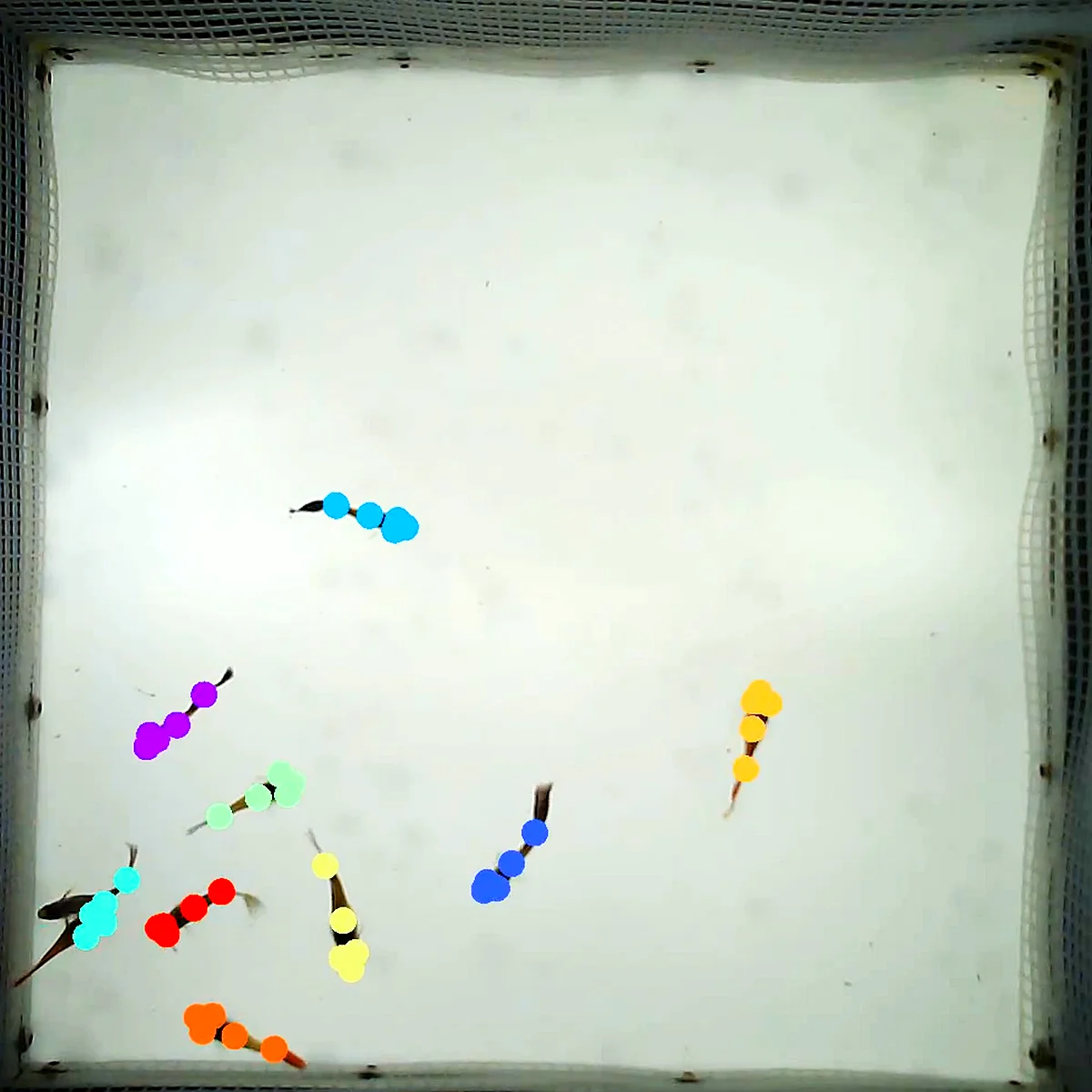
Representative Zebrafish Light/Dark Maze output for methods review and endpoint interpretation.
Toxicological profile and neuromodulatory effects of a secoiridoid-rich extra-virgin olive oil extract in a zebrafish model of chemically induced seizures.
Damiano A, Arana ÁJ, Merola C, et al.. Biomed Pharmacother. 2026 Sep 22.
Extra-virgin olive oil (EVOO) is a rich source of bioactive compounds, including the secoiridoids oleocanthal (OLC) and oleacein (OLE), which exhibit antioxidant, anti-inflammatory, and neuroprotective activities.
Acute high-dose acesulfame exposure induces developmental and neurobehavioral toxicity.
Xing Y, Wang M, Zhang X, et al.. Tissue Cell. 2026 Sep 19.
Acesulfame potassium (ACE) is a widely used low-calorie artificial sweetener that is frequently detected in aquatic environments.
Phenotypic attenuation masks persistent molecular perturbations during PFOS-cadmium co-exposure in zebrafish larvae.
Zhao X, Chen F, Chang C, et al.. J Hazard Mater. 2026 Sep 8.
Perfluorooctane sulfonate (PFOS) and cadmium (Cd) are persistent contaminants that frequently coexist in aquatic environments, yet their combined effects on early neurodevelopment remain unclear.
Early neurotoxic effects of commercial 2,4-D formulation in zebrafish: A multibiomarker approach.
Oliveira BRF, Kremer R, Pereira AG, et al.. Environ Toxicol Pharmacol. 2026 Sep.
Commercial formulations of 2,4-dichlorophenoxyacetic acid (CF2,4-D) are widely used in agriculture and frequently detected in aquatic environments, yet their neurotoxic effects remain poorly understood.
Ferulic acid alleviates ionizing radiation-induced developmental and neurobehavioral toxicity in zebrafish via modulation of apoptosis-related genes.
Wang T, Zhang Y, Xiang S, et al.. Ecotoxicol Environ Saf. 2026 Sep 1.
High-dose ionizing radiation (IR), as encountered in radiotherapy-related and radiological emergency contexts, induces severe acute developmental and neurobehavioral toxicity. However, safe and effective natural radioprotective agents remain limited.
Bisphenol A alternatives (BPS and BPAF) disrupt anti-predatory behavior and intergenerational behavioral responses in zebrafish (Danio rerio).
Costa DFD, Silva GVD, Bellot MS, et al.. Aquat Toxicol. 2026 Sep.
Bisphenol S (BPS) and bisphenol AF (BPAF) are increasingly used as alternatives to bisphenol A and are now widely detected in aquatic environments. These compounds interfere in endocrine systems as the hypothalamus-pituitary-gonadal and the hypothalamus-pituitary-thyroid axes.
§ 4
Limitations of the paradigm, methodological caveats, and current directions.
Variables that can shift Zebrafish Light/Dark Maze results apart from the effect under study.
Water quality can change apparent Zebrafish Light/Dark Maze performance without reflecting the intended behavioral construct. Control it in setup and report it in methods.
Illumination contrast can change apparent Zebrafish Light/Dark Maze performance without reflecting the intended behavioral construct. Control it in setup and report it in methods.
Tank reflection can change apparent Zebrafish Light/Dark Maze performance without reflecting the intended behavioral construct. Control it in setup and report it in methods.
Acclimation can change apparent Zebrafish Light/Dark Maze performance without reflecting the intended behavioral construct. Control it in setup and report it in methods.
Individual versus group testing can change apparent Zebrafish Light/Dark Maze performance without reflecting the intended behavioral construct. Control it in setup and report it in methods.
Zebrafish Light/Dark Maze is strongest when endpoint definitions, apparatus settings, and exclusion rules are specified before testing. Treat a single summary metric as a screening signal, then confirm interpretation with latency, engagement, comparator assays, and quality-control review. 1
Choose Zebrafish Light/Dark Maze when the research question matches zebrafish scototaxis, anxiety-like preference, transition behavior, and aquatic screening. and the lab can control water quality, illumination contrast, and trial timing.
Specify species, cohort size, apparatus dimensions, lighting, tracking method, automation level, cleaning workflow, endpoint definitions, and exclusion criteria before data collection begins.
Interpretation is strongest when the apparatus configuration, trial timing, scoring thresholds, confound controls, and comparator assays are documented together with the primary endpoint.
Quarterly editorial review of emerging Zebrafish Light/Dark Maze methodology. Q2 2026
Define light-zone time, latency, exclusions, and engagement flags before comparing cohorts.
Camera and event-log workflows can reduce observer burden and improve consistency when zone definitions and event thresholds are validated.
Zebrafish Light/Dark Maze should link to adjacent maze, motor, or motivation assays when interpretation depends on controls.
Apparatus dimensions, protocol fit, tracking compatibility, and endpoint definitions should be reported together so results are easier to reproduce.
§ 5
10 selected methods and validation references for Zebrafish Light/Dark Maze.