
1 / 13
Visual Cliff Test
SKU ME-5201/ ME-5202
In Stock — ships now$1,490.00
IncludesStandard care
Behavioral apparatus for assessing depth perception and visual development in rodents using an apparent cliff created by elevated transparent plexiglass over checkered patterns.
CE MarkedBAA available
Scientist guidance

Louise Corscadden, PhD
Director of Science · ConductScience
Ask Louise about Visual Cliff Test fit, setup, configuration, or quote prep.
Already working with us? Sign in to connect this with My Scientist.
Key Specifications
Full details →- Model fit
- Mouse, Rat
- SKU family
- ME-5201/ ME-5202
- Sizing
- Mouse: Length 62 cm · Width 62 cm; Rat: Length 82 cm · Width 82 cm
- Ordering
- Online checkout and quote request available
- Category
- Behavioral Mazes
- Build notes
- Plexiglass
The Visual Cliff Test is a specialized behavioral apparatus designed to assess depth perception and visual development in rodents. Based on the seminal work of Gibson and Walk (1960), this apparatus creates an apparent cliff using a transparent plexiglass surface positioned above a checkered pattern, allowing researchers to evaluate an animal's ability to perceive depth and avoid potentially dangerous edges.
The apparatus features a single-chamber design with species-specific dimensions optimized for mouse (60cm x 60cm) or rat (79.8cm x 79.8cm) testing. The transparent glass plate is elevated 1m (mouse) or 1.33m (rat) above ground level, with checkered patterned wallpaper positioned beneath half of the surface to create visual depth cues. The apparatus is compatible with video tracking systems including Noldus EthoVision XT and ANY-Maze for automated behavioral analysis.
How It Works
The Visual Cliff Test exploits the fundamental visual system's ability to interpret depth cues through binocular disparity and motion parallax. The apparatus creates an optical illusion of depth by positioning a transparent plexiglass surface above a high-contrast checkered pattern on one side (shallow side) while the other side extends over empty space (deep side), creating the appearance of a cliff edge.
When placed at the junction between the shallow and deep sides, animals with intact depth perception will demonstrate cliff avoidance behavior by preferentially remaining on or moving toward the apparent shallow side. The transparent surface provides equal tactile support across both sides, ensuring that behavioral choices reflect visual depth perception rather than physical barriers. The high-contrast checkered pattern enhances visual depth cues through texture gradients and perspective.
Testing sessions typically last 20 minutes, during which researchers record the animal's position, movement patterns, and time spent on each side. The apparatus positioning allows partial overhang from the edge of the support surface, enhancing the cliff illusion while maintaining structural stability.
Features & Benefits
Species-specific dimensional optimization
Provides appropriately scaled testing environments for both mouse and rat subjects with dedicated size configurations.
Transparent plexiglass construction
Ensures equal tactile support across both shallow and deep sides while maintaining visual depth illusion integrity.
Single chamber design
Simplifies experimental setup and animal handling while focusing assessment on depth perception without confounding spatial variables.
Checkered pattern visual cues
Provides high-contrast depth perception stimuli that enhance texture gradients and perspective cues for reliable behavioral responses.
Video tracking compatibility
Integrates with Noldus EthoVision XT and ANY-Maze systems for automated behavioral analysis and objective data collection.
20-minute standardized test duration
Allows sufficient time for comprehensive behavioral assessment while minimizing stress and habituation effects.
Apparatus overhang positioning
Enhances cliff illusion realism while maintaining structural safety and experimental validity.
Storage and assembly system
Facilitates laboratory space management and equipment maintenance with organized storage solutions and user assembly options.
Sizes by model
| Measurement | Mouse | Rat |
|---|---|---|
| Length | 62 cm | 82 cm |
| Width | 62 cm | 82 cm |
| Height | 19 cm | 25 cm |
- 1 Chamber
- 1 Pattern set
- Clear floor
Warranty Length
- 1 YEAR
Chamber Design
- Single chamber
Assembly Required
- Yes
Storage Included
- Yes
Test Duration
- 20 minutes
Apparatus Positioning
- Partially overhangs from edge of support surface
Pattern Paper
- Checkered patterned wallpaper
Behavioral Construct
- Depth perception
- Visual discrimination
- Cliff avoidance
- Spatial perception
- Visual development
- Stereopsis
Automation Level
- semi-automated
Material
- Plexiglass
Research Domain
- Aging Research
- Anxiety and Depression
- Behavioral Pharmacology
- Developmental Biology
- Learning and Memory
- Neurodegeneration
- Neuroscience
Compatible Tracking Software
- ConductVision
Shipping weight
- 21.0 lb
Shipping box
- L: 43.2 cm
- W: 38.0 cm
- H: 27.9 cm
| Feature | This Product | Typical Alternative | Advantage |
|---|---|---|---|
| Platform dimensions | 60cm x 60cm (mouse) or 79.8cm x 79.8cm (rat) with species-optimized sizing | Fixed single-size platforms often compromise testing effectiveness for different species | Species-specific dimensions ensure appropriate spatial scale for natural exploration behaviors and reliable depth perception assessment. |
| Elevation height | 1m height for mouse, 1.33m height for rat with species-appropriate scaling | Single height configurations may not provide adequate depth illusion for all species | Optimized heights create species-appropriate depth perception challenges while maintaining safety and experimental validity. |
| Video tracking integration | Compatible with Noldus EthoVision XT and ANY-Maze tracking systems | Basic apparatus designs often require manual observation and scoring | Automated tracking reduces observer bias and enables precise quantification of spatial and temporal behavioral parameters. |
| Storage and assembly | Includes storage system with user assembly design | Fixed installations require dedicated laboratory space | Flexible setup and storage optimize laboratory space utilization while maintaining consistent apparatus configuration. |
| Testing duration standardization | 20-minute standardized test sessions | Variable or undefined testing periods across different systems | Standardized duration facilitates protocol consistency and cross-study comparisons while balancing assessment completeness with animal welfare. |
This Visual Cliff Test offers species-optimized dimensions and heights with integrated video tracking compatibility and flexible storage solutions. The standardized 20-minute testing protocol with plexiglass construction provides reliable depth perception assessment for both mouse and rat research applications.
| Model | SKU | Listed price | Status | Shipping box |
|---|---|---|---|---|
| Rat | ME-5201/ ME-5202 | $1,490.00 | Available | 43.2 x 38.0 x 27.9 cm |
| Mouse | ME-5201/ ME-5202 | $1,290.00 | Available | 43.2 x 38.0 x 27.9 cm |
Neuroscience
Evaluating visual system development and depth perception capabilities in animal models of visual disorders or developmental delays.
Behavioral Pharmacology
Assessing the effects of pharmacological interventions on visual processing and spatial perception behaviors in rodent models.
Developmental Biology
Investigating the ontogeny of visual depth perception and spatial awareness during critical developmental periods.
Vision Research
Characterizing visual system function and stereopsis in genetically modified animal models or following experimental manipulations.
Aging Research
Documenting age-related changes in visual perception and depth discrimination capabilities in longitudinal studies.
Neurodegeneration
Monitoring visual system dysfunction and spatial perception deficits in models of neurodegenerative diseases affecting vision.
Practical Tips
Calibration
Verify pattern positioning and contrast levels before each testing session to ensure consistent visual depth cues.
Why: Pattern alignment and contrast consistency directly affect the reliability of depth perception assessment.
Maintenance
Clean the plexiglass surface with appropriate non-abrasive cleaners and inspect for scratches that could affect transparency.
Why: Surface clarity is essential for maintaining the visual cliff illusion and preventing confounding visual artifacts.
Best Practices
Maintain consistent ambient lighting conditions and avoid shadows or reflections on the apparatus surface during testing.
Why: Lighting variations can alter depth perception cues and introduce uncontrolled variables affecting behavioral responses.
Best Practices
Allow animals to acclimate to the testing room environment for at least 30 minutes before apparatus exposure.
Why: Environmental acclimation reduces stress-related behavioral alterations that could interfere with depth perception assessment.
Troubleshooting
If animals show excessive freezing behavior, reduce ambient noise and verify appropriate testing room temperature.
Why: Environmental stressors can suppress natural exploratory behavior necessary for meaningful cliff avoidance assessment.
Data Quality
Record baseline locomotor activity in a neutral environment to distinguish depth-specific avoidance from general activity differences.
Why: Baseline activity measurements help differentiate visual depth perception from general locomotor or anxiety-related behavioral changes.
Safety
Inspect apparatus stability and overhang positioning before each use to ensure structural integrity.
Why: Proper apparatus positioning maintains both experimental validity and animal safety during behavioral assessment.
Troubleshooting
If tracking systems fail to detect animals properly, adjust camera angles and lighting to eliminate shadows or reflections.
Why: Consistent animal detection is essential for accurate behavioral quantification and reliable data collection.
Setup Guide
Unpack and Inspect Components
Remove the plexiglass platform, support structure, and checkered pattern materials from storage packaging and inspect for any damage during shipping.
Assemble Support Structure
Construct the elevated platform according to species-specific height requirements (1m for mouse, 1.33m for rat) ensuring structural stability and proper alignment.
Position Checkered Pattern
Place the checkered patterned wallpaper beneath the designated shallow side of the apparatus, ensuring proper alignment and contrast visibility.
Install Plexiglass Platform
Mount the transparent plexiglass plate securely on the support structure, verifying that it extends partially over the edge to create the cliff illusion.
Verify Apparatus Positioning
Confirm that the apparatus partially overhangs from the edge of the support surface and that the visual depth cues are clearly visible.
Configure Tracking System
Set up compatible video tracking equipment (Noldus EthoVision XT or ANY-Maze) with appropriate camera positioning and calibration for behavioral analysis.
Conduct Test Validation
Perform initial validation trials to ensure proper depth perception assessment and verify tracking system accuracy before experimental use.
What’s in the Box
- Plexiglass platform (species-specific dimensions)
- Support structure components
- Checkered patterned wallpaper
- Assembly hardware and fasteners
- Storage container system
- User manual and setup instructions (typical)
- Calibration and validation guide (typical)
Warranty
ConductScience provides a 1-year manufacturer warranty covering defects in materials and workmanship, with technical support for setup and operational guidance.
Compliance
ARRIVE GuidelinesCommonly used in animal research workflows where standardized behavioral assessment protocols support reproducible experimental reporting.
IACUC Protocol RequirementsSupports behavioral testing protocols subject to institutional animal care and use committee approval and oversight.
Good Laboratory Practice (GLP)Used in regulated research environments where standardized behavioral assessment procedures support data integrity and study validity.
References
Background reading relevant to this product:
1.John E. Richards et al. (1983) “Affective, Behavioral, and Avoidance Responses on the Visual Cliff: Effects of Crawling Onset Age, Crawling Experience, and Testing Age” Psychophysiology doi:10.1111/j.1469-8986.1983.tb00930.x
2.Adi Tzameret et al. (2019) “Evaluation of visual function in Royal College of Surgeon rats using a depth perception visual cliff test” Visual Neuroscience doi:10.1017/s095252381800007x
Q
What is the recommended acclimation period before testing?
A
Allow 5-10 minutes for animals to acclimate to the apparatus environment before beginning the 20-minute test session. Monitor for signs of excessive stress or freezing behavior that may interfere with natural exploration.
Q
How do you distinguish between visual depth perception and other avoidance behaviors?
A
Compare behavior on the visual cliff with control conditions using opaque surfaces at the same height. True depth perception is indicated by selective avoidance of the apparent deep side while showing normal exploration of elevated opaque surfaces.
Q
What tracking parameters should be measured during testing?
A
Key measures include time spent on shallow vs deep sides, latency to cross to deep side, number of approaches to the cliff edge, and overall locomotor activity. Video tracking systems can automate these measurements with zone-based analysis.
Q
How does age affect visual cliff performance in rodents?
A
Eye opening occurs around postnatal day 14 in rodents, with depth perception developing over the following weeks. Adult animals typically show robust cliff avoidance, while very young or aged animals may show reduced discrimination.
Q
Can the apparatus be modified for different experimental conditions?
A
The checkered pattern can be replaced with different visual stimuli to test specific depth cues. Lighting conditions can be adjusted to evaluate vision under various illumination levels, though maintain consistent conditions within experiments.
Q
What are common sources of experimental variability?
A
Variability can arise from inconsistent lighting, pattern positioning, animal handling stress, or apparatus cleanliness. Standardize all environmental conditions and thoroughly clean between subjects to minimize confounding factors.
Q
How do you validate proper apparatus function?
A
Test with animals of known visual status (normal and visually impaired) to confirm the apparatus reliably discriminates visual capabilities. Monitor that tracking systems accurately detect animal position across all zones.
Have a question about this product?
Track rodents with ConductVision
ConductVision is our video-tracking software. Record your sessions on video, and it scores standard rodent tests, such as those listed below.
Examples of tests it scores
To check whether ConductVision scores your protocol in this apparatus, ask in your quote request.
Ask a question
Have a question? Just ask.
Send it over and we'll email you a personalized answer — no call, no scheduling.
Personalized email reply
Usually within one business day
Helpful answers published here
Prefer to talk it through?
Frequently Bought Together
Total: $2,730.00
Creator Insights
Eleanor J. GibsonDeveloped the visual cliff (1960, with Richard D. Walk)Cornell University
About the Creator
Eleanor J. Gibson (1910–2002) was a developmental psychologist at Cornell University and a leading figure in the study of perceptual learning; she received the National Medal of Science in 1992. With Richard D. Walk of George Washington University she developed the visual cliff, an apparatus with a glass-covered table presenting a shallow side and an apparent deep drop-off. The pair used it to test whether newborn animals and human infants could perceive and avoid depth without prior experience, reporting their findings in a widely read 1960 article. The visual cliff has since been applied across many species to study the development of depth perception.
To view Eleanor J. Gibson’s publications, visit PubMed.
Did you work with Eleanor J. Gibson? to suggest corrections or share material for these Creator Insights.
ConductScience celebrates method creators: researchers who, through rigorous and often ingenious experiments, develop the tools that reveal how the brain and body work. These are real scientific discoveries that become everyday instruments for the labs that follow.
Foundational paper
- Gibson, E. J., & Walk, R. D. (1960). The “visual cliff.” Scientific American, 202(4), 64–71. doi:10.1038/scientificamerican0460-64
Use this apparatus with
The complete Visual Cliff Test workflow
Track behavior
No exact ConductVision visual-cliff page is currently published. Shallow- versus deep-side choices and step-off latency are scored from an overhead view of the platform, so automated choice detection stays a roadmap gap.
Supporting page not yet builtRun protocol
No exact ConductMaze visual-cliff protocol is currently published. Apparent-depth setup, contrast and lighting control, and shallow- versus deep-side choice scoring are apparatus-specific; keep this as a roadmap gap.
Supporting page not yet builtAnalyze output
No exact visual-cliff analysis tool is currently published. Shallow-side preference, step-off latency, and deep-side crossings are summarized from trial logs rather than a dedicated analyzer; keep this as a roadmap gap.
Supporting page not yet builtConfiguration considerations
Common Visual Cliff Test setup decisions
Use these notes to scope species, cohort, tracking, and automation needs. Only verified product or support routes are linked from this section.
This productCheckerboard
Visual Cliff Test
Elevated glass platform over a checkerboard pattern, with the pattern flush on the shallow side and dropped on the deep side
Standard configuration for assessing depth perception, scoring whether an animal placed on a center board steps onto the shallow side or the apparent drop.
Quote
Request QuoteBuyableMouse or rat
Species-Scaled Cliff
Platform size, center-board width, and apparent drop scaled for mouse or rat
Center-board width and apparent depth interact with body size and stride, so the platform should be scaled to the species to keep the depth cue salient.
Quote
View options ->SpecialtyContrast series
Graded-Contrast Cliff
Adjustable checkerboard contrast and apparent depth for visual-acuity grading
Best when the question is graded visual function rather than a single pass or fail, using a contrast and depth series to find where depth avoidance breaks down.
Quote
Request automation help§ 1
Introduction
The Visual Cliff Test assesses depth perception by placing an animal on a center board between a shallow surface and an apparent drop covered by clear glass, then recording which side it steps onto. Gibson and Walk introduced the visual cliff as a way to study whether depth avoidance is present without prior experience of falling. 1
The core readout is the choice to step onto the shallow side rather than the deep side, supported by step-off latency and the rate of deep-side crossings. Because the drop is covered by glass, the test isolates the visual depth cue from any real fall, making it a standard screen for functional vision and depth perception in rodent models. 1
Visual ability, lighting and contrast, surface-texture cues, the apparent height of the drop, and general exploratory drive all change the choice independent of depth perception. A defensible protocol controls lighting and contrast, eliminates non-visual edge cues, confirms baseline vision in the strain, and scores freezing and indecision separately from a deep-side choice. 1
§ 2
Methods
2.1 Procedure
Center-board depth choice with lighting and contrast control, latency timing, and freezing and indecision scoring.
Pre-test setup
- 1.Strain vision check: Confirm the strain is not visually impaired, since blind or low-vision lines choose at chance and a deep-side step then reflects blindness rather than absent depth avoidance.
- 2.Contrast and lighting setup: Set the checkerboard contrast and even, glare-free lighting so the apparent-depth cue is salient and reflections off the glass do not mask it.
- 3.Eliminate non-visual cues: Ensure the glass is flush and clean so there is no tactile, thermal, or olfactory edge cue that would let the animal detect the boundary without seeing it.
- 4.Define choice rules: Pre-define a shallow-side choice, a deep-side crossing, a maximum decision latency, and what counts as freezing or indecision on the center board.
Trial sequence
- 1.Place on the center board: Place the animal on the narrow center board straddling the shallow and deep sides and start the decision timer.
- 2.Record the choice: Score whether the animal steps onto the shallow side or crosses onto the apparent drop as its first descent.3
- 3.Time step-off latency: Record the latency from placement to the first step off the board, capping at the pre-defined maximum for animals that stall.1
- 4.Score freezing and indecision: Log freezing and center-board time separately, since a fearful animal that never steps off is not the same as one choosing the deep side.
- 5.Clean and repeat: Clean the glass between animals to remove odor and smudges, and rotate the apparatus orientation to cancel any room-cue bias.
Critical methodological constraints
- Visual ability. Blind or low-vision strains choose at chance. Confirm baseline vision so a deep-side step is interpreted as absent depth avoidance, not absent sight.5
- Lighting and contrast. Glare on the glass and weak checkerboard contrast degrade the depth cue. Use even lighting and high contrast so the cue is visually available.4
- Non-visual edge cues. Tactile, thermal, or olfactory differences at the boundary let animals detect the edge without vision. Keep the glass flush, clean, and thermally uniform.
- Indecision versus choice. Freezing on the board is not a deep-side choice. Score indecision and center-board time separately so fear is not read as failed depth avoidance.
2.2 Measurement & Analysis
Core visual-cliff endpoints for depth avoidance, decision dynamics, and indecision quality control.
Shallow-Side Choices
Depth avoidance
Proportion of trials in which the animal steps onto the shallow side, the primary index of intact depth perception and avoidance.3
Step-Off Latency
Decision time
Time from placement on the center board to the first descent, indexing how quickly the depth choice is resolved.1
Deep-Side Crossings
Avoidance failure
Count of descents onto the apparent drop, the direct marker of failed or absent depth avoidance.
Freezing Time
Fear confound
Time spent immobile on the center board, recorded so fear-driven immobility is not misread as a depth-side choice.
Center Time
Indecision QC
Time spent on the center board before any step-off, a quality-control measure that flags indecision and low exploratory drive.
+ Additional metrics: trial-to-trial consistency, contrast level, illumination, apparatus orientation, baseline visual-acuity correlate, and per-trial video notes.
2.3 shallow-side preference (analysis)
A compact fraction of descents that landed on the shallow side rather than the apparent drop.
2.4 sample-size planning
Estimate the N per group needed to detect a literature-anchored depth-perception effect at the endpoint you plan to report. Override the defaults with your own pilot numbers.
§ 3
Results
PubMed publication counts, sample apparatus output, and recent papers from a dated PubMed snapshot.
3.1 Publication trends
PubMed volume and co-occurring behavioral methods for visual-cliff and depth-perception studies.
3.2 Sample apparatus output
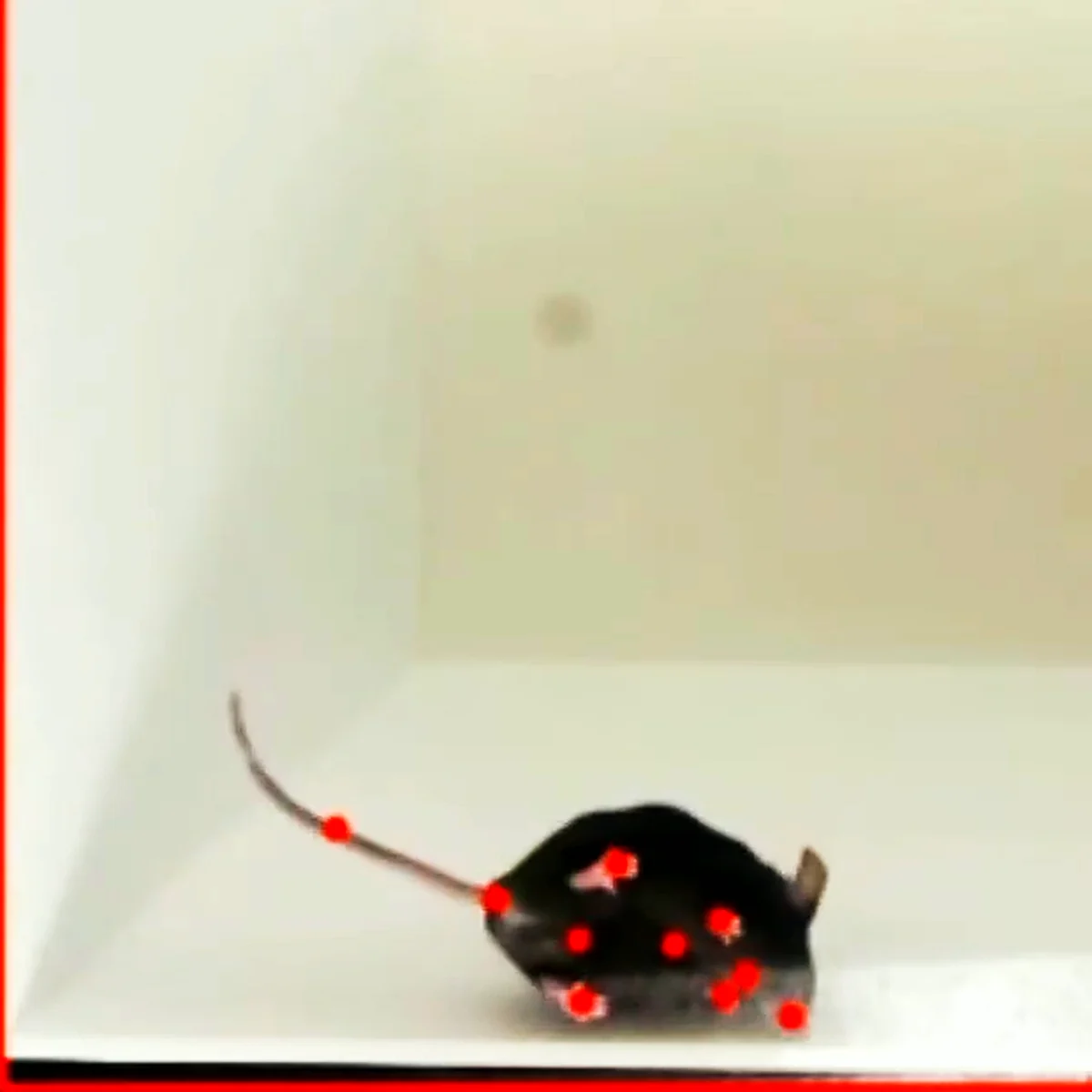
Representative output from a visual-cliff session comparing sighted wild-type and visually impaired animals.
3.3 Recent findings (PubMed)
- Sep 2026PMID: 42727708
Olfactory bulb-initiated α-synucleinopathy induces visual abnormalities via remote occipital network dysfunction.
Amakusa Y, Takeuchi RF, Ito H, et al.. Neurosci Res. 2026 Sep 11.
Visual abnormalities are common in Lewy body diseases (LBDs), yet Lewy pathology is often sparse in the visual cortex, suggesting that dysfunction of anatomically remote networks may contribute to impaired visual processing.
- Jun 2026PMID: 41727276
Prophylactic self-assembled nucleic acid hydrogel targeting retinal ganglion cell cuproptosis and microglial neuroinflammation for retinal ischemia-reperfusion injury.
Liu S, Wang Z, Wu Y, et al.. Bioact Mater. 2026 Jun.
Retinal ischemia-reperfusion (RIR) injury constitutes a common pathological pathway in glaucoma, diabetic retinopathy, and other neurodegenerative diseases, frequently leading to irreversible neuronal loss.
- May 2026PMID: 42133544
Retinal Pathology and Synucleinopathy in the Visual Pathway of α-Synuclein Preformed Fibril Mouse Model of Parkinson's Disease.
Zhang Q, Qian XY, Peng T, et al.. Brain Behav. 2026 May.
Visual dysfunction is a common nonmotor manifestation of Parkinson's disease (PD) that may precede motor symptoms. This study aimed to characterize the early preformed fibril (PFF) mouse model of PD. Male C57BL/6J mice received intrastriatal injections of α-synuclein (α-syn) PFFs or phosphate-buffered saline.
- Apr 2026PMID: 41972858
Overexpression or Activation of Potassium Channel TASK-3 Protects Retinal Ganglion Cells and Restores Visual Function in Optic Nerve Crush.
Zhang J, Chen X, Ji J, et al.. Invest Ophthalmol Vis Sci. 2026 Apr 1.
This study explored in a mouse model whether activation or upregulation of the two-pore domain potassium channel tandem pore domain acid-sensitive potassium channel 3 (TASK-3) in retinal ganglion cells (RGCs) could protect RGCs and reverse the vision loss arising through optic nerve injury.
- Feb 2026PMID: 41733412
Cortex-Restricted Deletion of Foxp1 Impairs Visual Responses by Disrupting Geniculocortical Connections in a Mouse Model of Autism.
Li X, Wang C, Tu X, et al.. Invest Ophthalmol Vis Sci. 2026 Feb 2.
Visual deficits are prominent features of autism spectrum disorder (ASD), yet the underlying neural mechanisms remain unclear. Mutations in FOXP1, which is a major risk factor for ASD, are often associated with visual issues.
- 2026PMID: 41799768
Stem cells ameliorate neurotrauma-induced visual disturbances and retinal degeneration via broad normalization of β-catenin-related signaling.
Kuo SC, Tseng CH, Hwang S, et al.. Int J Med Sci. 2026.
Traumatic brain injury (TBI) is associated with visual dysfunction and retinal degeneration, but the underlying mechanisms and therapeutic options remain limited. Mesenchymal stem cells (MSCs) have shown neuroprotective effects in various central nervous system injuries, including optic neuropathies.
§ 4
Discussion
Limitations of the paradigm, methodological caveats, and current directions.
4.1 Common confounds
Variables that can shift Visual Cliff Test results apart from the effect under study.
Visual ability (strain blindness)
Blind or low-vision strains choose at chance, so a deep-side step reflects absent sight rather than absent depth avoidance. Confirm baseline vision before interpreting choices.
Lighting/contrast
Weak checkerboard contrast and glare off the glass degrade the depth cue. Use even, high-contrast lighting so the cue is visually available.
Surface-texture cues
Tactile or thermal differences at the boundary let animals detect the edge without vision. Keep the glass flush, clean, and thermally uniform.
Apparent height/contrast depth
The salience of the cliff depends on the apparent drop and pattern contrast. Hold the apparent depth and contrast constant across groups.
Motivation/exploration drive
Low-exploration animals may never leave the center board. Score freezing and indecision separately so reluctance is not read as a depth choice.
Preview exported markdown
## Visual Cliff Test — methods controls

Confounds controlled in this protocol:

- **Visual ability (strain blindness).** Blind or low-vision strains choose at chance, so a deep-side step reflects absent sight rather than absent depth avoidance. Confirm baseline vision before interpreting choices.
- **Lighting/contrast.** Weak checkerboard contrast and glare off the glass degrade the depth cue. Use even, high-contrast lighting so the cue is visually available.
- **Surface-texture cues.** Tactile or thermal differences at the boundary let animals detect the edge without vision. Keep the glass flush, clean, and thermally uniform.
- **Apparent height/contrast depth.** The salience of the cliff depends on the apparent drop and pattern contrast. Hold the apparent depth and contrast constant across groups.
- **Motivation/exploration drive.** Low-exploration animals may never leave the center board. Score freezing and indecision separately so reluctance is not read as a depth choice.
4.2 Construct validity caveats
The visual cliff is strongest when baseline vision, lighting, contrast, and non-visual edge cues are controlled before testing. A near-chance shallow-side preference can mean impaired sight rather than absent depth perception, so confirm vision with an independent acuity measure and score freezing distinctly from a deep-side choice. 1
4.3 Special considerations
How do I know a deep-side step means poor depth perception?
Confirm the strain can see first. Blind or low-vision lines choose at chance, so without a baseline vision check a deep-side step is ambiguous between absent sight and absent depth avoidance.
What lighting should I use?
Use even, high-contrast illumination with no glare off the glass. Weak contrast or reflections degrade the apparent-depth cue and push choices toward chance regardless of depth perception.
Is freezing the same as choosing the deep side?
No. A fearful animal that freezes on the center board has not chosen the deep side. Score freezing and center-board time separately so reluctance is not counted as failed avoidance.
4.4 Current directions
Quarterly editorial review of emerging Visual Cliff Test methodology. Q2 2026
Methods
Vision-confirmed scoring
Pairing the cliff with a baseline acuity check ensures a deep-side choice is read as a depth-perception result rather than a vision artifact.
Emerging
Automated choice detection
Overhead video and automated shallow- versus deep-side detection reduce observer bias and capture step-off latency consistently.
Methods
Contrast and lighting standardization
Reporting checkerboard contrast and illumination is increasingly expected because choice rates shift toward chance when the depth cue is weakly lit.
Emerging
Graded depth-and-contrast series
Varying apparent depth and pattern contrast turns a pass/fail screen into a graded estimate of where depth avoidance breaks down.
§ 5
References
5 selected methods and validation references for Visual Cliff Test.
- Gibson EJ, Walk RD. The "visual cliff". Sci Am. 1960;202:64-71. doi:10.1038/scientificamerican0460-64
- Walk RD, Gibson EJ. A comparative and analytical study of visual depth perception. Psychol Monogr. 1961;75(15):1-44. doi:10.1037/h0093827
- Fox MW. The visual cliff test for the study of visual depth perception in the mouse. Anim Behav. 1965;13(2):232-233. doi:10.1016/0003-3472(65)90040-0
- Pinto LH, Enroth-Cugell C. Tests of the mouse visual system. Mamm Genome. 2000;11(7):531-536. doi:10.1007/s003350010102
- Wong AA, Brown RE. Visual detection, pattern discrimination and visual acuity in 14 strains of mice. Genes Brain Behav. 2006;5(5):389-403. doi:10.1111/j.1601-183X.2005.00173.x

Visual Cliff Test
$1,490.00
Added to quoteView Quote