ConductVision Zebrafish Package
$1,990 per yearA 5-year license is $3,990 in total.
The ConductVision license for zebrafish tests.

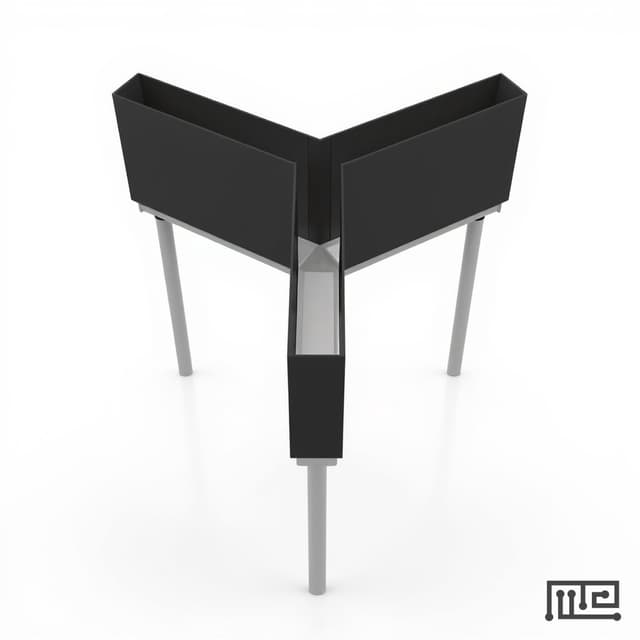
Three-compartment aquatic behavioral apparatus designed for assessing sociability and aggression in zebrafish using standardized mirror stimuli.

Director of Science · ConductScience
Ask Louise about Mirror Biting Cattelan fit, setup, configuration, or quote prep.
Already working with us? Sign in to connect this with My Scientist.
The Mirror Biting test apparatus serves as a specialized behavioral assessment tool for investigating sociability and aggression patterns in zebrafish and other fish species. This three-compartment aquatic system utilizes mirrors as standardized social stimuli, providing researchers with controlled experimental conditions for measuring fish behavior without the variability introduced by live conspecifics.
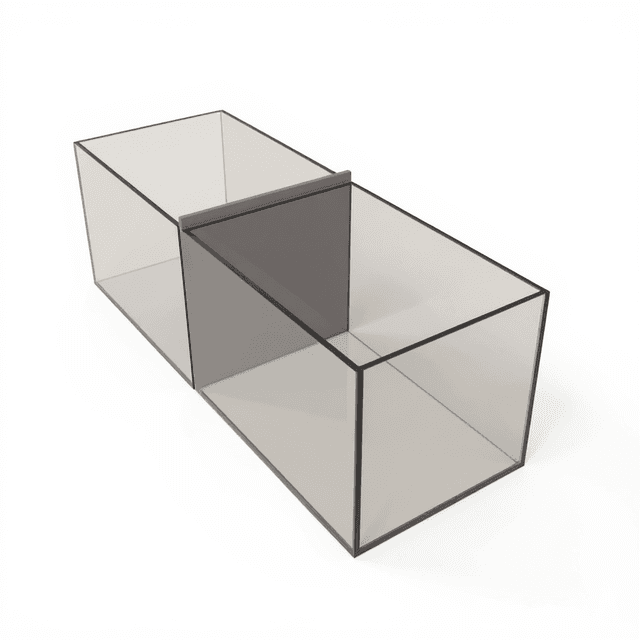
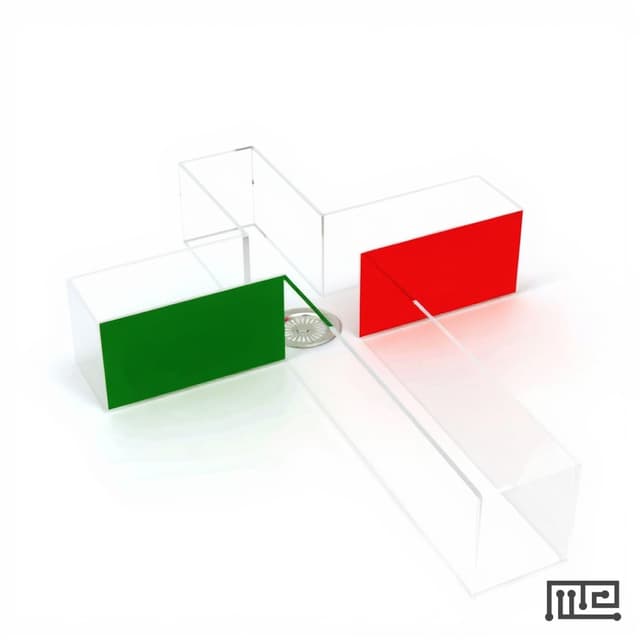
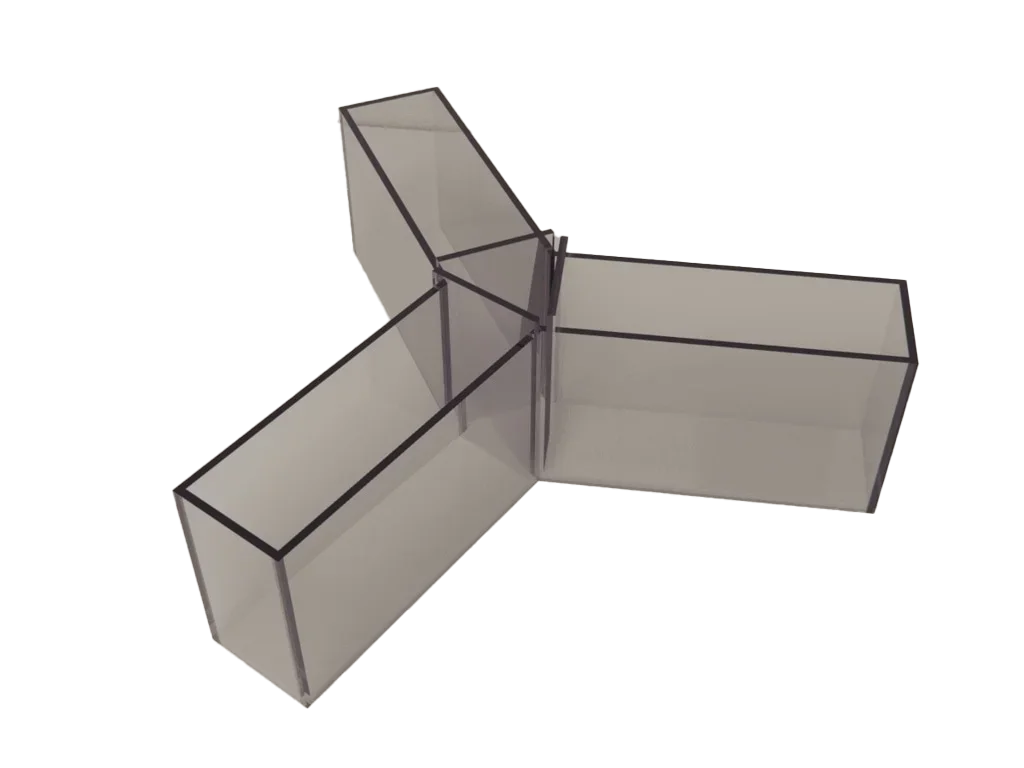
The apparatus consists of a transparent plexiglas and glass construction with precise dimensional specifications optimized for zebrafish behavioral studies. The central compartment (24 x 20 cm) houses the test subject, while lateral compartments (12 x 20 cm each) contain one-way mirrors that create the visual stimulus for social interaction assessment. This design enables researchers to quantify approach behaviors, mirror biting frequency, and spatial preferences as indicators of social motivation and aggression.
The Mirror Biting test exploits the natural tendency of fish to interpret their reflection as a conspecific, triggering species-typical social and territorial responses. When a test subject is introduced to the central compartment, it encounters mirror stimuli positioned in the lateral sections, which create the visual appearance of neighboring fish without the behavioral unpredictability of live animals.
The perforated transparent plastic partitions allow visual access to the mirrors while preventing physical contact, enabling researchers to measure approach behaviors, time spent near mirrors, and aggressive displays such as mirror biting. The one-way mirror configuration ensures consistent stimulus presentation while allowing for unobstructed behavioral observation and video recording from external angles.
Behavioral quantification typically involves tracking the subject's position relative to marked zones (6 cm from each partition) and recording specific behaviors such as approach frequency, contact attempts, and aggressive displays. This standardized stimulus presentation enables repeated measurements of the same individual over time and reduces inter-trial variability compared to live stimulus protocols.
| Feature | This Product | Typical Alternative | Advantage |
|---|---|---|---|
| Compartment Configuration | Three distinct compartments with central testing area and bilateral mirror placement | Simple two-chamber designs or single compartment systems | Enables bilateral stimulus presentation and spatial choice measurements for comprehensive behavioral assessment. |
| Mirror System | One-way mirrors (30 x 20 cm) providing controlled visual stimuli | Standard mirrors or live stimulus chambers | Eliminates stimulus animal variability while maintaining naturalistic visual cues for consistent behavioral responses. |
| Partition Design | Perforated transparent plastic allowing visual access | Solid barriers or open access systems | Prevents physical contact while maintaining visual stimulus presentation, ensuring subject safety during aggressive displays. |
| Water Depth | 14 cm standardized depth for zebrafish behavior | Variable depths or shallow observation chambers | Optimizes vertical swimming space for natural behavior expression while maintaining manageable water volume. |
| Behavioral Zones | Defined 6 cm zones from each partition for quantification | Unmarked chambers requiring manual zone definition | Provides standardized spatial reference points for consistent behavioral scoring across trials and laboratories. |
The apparatus combines standardized three-compartment design with one-way mirror stimuli and defined behavioral zones, providing researchers with controlled conditions for quantifying fish social behavior. The perforated partition system enables safe behavioral assessment while maintaining visual stimulus presentation.
Verify mirror positioning and visual angle before each experimental session to ensure consistent stimulus presentation.
Why: Proper mirror alignment is critical for reliable behavioral responses and data repeatability.
Clean mirrors and plexiglas surfaces with aquarium-safe cleaners between subjects to prevent visual obstruction and contamination.
Why: Clear optical surfaces are essential for proper stimulus presentation and behavioral observation.
Acclimate fish to the apparatus environment for 2-3 minutes before beginning behavioral recordings.
Why: Reduces novelty-induced stress responses that could confound social behavior measurements.
Use consistent lighting conditions and camera angles across all testing sessions for reliable behavioral scoring.
Why: Standardized recording conditions improve inter-rater reliability and data consistency.
Record baseline behavior in the central compartment before introducing mirror stimuli to establish individual behavioral profiles.
Why: Baseline measurements enable within-subject comparisons and improve statistical sensitivity.
If fish show reduced mirror interest, verify water clarity and adjust lighting to enhance mirror visibility.
Monitor fish continuously during aggressive display behaviors to prevent injury from repeated partition contact.
Why: Some fish may show intense aggressive responses that could result in physical harm if prolonged.
ConductScience provides a one-year manufacturer warranty covering materials and construction defects, with technical support for setup and protocol optimization.
Mirror Biting test is used to gain better insights into sociability in fishes. Sociability is usually studied by measuring the duration spent by the focal fish in proximity to the stimulus. Mirror tests employ mirrors as a substitution for live stimulus under the assumption that the subject perceives the image as a live conspecific. In theory, mirror tests allow better control of the variability of behavior shown by live stimuli and emulate a standardized behavior allowing for repeated measurements of the same focal subject.
Sociability can be seen in varying degrees in many fish species. More often than not, individuals are seen spending most of their lives in shoals. Shoaling is seen beneficial as it increases vigilance against predators, reduces individual predation risk and allows for faster location of food sources among other benefits. Although shoaling is a common feature of many marine and freshwater fish, it has its own disadvantages; shoaling tends to increase competition for resources and also the risk of parasite transmission. The concept of sociability has fascinated evolutionary biologists who have often speculated the trade-off that fish encounter with respect to shoaling.
Cattelan’s mirror biting apparatus consists of a glass aquarium that is divided into three compartments with the help of transparent plastic partitions. The partitioning plates have holes in them to allow both visual and olfactory contact between the focal and the stimulus subjects. The two smaller lateral compartments are used for housing stimulus shoals/individuals while the larger central compartment houses the focal subject. When the tests are performed with a mirror, the partitioning plate is replaced with a one-way mirror in one of the lateral sections.
Other apparatus similar to the Mirror Biting (Cattelan) apparatus includes the Mirror Biting (Balzarini) and Mirror Biting (Elwood).
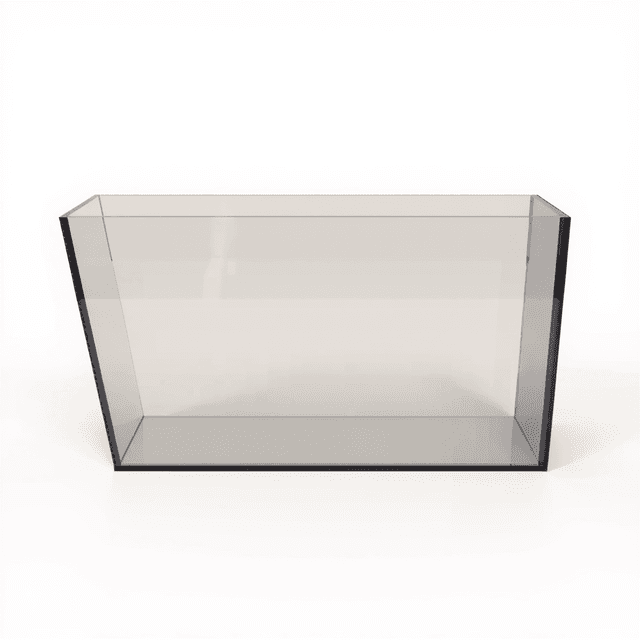
The Mirror Biting tank has dimensions 48 x 20 x 30 cm. The tank is divided into three sectors using perforated, transparent Plexiglas partitions. The two lateral compartments measure 12 x 20 cm each, and the central compartment measures 24 x 20 cm. Two marks, 6 cm, from each side of the partition, virtually divide the central compartment into three areas: a central no-choice area, a choice area for the stimulus shoal and a choice area for the empty lateral sector of the tank. A one-way mirror, 30 x 20 cm, is used in place of one of the partitions during experiments involving the mirror.
Prior to the experiments clean the apparatus thoroughly. Fill the tank with 14 cm of clean water. Change the stimulus shoal and the water of the experimental tank once every three trials. Appropriately illuminate the lateral compartments of the tank. For tracking and recording, video and software such as the Noldus Ethovison XT can be used. Ensure that the water is at ambient temperatures and that the lights of the test room are turned off during the experiment.
The focal subjects should be isolated in individual holding tanks prior to the experiments and between tests, without access to visual or olfactory cues from the other fishes to minimize the influence of previous interactions.
Pre-training
Isolate the focal subjects individually in 2-liter tanks, 24 hours prior to the experiment without access to visual or olfactory cues from the other fishes. Select stimulus shoal consisting of fishes that are unfamiliar with each other and the focal subject, Introduce the shoal into the lateral chamber (choose at random) 1-hour prior to the testing.
Mirror Biting Experiment Using Live Shoals
Introduce the focal subject into the central compartment in the no-choice area and allow it at least two minutes to acclimate to the environment. Avoid lateral bias by alternating the shoal positions between the lateral chambers between trials. Observe the interactions of the focal subject for at least 10 minutes.
Mirror Biting Experiment Using Mirror
Remove one of the partitions and replace it with a one-way mirror. Alternate the position of the mirror between the two sides to avoid lateral bias. Introduce the focal subject into the central compartment in the no-choice area and allow it at least two minutes to acclimate to the environment. Observe the interactions of the focal subject for at least 10 minutes.
Evaluation of social preference
Female guppies were evaluated in the Mirror Biting test for their social preference when presented with either an unfamiliar shoal or a mirror. The focal subject’s position across each of the three virtually divided areas was observed every 12 seconds during the 10-minute trial. It was observed that the subject had a significant preference for the social stimulus (shoal and mirror) than the empty chamber. However, no significant difference between the mean preference for the live conspecific or the mirror could be observed. (Cattelan et al., 2017)
Evaluation of the effect of increasing distance of the mirror and addition of conspecific odor on sociability performance
Cattelan et al. investigated if increasing the mirror’s distance and introducing conspecific odor would provide a more natural context for the focal subject. It was also speculated if these modifications would improve the correlation with the sociability scores observed with live conspecifics. The assessment of the effects of these modifications was observed by sequential addition. The mirror was moved 2 cm behind the transparent partition to mimic the inter-individual distance that would be observed in real interactions of shoals. Further, a live stimulus was added behind the mirror to provide the olfactory cue. For the test conducted with only modification of mirror distance, the mean preference of the focal fish was greater for the live conspecifics than the mirror. In the subsequent experiment that incorporated both the modifications, subjects showed a greater preference for live conspecifics and the mirror than the empty sector. However, preference for the mirror image did not significantly vary between either trial.
Evaluation of the effect of using a single conspecific on sociability performance
The Mirror Biting test was performed using a single live conspecific instead of a shoal. The test was performed to assess if a single conspecific would lead to similar sociability score as that of mirror stimulus. It was observed that the focal subject showed a greater preference for the live conspecific than the mirror image. Thus, strengthening the validity of the mirror biting test as a tool for measuring sociability in fishes. (Cattelan et al., 2017)
The following behaviors and parameters can be observed in the Mirror Biting test,
Strengths
Mirror tests have been shown to be a reliable measure of how fish behave with social companions and their social behaviors have been positively correlated with the shoaling tendency. The mirror in the tank can be removed or added as per need. The two protocols that can be used for the Mirror Biting test allow the introduction of different levels of novelty. Introducing the mirror to the tank already holding the fish evokes stronger territorial behavior. The apparatus is simple to construct and allows modifications to suit the needs of investigations. The narrow tank allows creating different densities of shoals to evaluate shoaling behaviors.
Limitations
Although a correlation exists, the mirror test is still a crude method for understanding sociability as some mirror-directed behavior could be the result of fear avoidance. Further, the mirror test does not emulate the characteristics of a real stimulus conspecific thus requiring caution when interpretations are made. The subject may also not be able to see the mirror image from close proximity clearly. The test also deprives the subject of chemical cues involved in typical social interactions between fish when the subject is tested using the mirror image stimulus. Subject’s and the stimulus conspecific’s social personality type also greatly influences the results. Anxious fishes may not perform as expected when introduced to the tank already housing the mirror.
Cattelan S, Lucon-Xiccato T, Pilastro A, Griggio M (2017). Is the mirror test a valid measure of fish sociability? Animal Behaviour 127 (2017) 109-116
From the Maze Engineers documentation for this apparatus.
What fish species can be tested in this apparatus besides zebrafish?
While optimized for zebrafish, the apparatus can accommodate other small fish species of similar size. Water depth and compartment dimensions should be evaluated for species-specific requirements.
How do you quantify mirror biting versus other social behaviors?
Mirror biting is typically scored as direct contact attempts with the partition near mirrors, while approach behaviors are quantified using the 6 cm zone markings for time allocation and proximity measurements.
What is the recommended trial duration for mirror biting tests?
Standard protocols typically use 5-10 minute trials, though duration should be optimized based on species-specific behavior patterns and research objectives.
Can multiple fish be tested simultaneously in the same apparatus?
The central compartment is designed for individual fish testing. Multiple fish would alter social dynamics and confound mirror stimulus interpretation.
How should water parameters be maintained during testing?
Maintain species-appropriate temperature, pH, and dissolved oxygen levels. The 14 cm depth provides adequate volume for short-term behavioral testing with appropriate water quality.
What lighting conditions are optimal for mirror stimulus presentation?
Uniform lighting that provides clear mirror visibility while avoiding glare or shadows that could interfere with visual stimulus presentation and behavioral observation.
How does this compare to live stimulus social behavior tests?
Mirror stimuli provide standardized, repeatable social cues without behavioral variability of live animals, enabling better experimental control but may not capture all aspects of natural social interaction.
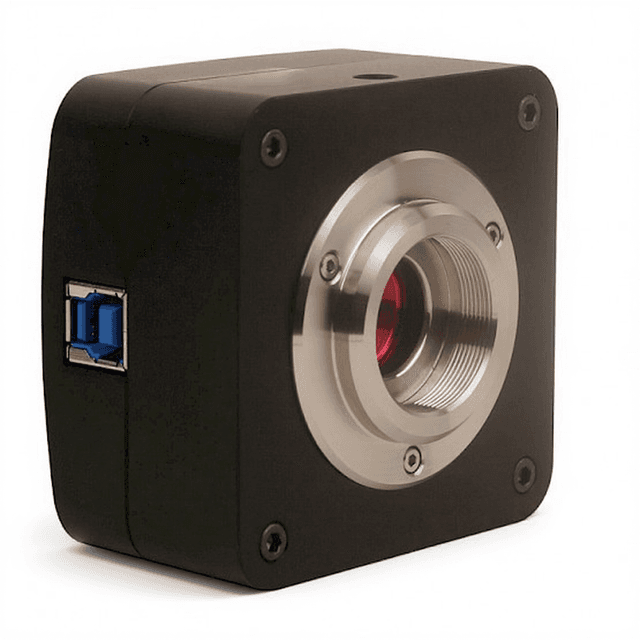
ConductVision is our video-tracking software. Record your sessions on video, and it scores standard zebrafish tests, such as those listed below.
The Zebrafish Package includes a custom assay made on request. To have one made for this test, ask in your quote request.
A 5-year license is $3,990 in total.
The ConductVision license for zebrafish tests.
Send it over and we'll email you a personalized answer — no call, no scheduling.
Prefer to talk it through?