Path Regularity Mazes
Perspex cylinder maze system for studying spatial navigation and learning strategies in honeybees through four distinct path regularity patterns.

Louise Corscadden, PhD
Director of Science · ConductScience
Ask Louise about Path Regularity Mazes fit, setup, configuration, or quote prep.
Already working with us? Sign in to connect this with My Scientist.
Key Specifications
Full details →- Model fit
- Honeybees
- SKU family
- ME-32106
- Shipping box
- 43.2 x 38.0 x 27.9 cm
- Ordering
- Online checkout and quote request available
- Category
- Behavioral Mazes
- Build notes
- Perspex
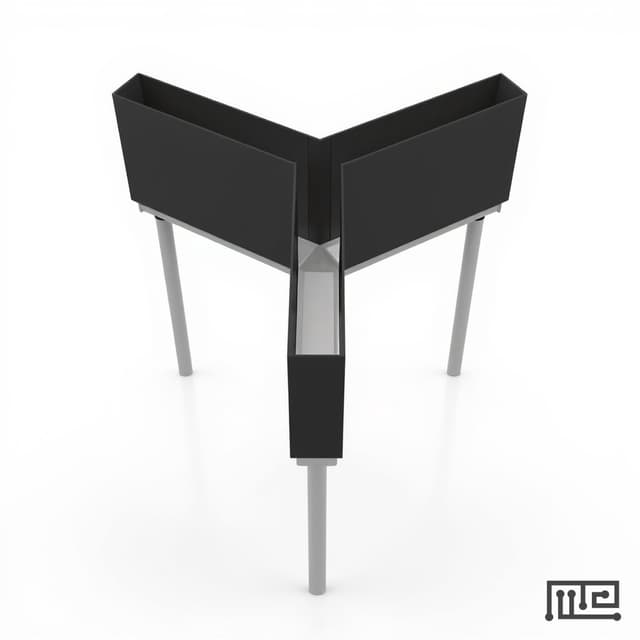
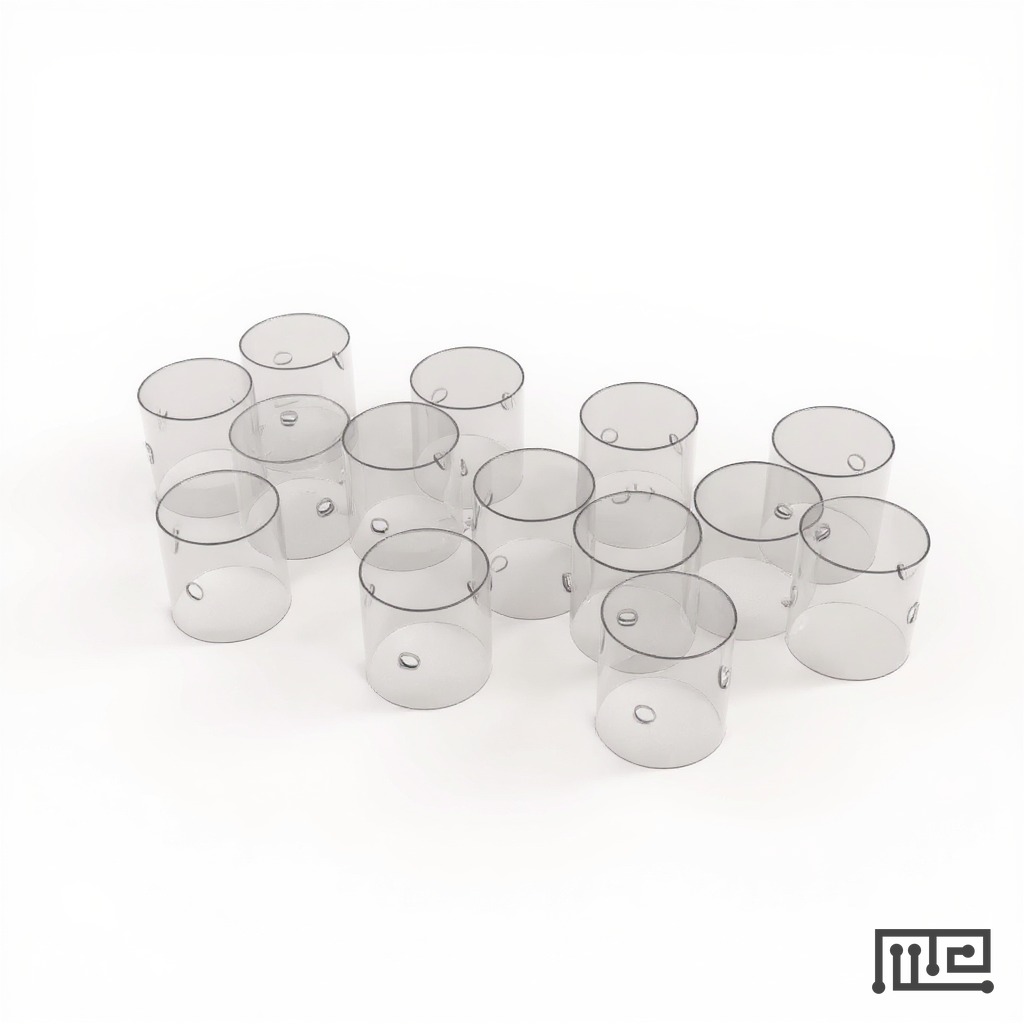
The Path Regularity Maze is a specialized apparatus designed for investigating spatial navigation and learning strategies in honeybees. Constructed from perspex cylinders measuring 22.5cm in diameter and 25cm in height, this maze system employs four distinct navigation patterns: constant-turn, zig-zag, irregular, and variable irregular configurations. Each cylinder contains three 4cm diameter holes positioned 12.5cm above the base, with the exit hole positioned at 45° relative to the entrance direction.
This apparatus enables controlled studies of insect spatial memory and orientation behaviors by presenting honeybees with varying degrees of path regularity. The maze operates within temperature ranges of 17°C ±3°C (night) to 24°C ±5°C (day), accommodating the thermal requirements of honeybee behavioral studies. Training protocols typically involve 8-10 bees per group over 6-hour sessions, with experimental groups of 10 bees and 1-hour pause durations per chamber.
How It Works
The Path Regularity Maze operates on the principle of spatial learning through varying degrees of path predictability. Honeybees navigate through interconnected cylindrical chambers, each presenting three exit options positioned at specific angular relationships. The maze exploits the natural foraging behavior of honeybees, requiring them to make sequential navigation decisions based on spatial cues and learned patterns.
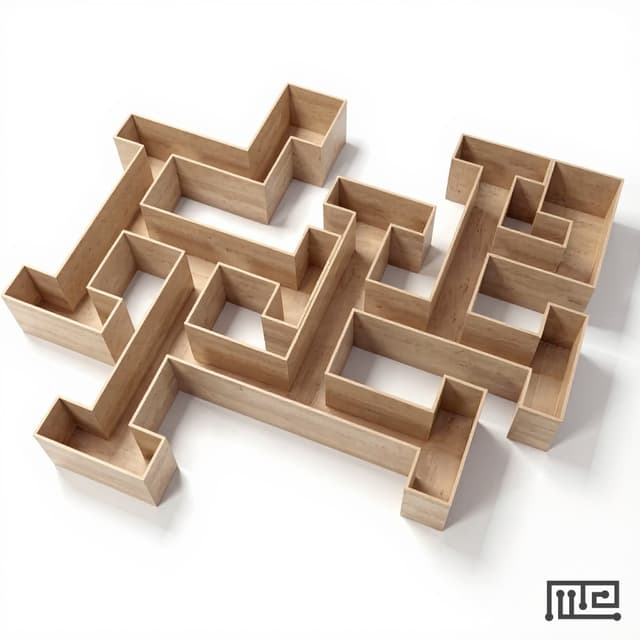
Four maze configurations provide different levels of navigational complexity: constant-turn mazes require consistent directional choices, zig-zag patterns alternate turning directions, irregular mazes present unpredictable sequences, and variable irregular configurations introduce random path elements. This systematic variation allows researchers to quantify how path regularity influences learning acquisition, memory consolidation, and navigation strategy selection.
The 45° angular positioning of exit holes relative to entry points creates controlled decision points that challenge the bee's spatial memory systems. The 135° separation between entrance and exit holes ensures that successful navigation requires active spatial processing rather than simple stimulus-response associations.
Features & Benefits
Add-ons and modifications
| Add-on | Price | Details |
|---|---|---|
| Path Regularity Mazes | $990 | Diameter of cylinders: 22.5cm Height of cylinders: 25cm Diameter of holes in cylinder: 4cm Distance of holes from the floor: 12.5cm Position of exit hole away f |
Add any of these to your quote request.
Cylinder Diameter
- 22.5cm
Cylinder Height
- 25cm
Hole Diameter
- 4cm
Hole Position Height
- 12.5cm above base
Exit Hole Angle
- 45º to the right or left relative to each other
Number of Holes per Cylinder
- 3
Table Height
- 30cm
Maze Types
- constant-turn, zig-zag, irregular, variable irregular
Training Bees Count
- 8-10 bees per group
Experiment Bees Count
- 10 bees
Training Duration
- 6 hours
Pause Duration per Chamber
- 1 hour
Behavioral Construct
- spatial navigation
- spatial memory
- learning acquisition
- maze learning
- orientation behavior
- navigation strategy
Automation Level
- manual
Material
- Perspex
Temperature Range
- 17°C ±3°C (night) to 24°C ±5°C (day)
Species
- Honeybees
Research Domain
- Behavioral Pharmacology
- Developmental Biology
- Environmental Monitoring
- Learning and Memory
- Neurodegeneration
- Neuroscience
Compatible Tracking Software
- ConductVision
Shipping weight
- 21.0 lb
Shipping box
- L: 43.2 cm
- W: 38.0 cm
- H: 27.9 cm
| Feature | This Product | Typical Alternative | Advantage |
|---|---|---|---|
| Maze Configuration Options | Four distinct patterns (constant-turn, zig-zag, irregular, variable irregular) | Most insect mazes offer 1-2 fixed configurations | Enables systematic comparison of learning rates across different levels of spatial complexity within a single apparatus. |
| Chamber Dimensions | 22.5cm diameter cylinders with 25cm height | Smaller chambers often restrict natural flight patterns | Accommodates natural honeybee movement while maintaining controlled navigation decision points. |
| Navigation Hole Design | 4cm diameter holes at 12.5cm elevation with 45° angular positioning | Fixed positioning without standardized angular relationships | Creates consistent spatial challenges that require active navigation decisions rather than random movement patterns. |
| Temperature Control Range | 17°C ±3°C (night) to 24°C ±5°C (day) | Many systems lack specified temperature control | Maintains optimal thermal conditions for consistent honeybee behavioral responses across experimental sessions. |
| Group Size Accommodation | Training groups of 8-10 bees, experimental groups of 10 bees | Individual or small group testing only | Enables both individual learning assessment and group behavioral dynamics studies within controlled protocols. |
| Material Construction | Perspex cylindrical chambers | Opaque materials limit behavioral observation | Provides complete visual access for continuous behavioral monitoring and detailed navigation pattern analysis. |
The Path Regularity Maze offers systematic spatial complexity variation through four distinct maze configurations with standardized angular relationships and controlled environmental conditions. The perspex construction and optimized chamber dimensions accommodate natural honeybee behavior while providing comprehensive behavioral observation capabilities.
Practical Tips
Verify angular measurements of exit holes using precision protractors before each experimental series to ensure consistent 45° positioning.
Why: Accurate angular relationships are critical for standardized spatial challenge presentation across trials.
Clean perspex surfaces with antistatic solution between experimental sessions to prevent electrostatic bee attraction or repulsion.
Why: Static charges can influence honeybee navigation behavior and introduce uncontrolled variables.
Allow 1-hour chamber pause durations during training to enable memory consolidation assessment and prevent behavioral fatigue.
Why: Adequate rest periods are essential for distinguishing learning acquisition from performance limitations.
If bees cluster at chamber connections, verify that hole diameters are exactly 4cm and edges are smooth without sharp corners.
Why: Navigation hesitation often indicates physical obstacles that can confound spatial learning measurements.
Record ambient temperature every 30 minutes during experimental sessions to verify maintenance within the 17-24°C range.
Why: Temperature fluctuations outside the specified range can significantly alter honeybee activity levels and navigation accuracy.
Position emergency bee collection equipment near maze exits and maintain ventilation to prevent overheating during extended trials.
Why: Proper safety measures protect both research subjects and personnel during behavioral testing sessions.
Randomize maze configuration order across experimental groups to prevent learning transfer effects between different spatial patterns.
Why: Systematic configuration ordering can create confounding learning advantages that affect spatial memory assessment.
Video record navigation sessions from multiple angles to enable detailed path analysis and verify behavioral scoring accuracy.
Why: Multiple viewing angles capture complete navigation sequences that may be missed by single-point observation.
Setup Guide
What’s in the Box
- Perspex cylindrical chambers (set for complete maze configuration)
- Connecting hardware for chamber assembly
- Support table mounting components
- Assembly instructions and training protocol guide
- User manual with configuration diagrams (typical)
- Maintenance and cleaning guidelines (typical)
Warranty
ConductScience provides a standard one-year manufacturer warranty covering material defects and construction quality. Technical support includes training protocol guidance and maze configuration assistance.
Compliance
Protocol and background
Introduction
Path Regularity Maze is a learning paradigm that investigates navigational mechanisms and the underlying orientation in honeybees. It explores maze-learning by combining four types of mazes; constant-turn maze, zig-zag maze, irregular maze, and variable irregular maze.
Bees are known to navigate through complex labyrinths by using colors or marks as symbolic indicators; however, this phenomenon has largely been investigated in vertebrates such as rats only. Shaowu, Akiko, and Mandyam (2000) have developed Path Regularity Maze to study whether honeybees possess the ability to recognize and differentiate between regular pattern mazes from the unmarked mazes of various configurations.
Path Regularity maze consists of a number of cylinders containing entrance and exit holes. A bee flying a correct path enters a cylinder through one hole and leaves through one of two exit holes. One of these holes represents the correct path and continues through the maze, while the other leads to the dead end. A bee treading the correct path flies to the final cylinder containing a reward.
Apparatus and Equipment
The apparatus consists of an array of vertically-oriented cylinders (diameter: 22.5cm, height: 25cm) used as modules to construct mazes. Each cylinder has three holes (diameter: 4cm), each positioned 12.5cm above the floor. The exit holes are located at 45º to the right or left of the other direction. All cylinders are covered with transparent Perspex cover.
Training Protocol
House bees in a glasshouse with the temperature maintained at 24° ±5°C during the day and 17° ±3°C at night. Mount a beehive in the glasshouse with holes allowing entry and exit into the glasshouse. For each experiment, mark and train 10 bees by carrying out reinforcements, i.e., allowing navigation through the selected maze. The experiments can be recorded with (Noldus Etho Vision® XT).
Complex Maze Learning & Navigation Training in Honeybees Using Variable Mazes
Place the reward feeder just outside the entrance to the maze and train 8-10 bees to fly toward it. Slowly move the feeder through the maze step by step (after 1h in each decision chamber). After the feeder reaches its final position, score performance of each bee in terms of choices made and the total duration of flight through the maze. Continue training for 6 hours.
Test of Bee Performance Using Constant-Turn Maze
Put the maze on a 30cm high table with castors. Allow each bee to enter the maze configured in two settings; right-turn maze and the left-turn maze. Here, the bee has to turn in one direction only to reach the exit and receive a reward on right-hand or left-hand exit.
Test of Bee Performance Using Zig-zag Maze
Here the bee has to turn alternately left and right in the series of cylinders to reach the feeder.
Test of Bee Performance Using Irregular Maze
This maze lacks a pattern and can be arranged randomly. The bee has to learn the sequence through repeated training for a fixed irregular maze. Train the bee to fly through the randomly-sequenced cylinders.
Test of Bee Performance Using Variable Irregular Maze
Allow the bee to fly through four variable irregular maze configurations in turn to reach the reward.
Analysis of Maze Navigation and Path Regularity Learning in Honeybees Using Complex Mazes
Shaowu et al. (2000) explored the ability of honeybees to navigate through mazes of various structures and symmetry. They found that bees are better at learning mazes with a regular pattern, such as a constant-turn maze. Constant-turn maze possessed a simple single rule that bees learned and mastered quickly. Where navigational algorithms were more complex, such as in the zig-zag maze, the bees had difficulty following alternations; however, they demonstrated the ability to learn the path and use it to their advantage ultimately. Irregular mazes, on the other hand, were hard to learn. Nonetheless, the trained bees were nearly as good in memorizing the irregular 6-turn sequence as they were in the zig-zag sequence. Learning and navigational performances in the variable irregular mazes were significantly poor, which was not surprising since it required both memorization of the paths of all four mazes and recognition of the type of maze the bee had entered in order to recall the appropriate memory.
Data Analysis
The bee performance is evaluated by group flights into four categories:
- C1: number of flights in which a bee arrives at the feeder without making any mistakes.
- C2: number of flights in which the bee retraces path but remains on the correct path and successfully arrives at the goal.
- C3: number of flights in which a bee makes at least one wrong turn but manages to arrive at the goal within 5 min. This category is divided into three subcategories: C3a, C3b, and C3c, representing one, two, and three or more wrong turns, respectively.
- C4: number of flights in which the bee does not reach the goal within 5 min of flight, irrespective of path choice. Such bees get trapped and require entry into the maze to start anew.
C1 denotes the best performance and C4 the worst.
Other measures assessed during each task include:
- Duration of Flight: Time in seconds required to reach the feeder. Flight duration is measured as T1 (1–30 sec), T2 (31–60 sec), T3 (61–90 sec), T4 (91–120 sec), and T5 (120–300 sec).
- Bee Choice in Each Chamber: measured by plotting performance histograms.
Strengths and Limitations
Strengths
Path Regularity Maze is a reliable tool to study navigational and memory patterns in honeybees. It is an amalgam of four different tests that are sufficient to gauge various aspects of honeybee performance. The four configurations of the maze with varied architecture provide a detailed look at how bees memorize, learn, and recall spatial memory.
The difficulty level of the maze increases gradually, allowing the bee to develop memory and strategic skills at its own pace. The bees are given an appropriate break after each test, which reduces the chances of stress and fatigue. Furthermore, bees are not food deprived at any stage. Hunger can affect bee performance.
Limitations
The complexity of the maze design does not allow bees to develop navigational strategies fully. In the constant-turn maze, bees had trouble flying to the goal despite the strategy requiring constant turning. The extent to which bees can develop navigational strategies and master irregular mazes needs to be further explored.
Summary
- Path regularity maze determines complex maze learning in honeybees.
- This concept has been studied in vertebrates.
- Honeybees navigate through surroundings with the help of cues and symmetry.
- Path regularity maze uses four types of maze to test complex maze learning in honeybees.
- These mazes include constant-turn maze, zig-zag maze, irregular maze and variable irregular maze.
- The honeybee enters the maze through one hole and flies to exit to receive the reward.
- The maze is developed by Shaowu et al. (2000)
References
Mizutani, A., Srinivasan, M.V., & Zhang, S. (2000). Maze Navigation by Honeybees: Learning Path Regularity. Learn Mem, 7(6), 363–374.
From the Maze Engineers documentation for this apparatus.
What training duration is required to establish baseline learning in honeybees?
Training protocols typically involve 6-hour sessions with groups of 8-10 bees, followed by experimental trials with groups of 10 bees. One-hour pause durations per chamber allow for memory consolidation assessment.
How do the four maze configurations differ in complexity?
Constant-turn mazes require consistent directional choices, zig-zag patterns alternate directions, irregular mazes present unpredictable sequences, and variable irregular configurations introduce random elements, providing systematic complexity gradients.
What temperature control is necessary for consistent bee behavior?
The system requires temperature maintenance at 17°C ±3°C during night phases and 24°C ±5°C during day phases to ensure optimal honeybee activity and consistent behavioral responses.
Can the maze configuration be modified during experiments?
The modular perspex construction allows reconfiguration between the four maze types (constant-turn, zig-zag, irregular, variable irregular) to test different spatial learning paradigms within the same study.
What behavioral parameters can be measured with this system?
The apparatus enables measurement of navigation choice accuracy, path completion times, error rates, learning acquisition curves, and spatial memory retention across different maze configurations.
How is the 45° exit hole positioning significant for spatial learning?
The 45° angular relationship between entrance and exit requires active spatial processing and prevents simple stimulus-response navigation, ensuring that successful maze completion depends on spatial memory formation.
What group sizes are recommended for statistical power in learning studies?
Training groups of 8-10 bees provide sufficient behavioral variation for learning assessment, while experimental groups of 10 bees offer adequate statistical power for detecting spatial memory differences between conditions.
Have a question about this product?
Have a question? Just ask.
Send it over and we'll email you a personalized answer — no call, no scheduling.
Prefer to talk it through?
Accessories
Enhance your setup with compatible accessories

Frequently Bought Together