| Product | Model | Channel | Description |
|---|---|---|---|
| Homeothermic Monitoring System – Temperature Controller | CS0001 | 1 | Complete System: 1 Homeothermic Control Unit 1 Cage size Heating Pad 1 Temperature probe |
| Homeothermic Monitoring System – Temperature Controller | CS0002 | 2 | Complete System: 1 Homeothermic Control Unit 1 Rat Heating Pad 1 Temperature probe |
| Homeothermic Monitoring System – Temperature Controller | CS0004 | 4 | Complete System: 1 Homeothermic Control Unit 1 Mouse Heating Pad 1 Temperature probe |
| *Homeothermic Monitoring System – Temperature Controller includes the complete system. | |||
| Product | Model | Size | Description |
|---|---|---|---|
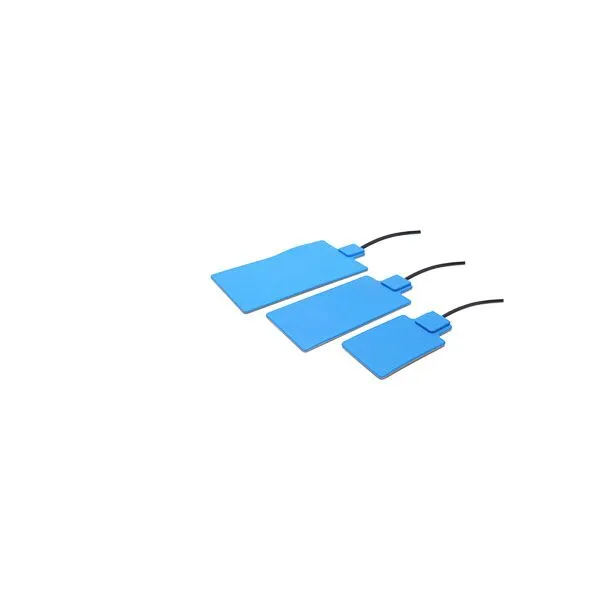
| Heating Pad | CS-HP-2007 | Cage | 200*350mm / Cable Length 150 cm |
| Heating Pad | CS-HP-2005 | Rat | 150*250mm / Cable Length 150 cm |
| Heating Pad | CS-HP-2014 | Mouse | 120*205mm / Cable Length 150 cm |
| Temperature probe | CS-TP-2001/2 | Rats and Mice |
Mouse: ø1.5 x 15mm / Rat: ø 2 x 30mm Rod length: 30 mm Cord length: 150 cm |
Double channels displayed on UI enables two animals’ surgeries and experiments independently at the same time.
The UI displays a working progress bar of heating pads, and rectal probes working status: Idle, Warning, Standby, and Working
Simultaneous monitoring Heating pads and Rectal Probes data
A corresponding heat insulating pad is underneath every heating pad to prevent temperature loss.
The Heat and Temperature controller system, also known as the homeothermic monitoring system, is recurrently used for thermal regulation and monitoring in rodent surgeries. The normal body temperature of rodents ranges between 36.2-37.5ºC, whereas the cages in which they are housed have an ambient temperature of 23-24ºC. This difference in temperatures can result in hypothermia in rodents. Additionally, anesthetization and post-operative recovery from anesthesia can also cause hypothermia in rodents. A heat and temperature controller consisting of a thermal controller, a rectal probe, a heating pad, and a heat insulation pad is used for rodent thermoregulation in research laboratories.
Impaired thermoregulation resulting from general anesthesia during stereotaxic surgeries is the leading cause of hypothermia in rodents. In mammals, including rodents, the variations in core temperature are limited to +/- 0.3oC by the body's autonomic and behavioral responses. This narrow temperature range is called the "inter-threshold range," and the hypothalamus can extend this range 10-20fold, thus tolerating a fluctuation of (+/-) 2-4oC in body temperature. Anesthetics suppress the hypothalamus causing hypothermia before the beginning of any heat conservation mechanisms like vasoconstriction etc. Furthermore, control of arteriovenous shunting is lost due to the injection of general anesthesia. This loss of control causes heat redistribution from core to peripheral areas, ultimately decreasing core temperature. In a nutshell, hypothermia is induced as soon as the anesthesia is injected (Schuster and Pang, 2017). Therefore, one must take precautions beforehand to prevent it. For this, a heat and temperature control system is used.
The heat and temperature control system uses a rectal probe, also known as a thermal sensor, gently inserted into the rodent's body via the rectal route to measure body temperature. A temperature controller with a digital display shows the temperature measured by the rectal probe. Additionally, a heating pad is used to overcome hypothermia, and the temperature controller also monitors its temperature.
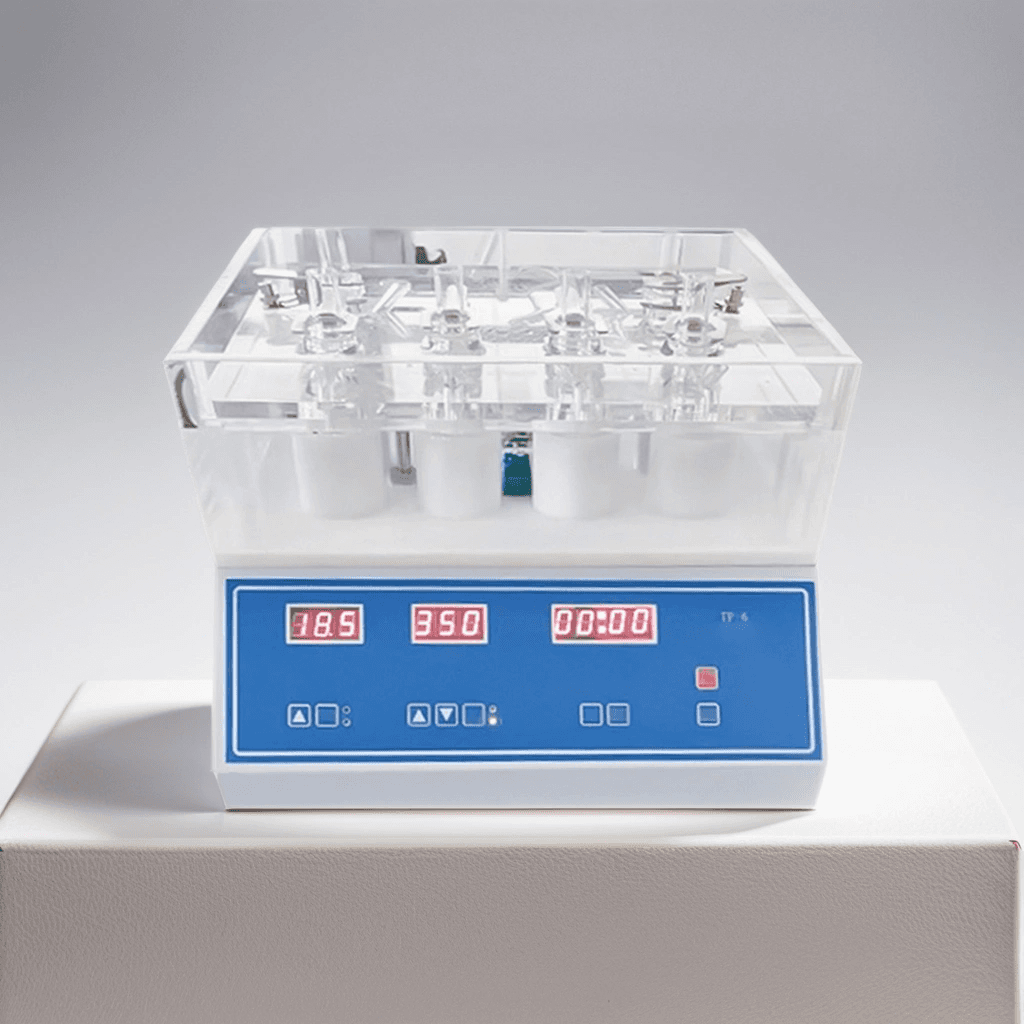
The homeothermic monitoring system provided by Conduct Science is a closed-loop system that includes a flexible rectal probe that enables the digital temperature controller to collect real-time feedback from the heating pad, automatically controlling the rodent's body temperature. The temperature controller (20.5x14.8x8.0cm) has an LCD that indicates the system’s current status, such as 'heating,' 'stand-by,' 'warning,' etc. The temperature scale can be interchanged between Fahrenheit and Celsius. Heating pads are made of high-quality silicone and efficiently provide warmth to the animals during surgery. They are available in three different sizes for rats, mice, and home cages. One can order them according to their experimental requirements. The homeothermic system has a temperature control range of 25-45ºC.
Following protocol can be followed using a heat and temperature control system (de Diego-García et al., 2019).
Hankenson et al. (2018) studied the thermal biology of rodents and their thermoregulatory mechanisms in a research environment. They stated that rodents’ physical and physiological abilities allow them to survive in low temperatures of up to 4oC and high temperatures of up to 43oC. These upper and lower temperature limits mark the boundaries of the murine “thermoneutral zone (TNZ).” The thermoneutral zone is “the range in which the resting metabolic rate of heat production is at equilibrium with animals’ evaporative heat loss to the surrounding environment.” The researchers must regularly monitor differences in body temperatures resulting from the ambient vivarium temperatures and anesthesia injection. For the measurement of core temperature, rectal thermometry is used. The rectal probe is inserted up to 2cm into the colon. Normal body temperature in anesthetized animals is then maintained by using devices like heating pads. During the entire process, the temperatures are regularly monitored by heat and temperature controller devices.
Skoven et al. (2021) studied the interhemispheric integration of neural activity behind the left and right motor cortex by optogenetically stimulating glutamatergic neurons in the motor cortex. They took twenty-one young male rats about three weeks old and housed them in the lab facility for a week before stereotaxic surgery. After shaving off their fur, the researchers pre-operatively administered the animals subcutaneously with analgesics for infection and pain management. They used a rectal probe to measure the rodents’ temperature and used a heating pad to keep the animal warm throughout the surgery. They also used a homeothermic monitoring system to monitor the temperature of the probe and the heating pad. Following this, they performed a surgery and chronically implanted the electrodes in the contralateral left motor cortex. They concluded that optogenetic stimulation evokes a trans-local response in the left motor cortex.
Lu et al. (2019) studied the side effects of the anticancer drug Cisplatin using rodent models. They found that Cisplatin could induce Ca+2 ion accumulation, hearing loss, exocytosis, and functional alterations in Ca+2 ion channels. They took fifteen C57/BL6 mice, injected them with a single dose of Cisplatin, and later performed Auditory Brainstem Response (ABR) thresholds on days 0 and 3 of cisplatin treatment for model verification. During ABR, the mice were intra-peritoneally anesthetized. Following anesthesia administration, they monitored the temperature of the subjects with a homeothermic monitoring system. The temperature was constantly maintained at 37oC throughout the ABR. The results indicated a significant difference between the control group mice and the test group mice. The test group mice experienced hearing loss.
Hankenson et al. (2018) studied the thermal biology of rodents and their thermoregulatory mechanisms in a research environment. They stated that rodents' physical and physiological abilities allow them to survive in low temperatures of up to 4oC and high temperatures of up to 43oC. These upper and lower temperature limits mark the boundaries of the murine "thermoneutral zone (TNZ)." The thermoneutral zone is "the range in which the resting metabolic rate of heat production is at equilibrium with animals' evaporative heat loss to the surrounding environment." The researchers must regularly monitor differences in body temperatures resulting from the ambient vivarium temperatures and anesthesia injection. For the measurement of core temperature, rectal thermometry is used. The rectal probe is inserted up to 2cm into the colon. Normal body temperature in anesthetized animals is then maintained by using devices like heating pads. During the entire process, the temperatures are regularly monitored by heat and temperature controller devices.
Skoven et al. (2021) studied the interhemispheric integration of neural activity behind the left and right motor cortex by optogenetically stimulating glutamatergic neurons in the motor cortex. They took twenty-one young male rats about three weeks old and housed them in the lab facility for a week before stereotaxic surgery. After shaving off their fur, the researchers pre-operatively administered the animals subcutaneously with analgesics for infection and pain management. They used a rectal probe to measure the rodents' temperature and used a heating pad to keep the animal warm throughout the surgery. They also used a homeothermic monitoring system to monitor the temperature of the probe and the heating pad. Following this, they performed a surgery and chronically implanted the electrodes in the contralateral left motor cortex. They concluded that optogenetic stimulation evokes a trans-local response in the left motor cortex.
Lu et al. (2019) studied the side effects of the anticancer drug Cisplatin using rodent models. They found that Cisplatin could induce Ca+2 ion accumulation, hearing loss, exocytosis, and functional alterations in Ca+2 ion channels. They took fifteen C57/BL6 mice, injected them with a single dose of Cisplatin, and later performed Auditory Brainstem Response (ABR) thresholds on days 0 and 3 of cisplatin treatment for model verification. During ABR, the mice were intra-peritoneally anesthetized. Following anesthesia administration, they monitored the temperature of the subjects with a homeothermic monitoring system. The temperature was constantly maintained at 37oC throughout the ABR. The results indicated a significant difference between the control group mice and the test group mice. The test group mice experienced hearing loss.
No questions yet for this product.